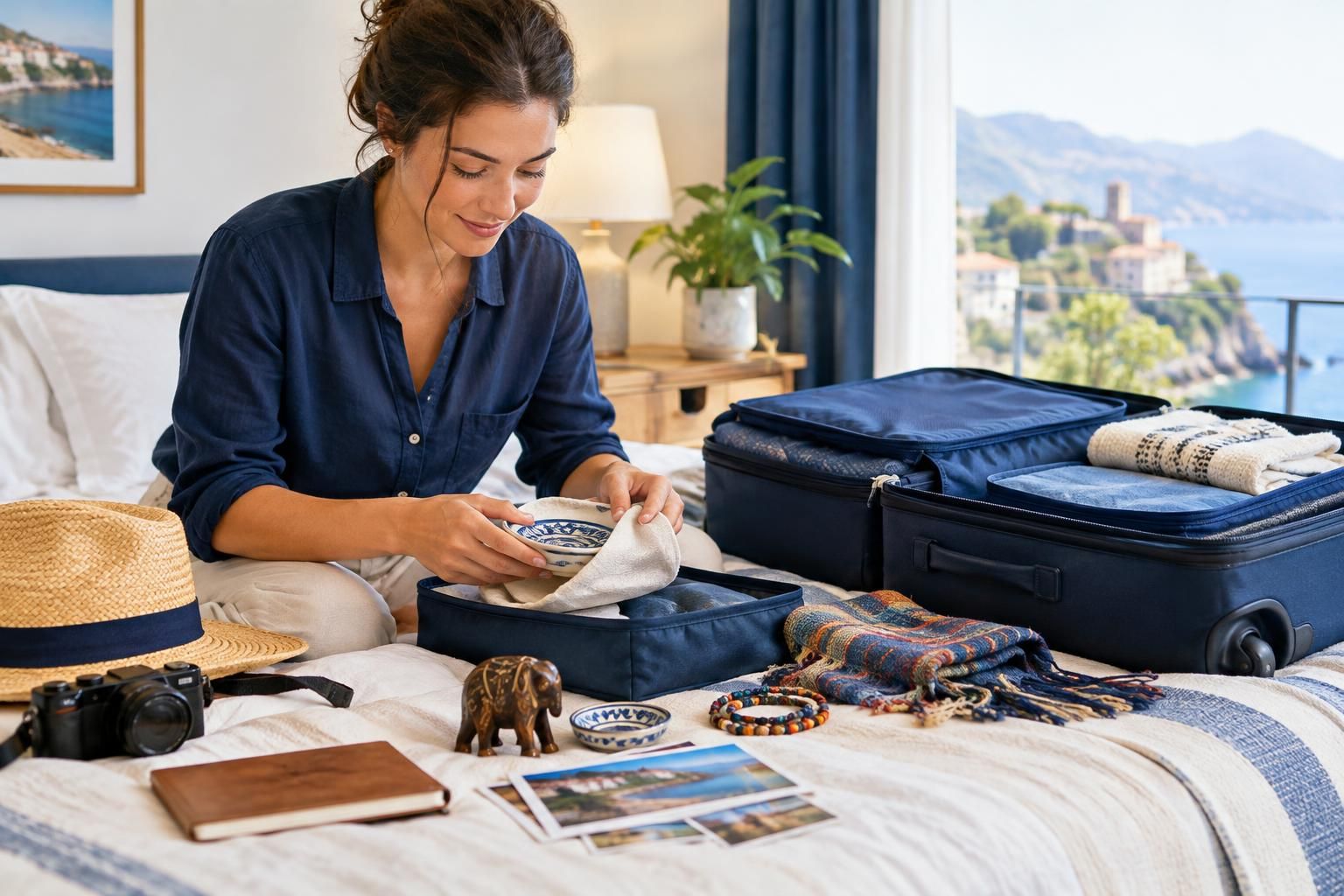
A small ceramic bowl, a market print or a locally woven scarf can hold more meaning than a suitcase full of hurried purchases. The difficulty is getting those finds home without turning your final travel day into a struggle with weight, space and fragile packaging. Souvenir planning works best before departure, but it does not require a shopping itinerary. A little spare capacity, a few buying criteria and a simple packing routine can leave room for unexpected discoveries without adding another suitcase.
1. Set a space limit before you leave
Start with the bag you intend to bring home, not an imaginary extra bag you might buy later. Pack your essentials, close the suitcase, then identify a realistic amount of spare space. A small packing cube or an empty section beside your shoes can serve as your souvenir allowance. This makes the limit visible rather than something you discover at checkout.
Space and weight are separate constraints. A compact stone ornament may weigh more than several folded textiles, while a lightweight lampshade can occupy half a bag. Check the baggage conditions for every transport segment you plan to use, including any smaller connecting service. Leave some margin rather than packing right up to a stated limit.
2. Choose the kind of keepsake that suits your journey
Think about what you actually enjoy using or displaying at home. Someone who cooks might value a small kitchen textile; someone with limited shelf space may prefer postcards, photographs or a flat print. Choosing a loose theme helps you recognize worthwhile purchases without making every market visit feel like a shopping assignment.
Match purchases to the rest of the itinerary. A rigid object bought early must survive every hotel change and transfer. A scarf or unframed artwork is usually easier to carry through a multi-stop trip than a bulky decorative piece. If you love something awkwardly shaped, pause to picture it inside your actual luggage, including the protective wrapping it needs.
3. Make a short gift list and a spending boundary
Gift shopping can expand quickly when you are trying to remember everyone at once. Before departure, list the people you genuinely intend to buy for, along with a rough spending range and any preferences. Keep the list short enough that finding gifts remains a pleasant part of the trip rather than a daily obligation.
Consider small, flat items such as bookmarks, illustrated cards or fabric accessories when buying for several people. Avoid assuming that everyone needs a separate substantial object. Also account for packaging, protective materials and any delivery costs when judging whether a purchase fits your budget. A low purchase price does not necessarily mean an inexpensive item to bring home.
4. Shop when carrying the purchase makes sense
There is no need to postpone every purchase until the final afternoon. A distinctive item may be worth buying when you find it, especially if returning would require a special journey. For ordinary gifts or easily repeated finds, shopping closer to the end of the trip reduces the number of times you have to pack and carry them.
If you are undecided, note the shop location, the item's dimensions and its price instead of relying on memory. Ask before taking photographs inside a shop. For larger purchases, establish how you would transport them before paying. Shipping is an option to investigate, not an automatic solution: packaging, delivery arrangements, destination charges and the consequences of damage all need consideration.
5. Protect purchases with a simple packing system
Bring a modest kit rather than a bag full of packing supplies. A reusable fabric bag, a few resealable pouches and a stiff document sleeve can help organize small purchases. Keep paper items flat and separate from anything damp or liable to leak. Retain useful protective packaging until you know the item can travel securely without it.
For breakable objects, ask whether suitable wrapping is available and inspect the packed shape before leaving. Cushion the object on all sides, prevent movement within its container and avoid pressure from heavy neighboring items. Clothing can provide padding, but a soft layer alone may not protect a delicate handle or thin rim. Pack items so they can be accessed if inspection is needed.
6. Review purchases before the final packing session
Set aside time before your last evening becomes busy. Gather purchases in one place, remove unnecessary outer packaging and arrange everything beside your luggage. Keep receipts together where useful. Recheck baggage conditions and consult relevant official guidance for anything that may face transport or import restrictions, particularly food, plant material or animal-derived products.
Then do a complete trial pack. The bag should close without crushing its contents, and you should still be able to lift and maneuver it comfortably. Do not treat an additional tote as invisible luggage; it may complicate transfers or count toward an allowance. If something will not fit, resolve that problem before heading to the station or airport.
The best souvenir plan leaves room for discovery while setting a clear physical limit. Buy things you will value, consider how long you must carry them, and allow time for a proper final pack. A few well-chosen objects can bring a trip home without making the journey home harder.
AI-assisted evergreen travel guide. Featured image is an AI-generated illustration, not a specific product or booking.