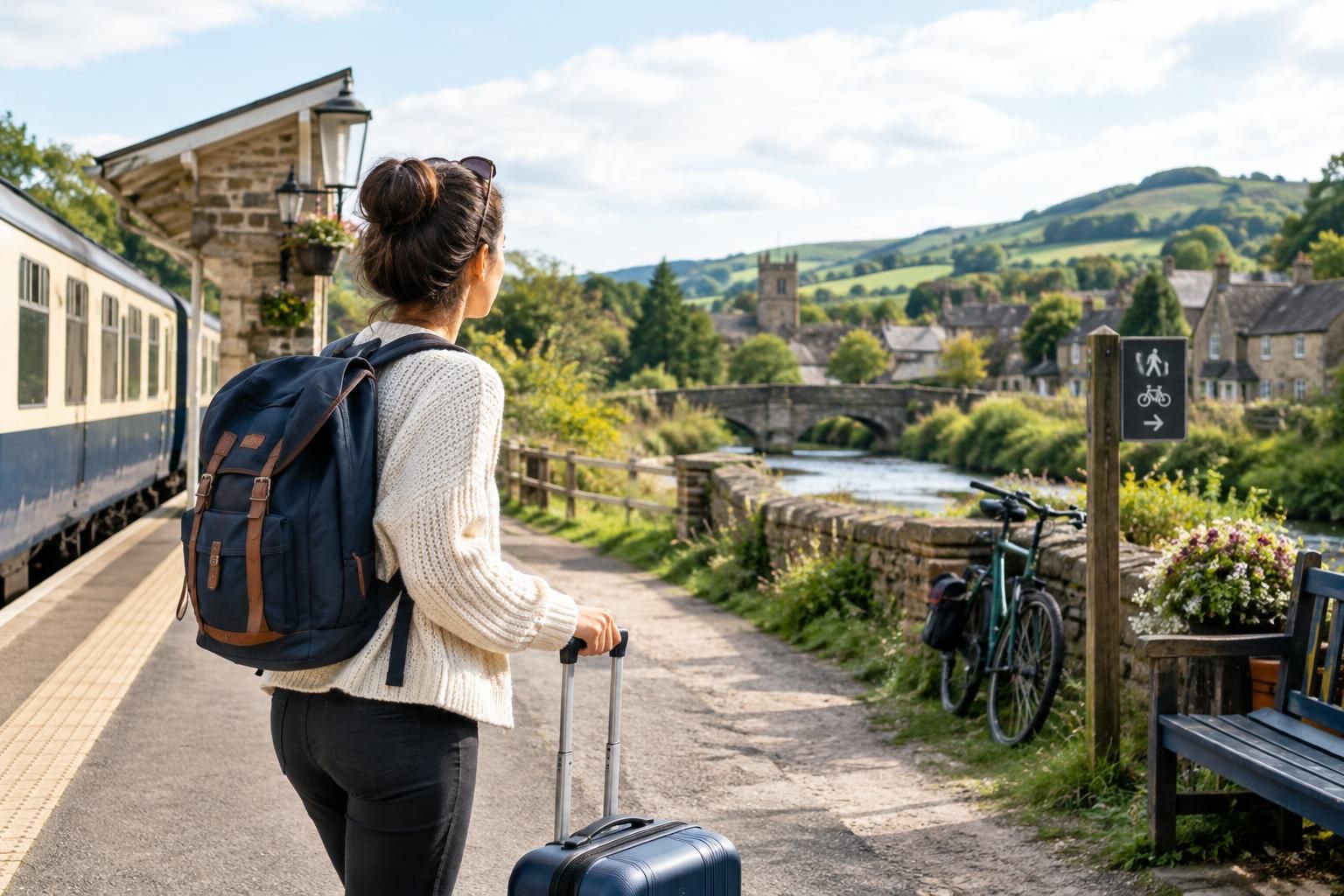
A countryside break does not have to begin at a rental desk. Traveling by train, bus and foot can turn the journey into part of the holiday, with fewer parking decisions and more time to notice the landscape. The challenge is that a destination can look well connected on a map while still being awkward to reach with luggage. Plan from the arrival point outward, and choose a base that supports the kind of days you actually want.
Choose the kind of countryside trip you want
Start with the experience rather than a famous region. Do you want gentle walks from your door, a village with cafés and short excursions, or one scenic railway journey followed by a quiet stay? These require different bases. A remote cottage may suit travelers happy to remain nearby, while a small market town can work better for varied outings.
Write down three essentials and two things you can skip. Your essentials might be a grocery shop within walking distance, access to a lakeside path and a straightforward journey from the nearest city. This makes it easier to reject beautiful but impractical accommodation before becoming attached to it. For a short break, favor fewer connections over a more dramatic setting.
Assess the whole journey, especially the last mile
Treat the trip as a chain: home to the main departure point, intercity travel, local transport and the final approach to your accommodation. Search using the property’s actual location, not just its village name. A station described as serving a town may sit outside the center, and a short distance can feel much longer with bags, hills or an unsuitable walking route.
Before committing, check the relevant operator’s information for your intended travel dates, including return options and any differences between weekdays and weekends. Where a taxi or arranged pickup would bridge the final gap, establish how it would be organized rather than assuming a vehicle will be waiting. Leave room between connections, particularly when the next service would be difficult to replace.
Pick accommodation that works without a vehicle
Location matters more than an extensive facilities list. Compare each property with the arrival stop, food options and at least one outing you could do without another transfer. Check whether the approach involves steep lanes, steps, gravel or a long stretch without a suitable pedestrian route. Online map distances are useful starting points, but they do not describe the effort of the walk.
Think through an ordinary evening as well as an ideal sightseeing day. If you do not want to cook, investigate nearby dining choices for your dates. If you prefer self-catering, identify where groceries would come from and how you would carry them. Ask the accommodation about practical details such as luggage storage, access arrangements or bicycle storage when these affect your plan.
Build outings around loops and simple return journeys
For each full day, choose one main outing and understand how you will get back before deciding how much else to add. A circular walk from your base keeps transport demands low. An out-and-back excursion can also work well because you can turn around according to time and energy. A point-to-point route needs more care when its finish depends on a particular bus or train.
Use a simple three-day structure: arrival and a short local wander, one substantial countryside outing, then a relaxed morning before departure. For a longer stay, alternate transport-dependent excursions with days close to your accommodation. Check route distance, terrain and elevation rather than judging a walk by distance alone, and choose paths appropriate to your group’s abilities and conditions.
Budget for convenience and pack for the transfers
Car-free travel is not automatically the cheapest option. Compare the full arrangement, including local fares, possible transfers, food access and accommodation location. Paying more to stay in a walkable village center may be worthwhile if it removes repeated journeys. Keep some budget unallocated for a simpler return or an alternative transfer if your original plan becomes inconvenient.
Pack for the most awkward part of the route. One manageable bag is easier to move between platforms, buses and uneven village streets than several loose items. Choose luggage you can lift yourself, and keep a lightweight day bag for outings. Carry essentials for the journey and any food needed before your first realistic shopping opportunity, without turning your luggage into a traveling pantry.
Give each day an easy alternative
A useful backup is something you would genuinely enjoy, not simply a consolation activity. Identify a short local walk, a village to explore or a quiet afternoon at your accommodation. If the main outing involves several connections, save the key journey details and relevant booking information somewhere accessible without relying entirely on mobile reception.
Before leaving your base each morning, review the return journey and decide when to turn back or leave the destination. Avoid building the day around the final possible connection when missing it would create a major problem. The aim is not to schedule every hour, but to know which parts of the day are flexible and which deserve a firm boundary.
The strongest car-free countryside plans begin with a usable base, a clear arrival route and rewarding things to do nearby. Choose somewhere that lets you enjoy a good day without arranging another journey, then add excursions selectively. That balance preserves the appeal of a rural escape without making every meal, walk and evening depend on transport.
AI-assisted evergreen travel guide. Featured image is an AI-generated illustration, not a specific product or booking.