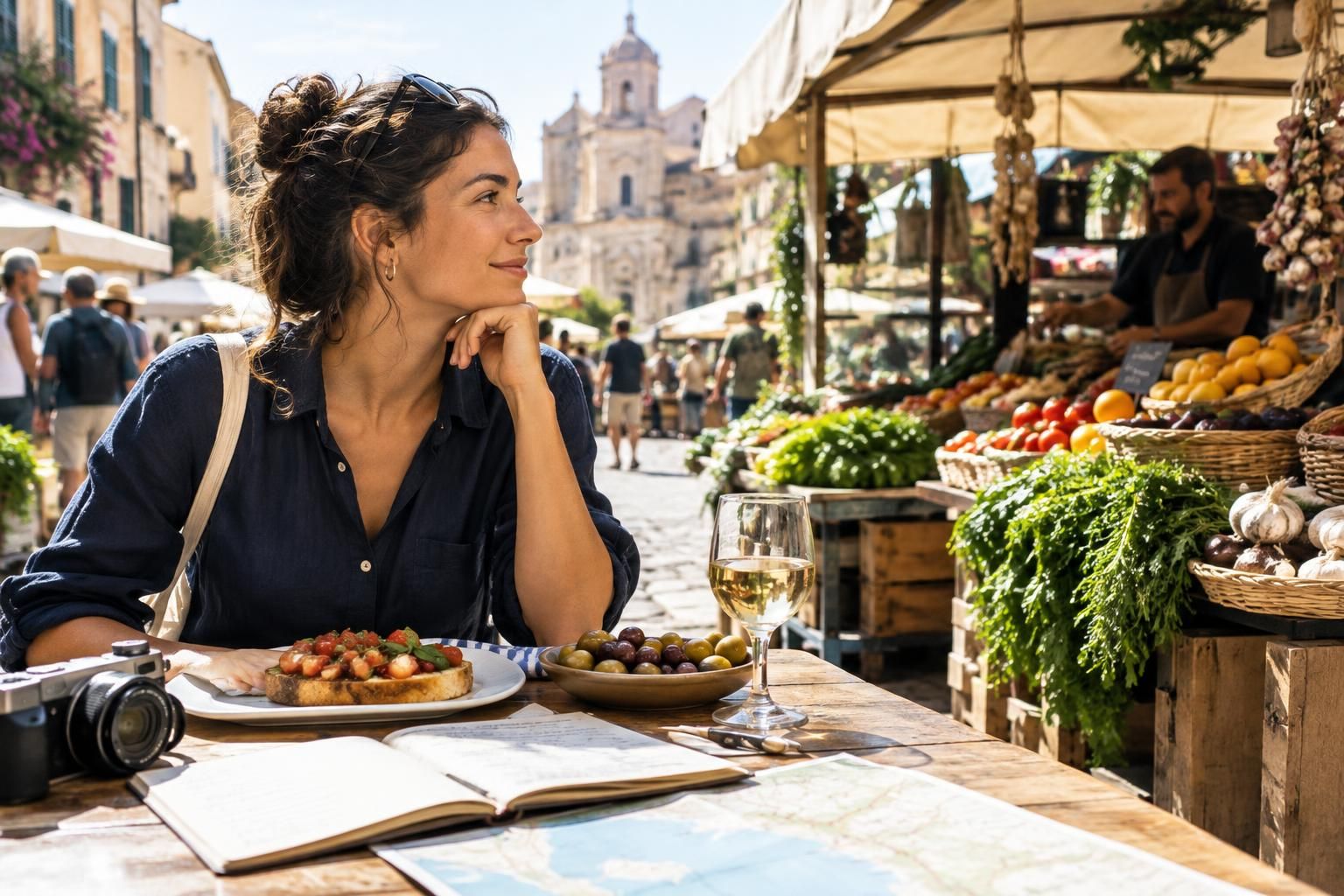
Food can give a trip its direction: a regional dish you want to understand, a market you want to explore or a cooking technique you want to learn. But a food-focused itinerary can become surprisingly rigid when every lunch and dinner is treated as a major event. Travel between restaurants, long meals and overlapping bookings can leave little space for the destination itself. A better plan combines a few intentional food experiences with ordinary meals and unstructured time. Start with what you are curious about, then build a schedule that respects both your appetite and your travel companions.
Choose a food theme, not an endless restaurant list
Give the trip two or three food priorities before collecting places to eat. You might focus on regional baking, coastal cooking or the relationship between a city’s markets and home kitchens. These themes help distinguish a meaningful stop from another appealing recommendation. A bakery visit, for example, might teach you more about local breakfast habits than a second elaborate dinner.
Turn each priority into a different kind of experience. An interest in bread could lead to a neighborhood breakfast, a hands-on class and a visit to a market selling local grains or baked goods. You do not need to book all three. The point is to create variety rather than build a list of restaurants offering similar meals.
Use anchor meals to give the itinerary shape
Choose a small number of anchor experiences that would genuinely disappoint you to miss. These could include a particular restaurant, a guided tasting or a cooking workshop. For a short break, one or two anchors may provide enough structure. On a longer trip, spread them out rather than clustering them into consecutive days.
Protect the time around each anchor. Avoid placing a substantial tasting immediately after a long lunch, or a lengthy dinner just before an early departure. Leave other meals deliberately simple: breakfast near your accommodation, a casual lunch along your sightseeing route or an evening with no fixed choice. Flexibility is part of the plan, not a gap that needs filling.
Map food stops alongside the rest of the day
Group possible meals by neighborhood rather than ranking every restaurant across the whole destination. For each area you expect to visit, save a few contrasting options: somewhere for a quick bite, somewhere to sit down and perhaps a bakery or market. This reduces the temptation to cross town repeatedly just to follow a food list.
Treat an out-of-the-way meal as an excursion in its own right. Consider the journey in both directions, the likely length of the meal and what else you would enjoy nearby. A regional lunch paired with a village walk can make a satisfying day. The same lunch squeezed between distant attractions may feel like a transport problem. Check relevant booking arrangements and service information before committing your day.
Plan for appetite as carefully as time
A free hour does not necessarily mean you will want another food experience. Rich meals, repeated tastings and unfamiliar eating rhythms can make an ambitious schedule less enjoyable. Alternate more substantial occasions with lighter, less structured ones. After a long dinner, leave the following morning open rather than committing to an extensive breakfast tasting.
If several small stops are central to your plans, decide which are tastings and which replace a meal. Otherwise, a market visit, a café break and lunch can accidentally become three full eating occasions. Leave room to skip a stop without feeling that the day has failed. For groups, make it easy for someone to join the walk or conversation without ordering at every venue.
Match the budget and accommodation to your priorities
Separate spending on everyday meals from spending on special food experiences. Include drinks, transport to distant venues and any deposits or cancellation terms you encounter while booking. Rather than assuming every day deserves the same allowance, decide where you want to concentrate your budget. One memorable workshop might matter more to you than several formal dinners.
Choose accommodation that supports the way you want to eat. A well-placed room near the neighborhoods you will explore can reduce meal-related travel. A kitchenette may be useful if market shopping is part of the trip, but it is less valuable if nobody wants to cook. Even modest facilities for storing a few groceries can support a slower breakfast or a quiet evening between bigger outings.
Make space for different tastes and unexpected finds
Before booking shared experiences, ask companions about dietary requirements, disliked ingredients, preferred meal lengths and comfort with unfamiliar dishes. Establish which meals everyone wants to share and where splitting up would be welcome. For requirements that need specific handling, ask venues directly what they can accommodate rather than relying on a dish name or a general description.
Keep a short backup list, not a second complete itinerary. A nearby casual option and a simple meal idea are usually more useful than dozens of saved venues. Leave at least one meal undecided so that a bakery window, a conversation or an appealing neighborhood can influence your choice. The freedom to change direction often makes food travel feel exploratory rather than administrative.
A rewarding food-focused trip needs contrast: special meals and ordinary breakfasts, planned experiences and spontaneous choices, time at the table and time exploring beyond it. Choose a few clear priorities, arrange them sensibly across the map and leave enough space to arrive hungry and interested. The aim is not to complete a restaurant list, but to understand a place more deeply through what and how you eat.
AI-assisted evergreen travel guide. Featured image is an AI-generated illustration, not a specific product or booking.