A local market can add texture to a trip: unfamiliar ingredients, regional crafts, everyday shopping and the chance to assemble a picnic. But a market visit works best when it has a clear place in your day. Arrive after a large breakfast, bring a full day bag or squeeze it between timed attractions, and you may find yourself browsing without enjoying much. The goal is not to see every stall. It is to choose a market that suits your interests, give yourself a manageable purpose and think through what happens after you leave.
Choose the kind of market experience you actually want
Start with the experience rather than the market’s reputation. A produce market suits travelers who enjoy ingredients and everyday shopping. A prepared-food market can anchor a casual meal. A craft market offers opportunities to compare materials and techniques, while a flea market rewards patient browsing. These experiences require different amounts of time, attention and carrying capacity.
Give the visit one main purpose and one optional extra. For example, plan to buy picnic ingredients, with a little time left for ceramics, rather than expecting breakfast, antiques, souvenirs and photography in one outing. If your group has different interests, choose an agreed meeting point and browse separately for part of the visit instead of moving everyone through every aisle.
Fit the visit into the right part of your route
Look at the market in relation to your accommodation and the rest of the day. A shopping-focused visit fits well before a return to your room. A food-focused visit belongs near a meal break. A brief look around can work between nearby activities, but a substantial detour makes less sense if you only have time to rush through.
Before setting your itinerary, check the market’s operating days and any information about its different sections. Do not assume that a building’s hours describe every stall, or that every market is best visited early. Decide what matters most: browsing choice, a particular meal or a quieter pace. Leave some space afterward so a queue or an interesting conversation does not disrupt your next booking.
Take a first look before making small decisions
For a compact market, begin with a short orientation loop. Notice entrances, seating, food areas and the stalls that genuinely interest you. In a large market, explore one section first rather than trying to survey the entire place. A quick look helps you avoid filling your bag at the entrance and discovering something more suitable later.
Keep a simple mental shortlist: somewhere to eat, one item to compare and perhaps one stall to revisit. Note a nearby landmark or aisle label when something catches your eye; rows of similar stalls can be difficult to retrace. Browsing does not need to become a research project, but a little orientation can reduce backtracking and impulse purchases.
Plan food purchases around what happens next
If you want a meal, leave room for it rather than arriving straight after breakfast. Decide whether you prefer one substantial dish or several smaller purchases, and agree on a rough spending limit before ordering. With companions, establish whether you are sharing or buying separately so that enthusiasm does not result in more food than anyone wants.
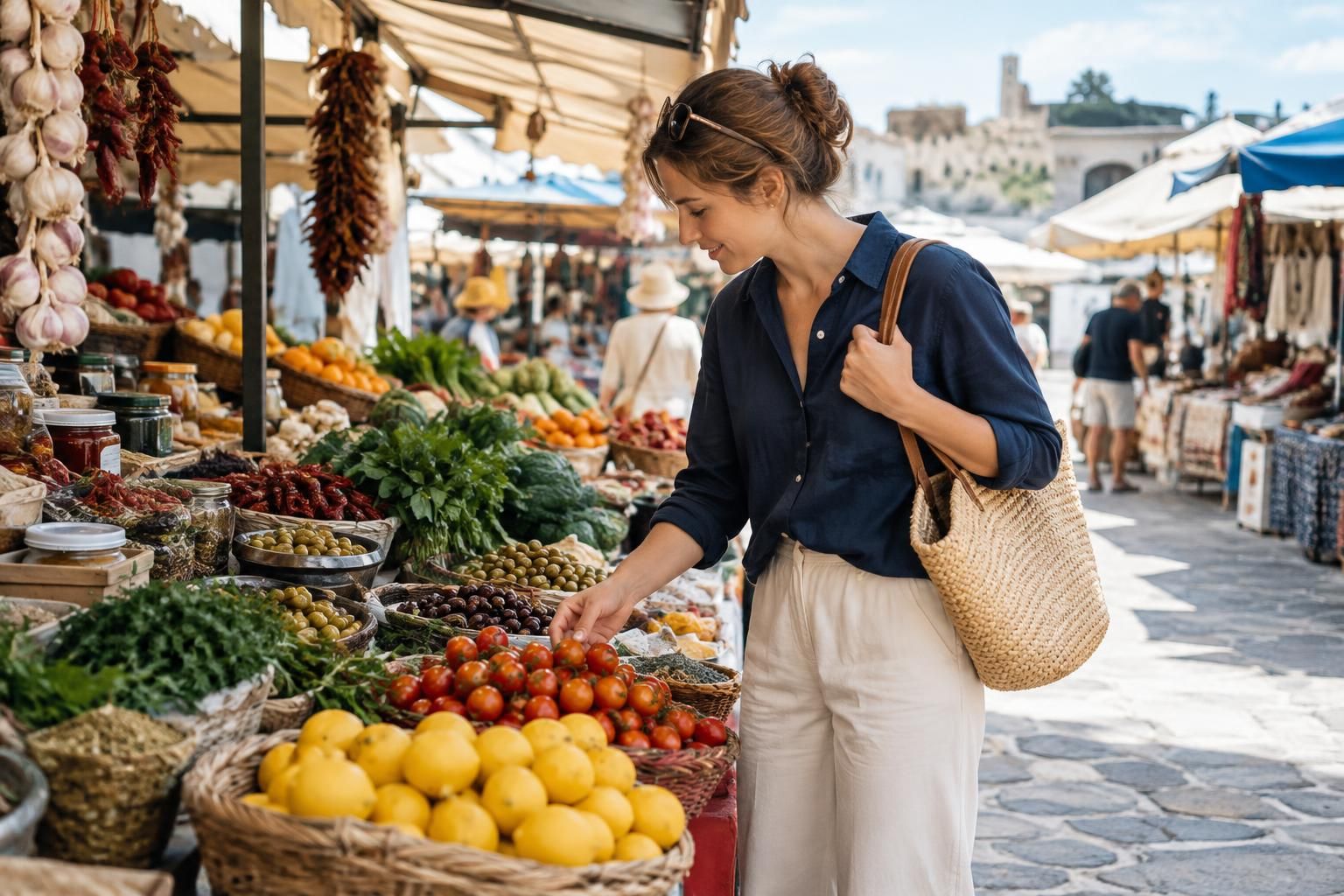
For picnic or self-catering supplies, buy for a specific meal. Bread, fruit and a few complementary ingredients are easier to use than a collection of unrelated temptations. Consider access to refrigeration, utensils and a place to eat. Ask vendors about unfamiliar ingredients and storage needs rather than assuming that everything displayed can comfortably accompany you through a long afternoon.
Shop with your luggage and budget in mind
Before buying a souvenir, picture its journey home. A bowl may need protective wrapping; a print may need a rigid sleeve. Check dimensions and weight against the space you actually have, not the space you hope to create. If you are considering food, plants or animal-derived materials, check the relevant transport and destination restrictions before committing.
Use a separate market spending allowance if small purchases tend to accumulate. Carry payment options that suit the market, without assuming every stall accepts cards or has change for large notes. Ask prices clearly, and do not assume bargaining is expected. For handmade items, questions about materials, care and how something was made are more useful than focusing only on the lowest price.
Keep browsing considerate and know when to leave
Markets are workplaces as well as places to explore. Step aside when deciding what to buy, keep bags out of narrow passages and ask before touching delicate goods or photographing people. Follow any guidance about samples and handling produce. If you want a longer conversation with a vendor, notice whether other customers are waiting.
Give yourself a clear finishing point: lunch completed, picnic packed or one chosen purchase made. You do not need to cover every aisle for the visit to count. A small reusable bag can help contain purchases, but avoid buying more simply because you brought carrying space. Leaving while you still have energy makes the market a satisfying part of the day rather than an outing you need to recover from.
A rewarding market visit starts with a simple match between the place, your interests and the rest of your itinerary. Choose a purpose, allow time to browse and buy only what you can use or carry comfortably. Whether you leave with lunch, a carefully chosen object or nothing at all, the visit can still offer a memorable change of pace.
AI-assisted evergreen travel guide. Featured image is an AI-generated illustration, not a specific product or booking.