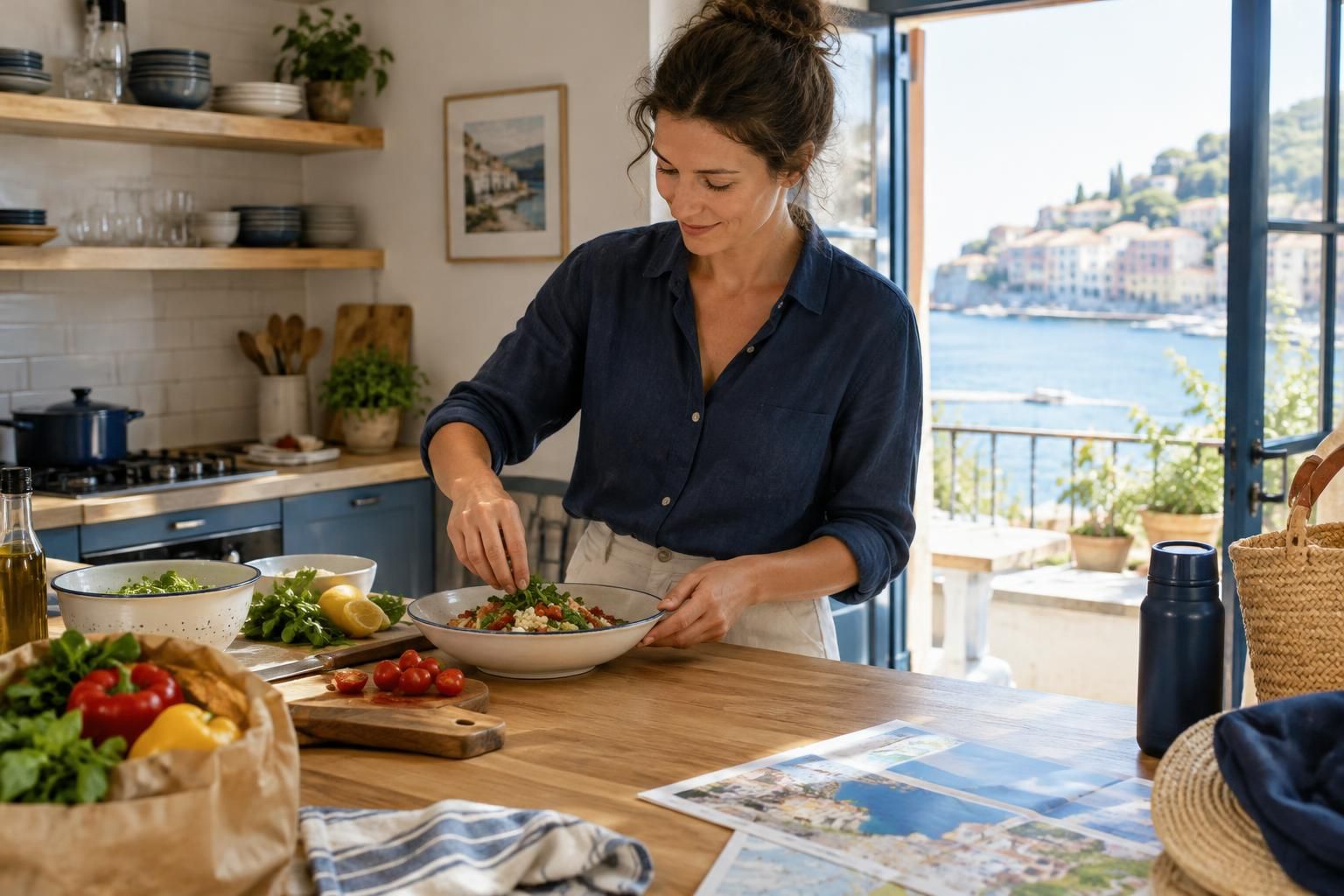
A self-catering holiday can mean breakfast whenever you wake up, picnic supplies ready for a day out and somewhere comfortable to eat after an excursion. It can also mean grocery shopping, washing dishes and discovering that a listing’s kitchen is less useful than expected. The difference often comes down to planning. Rather than recreating your cooking routine away from home, decide which meals a kitchen will genuinely improve and organize the rest of the trip around that limited role.
Decide what you want the kitchen to do
Start with your holiday rhythm, not a menu. If you expect to leave early and return after dinner, you may only need breakfast facilities and a fridge for drinks. A beach holiday with leisurely afternoons might suit simple lunches at home. For a family that prefers quiet evenings, preparing several dinners could be worth the effort.
Choose a realistic level of self-catering: breakfast only, breakfast plus picnics, or a few complete evening meals. This decision helps you judge accommodation, shopping needs and location. It also prevents the assumption that booking a kitchen commits you to using it every day.
Match the accommodation to the meals
Look beyond the word kitchen. For cold breakfasts and sandwiches, a fridge, basic utensils and a workable preparation surface may be enough. Cooking dinner introduces other requirements: suitable pans, a hob, enough plates and somewhere everyone can sit. If a particular appliance matters, ask about it before booking rather than inferring it from photographs.
Consider cleanup and storage as carefully as cooking. A dishwasher may be valuable for a larger group, while a tiny fridge can limit shopping for several days. Check whether essentials such as washing-up liquid, cloths and bin bags are supplied. Treat anything unspecified as something to confirm, not something guaranteed to be waiting.
Choose a location that makes provisions easy
Map the relationship between your accommodation, your likely outings and a practical place to buy groceries. A charming rural cottage may require a deliberate shopping stop, while an apartment near small food shops may make frequent, lighter purchases easier. Neither is automatically better; the important question is whether the arrangement fits your transport.
Without a car, think about the journey back with shopping, including hills, stairs and the final walk from public transport. With a car, consider whether collecting groceries fits naturally into your arrival route. Avoid choosing an inconvenient base solely for its kitchen: repeated detours can outweigh the convenience of eating in.
Build a small meal framework, not a full schedule
Choose a handful of meals that share ingredients and require little equipment. Bread, eggs, tomatoes and fruit can support breakfasts and light lunches. Pasta, beans and vegetables can form flexible dinners. Favor meals you already know how to make, with ingredients that are easy to substitute if the local selection differs.
Leave deliberate gaps for eating out, leftovers and changing plans. A useful starting point for a week might be breakfast supplies, two easy dinners and picnic ingredients, followed by a smaller top-up shop. You are creating options, not assigning every meal in advance.
When traveling with others, agree on the division of effort before departure. One person might cook while another clears up, or pairs could take responsibility for different evenings. Also clarify whether restaurant meals and shared groceries come from the same budget. A simple agreement avoids making the keenest cook the default holiday caterer.
Keep arrival day and sightseeing days simple
Do not make the first evening depend on an ambitious recipe or a perfectly timed shopping trip. Decide on an easy arrival meal and an alternative, such as eating before reaching the accommodation. Once you know what the kitchen actually contains, you can make better choices for the rest of the stay.
On busy sightseeing days, use the kitchen to remove decisions rather than add tasks. Have a repeatable breakfast and keep picnic preparation brief. If you expect a long outing, make dinner an eating-out night or choose something quick to assemble. Schedule any enjoyable cooking for a slower day when it feels like part of the holiday.
Shop in stages and plan the final meals
Check cupboards and equipment before making the main shopping list. Buy modest quantities at first, especially of bulky staples and ingredients used in only one dish. Larger packs are not necessarily better value if much of the contents will remain behind. A short stay usually rewards a short ingredient list.
A couple of days before departure, review what remains and let that guide your final meals. Stop replenishing automatically, and avoid relying on taking leftovers across borders or onto onward transport, where restrictions and practical limits may apply. Follow the property’s instructions for clearing the fridge and disposing of waste, and leave enough departure time for the required kitchen cleanup.
Successful self-catering is not measured by how many meals you cook. It is measured by whether having a kitchen makes the holiday easier. Choose accommodation for your actual needs, keep the food plan flexible and share the work explicitly. A few reliable meals and well-placed shopping stops can deliver the freedom of self-catering without turning your time away into another week of household chores.
AI-assisted evergreen travel guide. Featured image is an AI-generated illustration, not a specific product or booking.