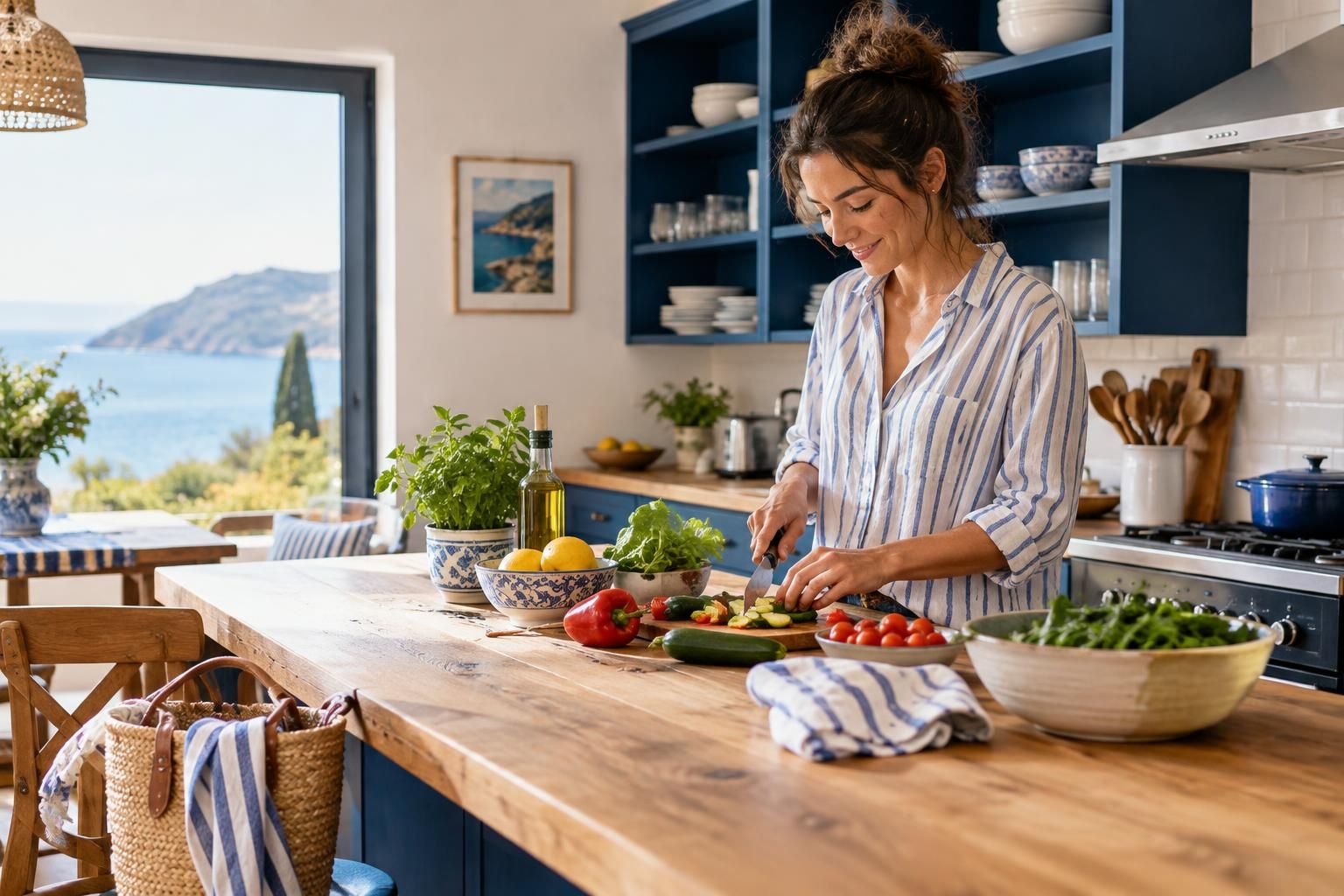
A self-catering stay can give a trip a relaxed rhythm: breakfast when you want it, a simple dinner after a long outing and somewhere to keep snacks for tomorrow. But having a kitchen does not mean you need to recreate your household routine away from home. The most useful approach is to decide which tasks genuinely improve your trip and which you would rather leave behind. With a modest meal plan, a realistic shopping list and a few accommodation checks, self-catering can support your holiday rather than become its main activity.
Decide what you actually want the kitchen to do
Start with your travel style, not an ambitious menu. If you expect to spend most days exploring, a kitchen might only need to handle breakfast, packed snacks and an occasional light supper. For a beach stay with long afternoons at your accommodation, preparing more meals may fit naturally. Neither approach is more successful simply because it uses the kitchen more.
Agree on a baseline before booking. For example, plan to eat breakfast in, carry lunch on excursion days and choose dinner according to your energy. This gives you a useful framework without committing every evening to cooking. Include meals out in the budget from the beginning so they feel like part of the plan, not a failure to economize.
Match the accommodation to your real cooking needs
The word “kitchenette” tells you little about what you can comfortably prepare. Look for the equipment your intended meals require, such as a refrigerator, hob, microwave or basic cookware. If details are unclear, ask specific questions rather than assuming a kitchen includes everything. A setup suitable for toast and coffee may be frustrating if you intend to cook pasta for four.
Consider the space around the kitchen, too. A usable table, enough seating and somewhere to put groceries can matter more than an extra appliance. Check the accommodation’s stated expectations for washing up, rubbish and departure cleaning. For a short stay, a simpler property with fewer household tasks may suit you better than a larger place with more upkeep.
Make the first grocery shop small and deliberate
Avoid buying a full week of food immediately after arrival. Your appetite, plans and enthusiasm for cooking may change once you settle in. Begin with breakfast for a couple of mornings, drinks, a few portable snacks and ingredients for one easy meal. Add to the supply when you know what you are actually using.
Choose ingredients that work in several combinations. Bread, eggs, tomatoes and fruit could cover breakfast, a picnic and a light dinner, depending on your preferences and available equipment. Buy small quantities of items you would not want to carry onward. Before purchasing staples, check what the accommodation provides, but do not build your meal plan around an assumed supply of oil, seasoning or coffee.
Use a few easy meals instead of a detailed menu
Keep two or three low-effort meal ideas in reserve. Think of a cold plate with bread and local produce, a one-pan dish or pasta with a simple sauce. Choose meals you already know how to make and that suit the actual kitchen. A holiday kitchen is rarely the best place for a complicated recipe requiring several pans and unfamiliar tools.
Connect shopping with experiences you already want to have. A browse through a food market or neighborhood bakery can supply lunch as well as a pleasant outing. Still, leave room to eat elsewhere when an appealing opportunity appears. The aim is to have a convenient alternative available, not to rush back because an elaborate dinner plan is waiting.
Share the work and give chores a boundary
When traveling with others, discuss the work beyond cooking: choosing meals, buying groceries, washing dishes and clearing the table. Divide tasks explicitly rather than assuming they will balance themselves. One person might prepare dinner while another handles the cleanup, or pairs could take turns managing a complete meal. Keep arrangements simple enough that nobody becomes the permanent holiday housekeeper.
Set a modest daily limit on household work. A quick kitchen reset after breakfast and washing up after dinner may be enough for your stay, alongside any property requirements. Avoid adding routines simply because you would do them at home. If preparing a meal would consume the only free hour in a busy day, use the alternative you already allowed for.
Plan the final meals before buying more
As departure approaches, take stock before shopping again. Build the next meal around what remains, and replace only what you need. Breakfast and snacks are easy to overbuy because each item seems small, yet together they can leave you with several bags to sort out when you should be packing.
Make the last evening especially straightforward. Choose a meal with little preparation and few dishes, or eat out if that fits your budget. Follow the accommodation’s instructions for leftover food and waste rather than assuming unopened items can stay. Keep departure morning focused on breakfast, a final kitchen check and leaving on time.
A successful self-catering holiday is not measured by how many meals you cook. It is measured by whether the setup makes your days easier. Choose a kitchen that matches your needs, shop in manageable amounts and share the work clearly. With simple meals and permission to change your mind, you can enjoy the flexibility of a temporary home without bringing every household responsibility along.
AI-assisted evergreen travel guide. Featured image is an AI-generated illustration, not a specific product or booking.