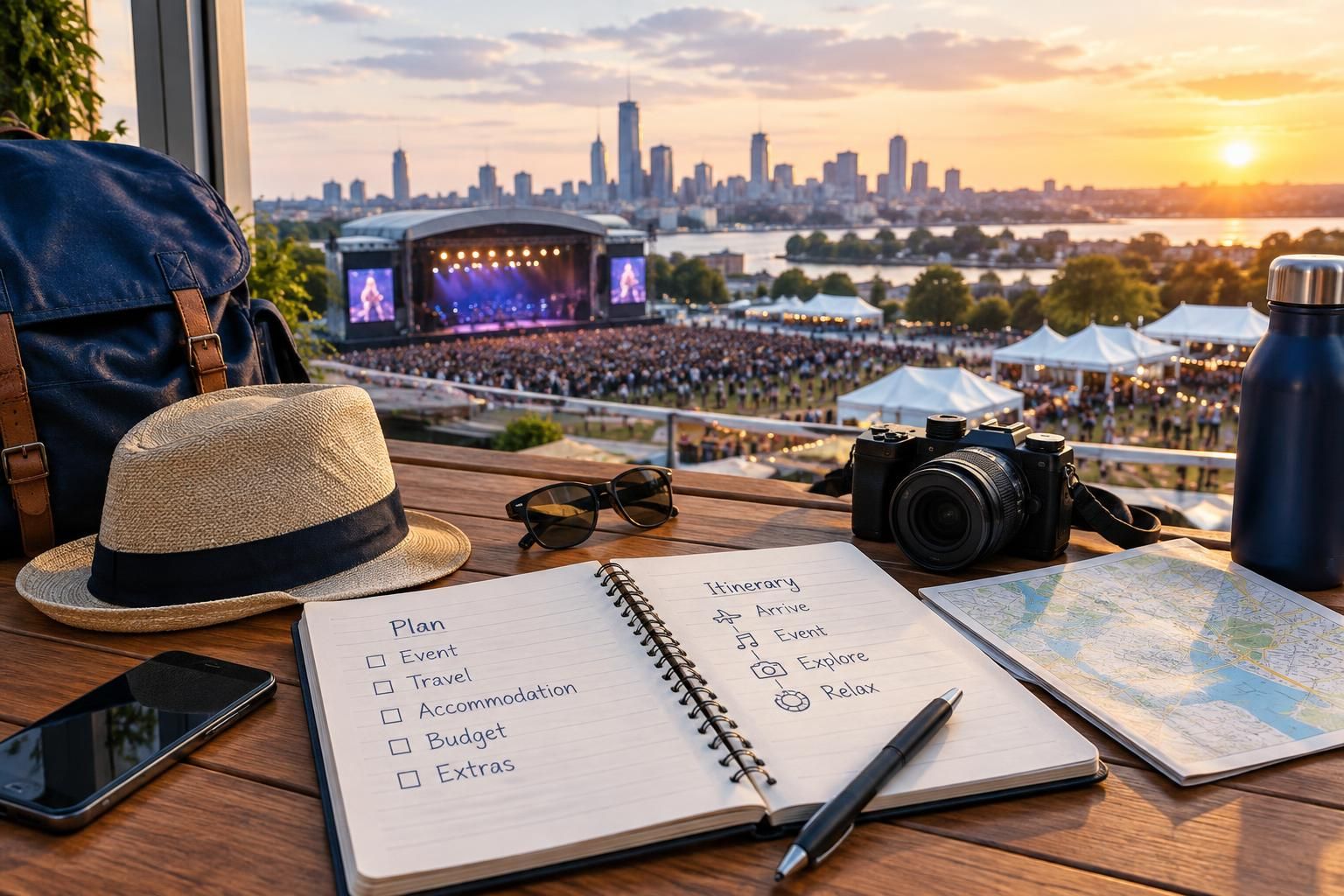
A concert, festival or sporting event can be a compelling reason to travel somewhere new. It gives the journey a clear purpose and can make choosing dates easier. The challenge is that one part of your trip is fixed while everything around it still needs room to breathe. A delayed arrival, an inconvenient hotel location or an overambitious sightseeing plan can create unnecessary pressure. The most useful approach is to treat the event as the anchor, then build a manageable trip around its location, timing and importance to you.
Define what the event needs from your trip
Start by deciding whether the event is the main reason for traveling or simply something you would enjoy while visiting. If missing it would make the whole journey feel wasted, your plan needs more margin. If it is an optional addition, you can give greater weight to accommodation value, sightseeing and convenient travel dates.
Write down the details that affect other decisions: the venue, the event date, whether it spans several days and whether your participation involves a fixed entry time. Separate confirmed details from assumptions. An announced performance time, for example, is not the same as knowing when you should arrive or when you will be ready to leave.
Resolve the booking dependencies before committing
Identify which booking makes the others worthwhile. For a trip built entirely around a particular match or performance, admission may be the critical dependency. For a broader holiday with an optional festival visit, transport and accommodation may matter more. Avoid treating an intention to attend as equivalent to having the admission you need.
Before making nonrefundable commitments, compare the relevant cancellation and change terms. Check that the event details, travel dates and accommodation nights fit together. If you are considering a package, establish what is included rather than assuming it covers admission, transfers or every night you need. Keep uncertain elements clearly labeled in your planning notes.
Give your arrival a realistic margin
Work backward from the point when you need to be at the venue, not merely from the advertised start. Your arrival sequence may include reaching the city, collecting luggage, traveling to your accommodation, eating and finding the correct entrance. Each step uses time even when nothing goes wrong.
For an event you would be deeply disappointed to miss, arriving the previous day can be worth considering, especially after a long or complicated journey. This is not a guarantee against disruption, but it avoids making every connection part of a single deadline. If same-day travel is your only practical option, keep the rest of that day simple and choose the least complicated workable route.
Choose accommodation around the whole evening
A hotel near the venue is not automatically the best base. Compare three journeys: arrival point to accommodation, accommodation to venue, and venue back to accommodation. A central location with a straightforward route may suit a longer city break better than a room beside an outlying event site.
Pay particular attention to the return journey. Consider whether the route remains practical at your likely departure time, how much walking it involves and what alternative you could use if your first option is unavailable. Check current transport details close to departure rather than relying on daytime journey estimates. If companions may leave at different times, choose a plan that does not require everyone to stay together.
Budget for the event's surrounding costs
Admission is only one part of an event-centered trip. Build a separate allowance for local transport, meals around the venue, any required luggage storage and optional purchases. If attending means adding an extra accommodation night or choosing a less convenient flight, include that difference when deciding what the experience is worth to you.
Set priorities before small extras accumulate. You might prefer a more comfortable room after a long festival day, a convenient return journey after an evening performance, or a special meal on a quieter day. Discuss these choices with travel companions early. Different budgets are easier to manage when optional spending is clearly separated from shared essentials.
Keep the surrounding itinerary light but worthwhile
Treat event day as a substantial activity in its own right. Even a seated performance can involve travel, waiting, crowds and a late finish. Choose a nearby walk, an unhurried meal or one modest sightseeing stop beforehand rather than filling every available hour. For a multi-day festival, avoid assuming you will have the energy for a second full sightseeing itinerary.
Give the following morning similar thought. A late night and an early departure can be an uncomfortable combination. Where your dates allow, leave time for breakfast, packing and a calm transfer. Add one or two experiences unrelated to the event elsewhere in the trip, such as a neighborhood market, a museum or a scenic walk. These give the destination its own place in your memories.
A well-planned event trip protects the experience you came for without making the entire journey depend on a perfect day. Resolve the key booking dependency, allow sensible arrival time and choose accommodation with the return journey in mind. Then leave enough space to enjoy both the event and the destination around it.
AI-assisted evergreen travel guide. Featured image is an AI-generated illustration, not a specific product or booking.