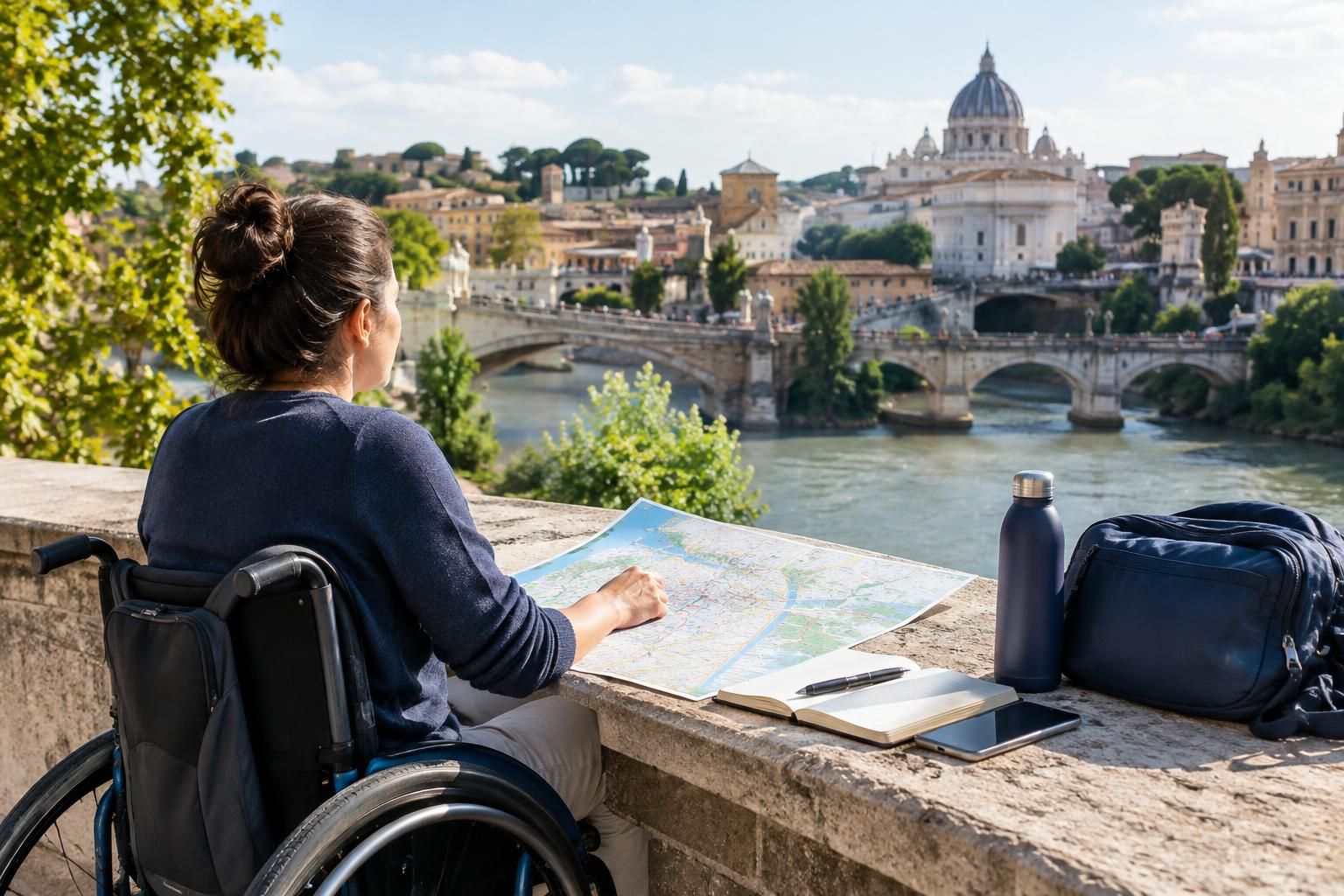
A destination can sound accessible while still presenting an awkward step at a hotel entrance, a station without a usable lift or a waterfront reached only by stairs. Planning for step-free access means looking at the whole journey rather than relying on a single label. Whether you use a wheelchair, travel with a mobility aid or simply need to avoid stairs, the most useful approach is to define your requirements, investigate the connections between places and leave room for alternatives. A well-chosen neighborhood and a few precise questions can matter more than a long list of attractions.
Start With Your Specific Access Requirements
Write a short access brief before comparing destinations. Separate essential requirements from preferences: a continuous step-free route, a lift between floors, space beside the bed, a particular bathroom layout or somewhere to sit during waits. If you use a mobility aid, keep its relevant dimensions handy. Step-free access describes the absence of steps; it does not automatically describe doorway widths, gradients, surfaces or usable facilities.
Add the conditions that affect how you enjoy a day. You might manage a longer outing on smooth paving but find a short cobbled route difficult. Another traveler may need frequent seating rather than shorter distances. This brief gives you a consistent way to assess accommodation and experiences without repeatedly starting from a vague question such as, “Is it accessible?”
Compare Neighborhoods Before Choosing Attractions
Begin with two or three potential bases and examine the ordinary journeys each would require. Look at the route from accommodation to transport, somewhere to eat and a few activities you genuinely want to do. A central address is not necessarily convenient if it sits above a steep hill or across a station with complicated level changes.
Favor a base that supports several satisfying outings without demanding transfers every day. For example, a neighborhood with a level riverside path, nearby galleries and several dining options may work better than a picturesque hillside quarter. Maps and street imagery can help identify questions, but they may not show temporary barriers, subtle slopes or the current condition of a route. Treat them as planning aids, not confirmation.
Check Transport as a Complete Chain
Break each major transfer into stages: arrival platform or terminal, exit route, onward vehicle, drop-off point and accommodation entrance. Ask transport operators about the specific stations, stops and services you intend to use. Relevant questions may include boarding gaps, lift access, assistance arrangements and whether a mobility aid can remain occupied during the journey. Requirements and facilities can differ between individual services.
For a taxi or private transfer, describe what you need rather than requesting only an “accessible vehicle.” Explain whether you need ramped boarding, space for a folded aid or room for luggage alongside equipment. Include waiting and loading time in your plan. Where a journey depends on a particular lift or boarding arrangement, identify an alternative route and check how to obtain operational updates closer to travel.
Ask Accommodation Questions About the Actual Room
A property description may refer to the building generally, not the room category you are considering. Ask about the route from the street to reception, from reception to the room and from the room to breakfast or other facilities you expect to use. Clarify whether “lift access” still involves entrance steps, short staircases or doors that are difficult to manage.
Request details tied to your access brief, such as doorway measurements, bed height, bathroom layout and maneuvering space. Photographs showing the entrance and bathroom from several angles can be more informative than a broad assurance. Ask whether the room with the discussed features can be assigned to your booking, and keep the written response with your reservation notes. Also consider whether the location makes returning for a break practical.
Build Days Around Routes, Not Just Sights
Choose one main experience for each day, then assess how you will reach it and move through it. A museum may have a step-free entrance away from the main doors; a garden may contain both paved paths and gravel sections. Ask which areas match your requirements, whether seating is available and whether any essential facilities sit on a different level.
Group nearby activities only when the connecting route also works. Two places that look adjacent on a map may be separated by stairs or a steep street. A practical day might pair one gallery with lunch nearby and an optional waterfront outing, rather than linking several distant sights. Leave enough time to use the suitable entrance without feeling rushed.
Keep Alternatives and Access Notes Together
Create a compact daily note containing the intended entrance, transport details, relevant booking correspondence and a workable alternative. Save information offline where possible. Describe alternatives concretely: a different station exit, a nearby indoor activity or a shorter route back to your base. A general instruction to “take a taxi” is not much help if the vehicle must meet particular requirements.
Before committing to bookings, consider what happens if a key facility is unavailable. An accommodation option with only one workable access route may call for more flexible terms. Closer to departure, reconfirm the arrangements your trip depends on and ask about known changes. This cannot eliminate uncertainty, but it helps you distinguish minor inconveniences from issues that would require changing the plan.
Planning with step-free access in mind is less about finding a universally accessible destination than matching specific places and routes to your needs. Prioritize a useful base, ask precise questions and check the connections between each part of the day. With fewer unresolved details and realistic alternatives, you can spend less of the trip solving access problems and more of it enjoying the experiences you chose.
AI-assisted evergreen travel guide. Featured image is an AI-generated illustration, not a specific product or booking.