A winter city break can offer atmospheric streets, unhurried meals and a good reason to linger in galleries or cafés. But in destinations with short winter days, an itinerary that looks comfortable on a map can leave you reaching the viewpoint after the view has disappeared. The answer is not to squeeze everything into the brightest hours. It is to decide which experiences genuinely need daylight and let the rest of the trip fit around them. This approach is especially useful in higher-latitude cities, where the difference between a summer itinerary and a winter one can be substantial.
Separate daylight-dependent plans from flexible ones
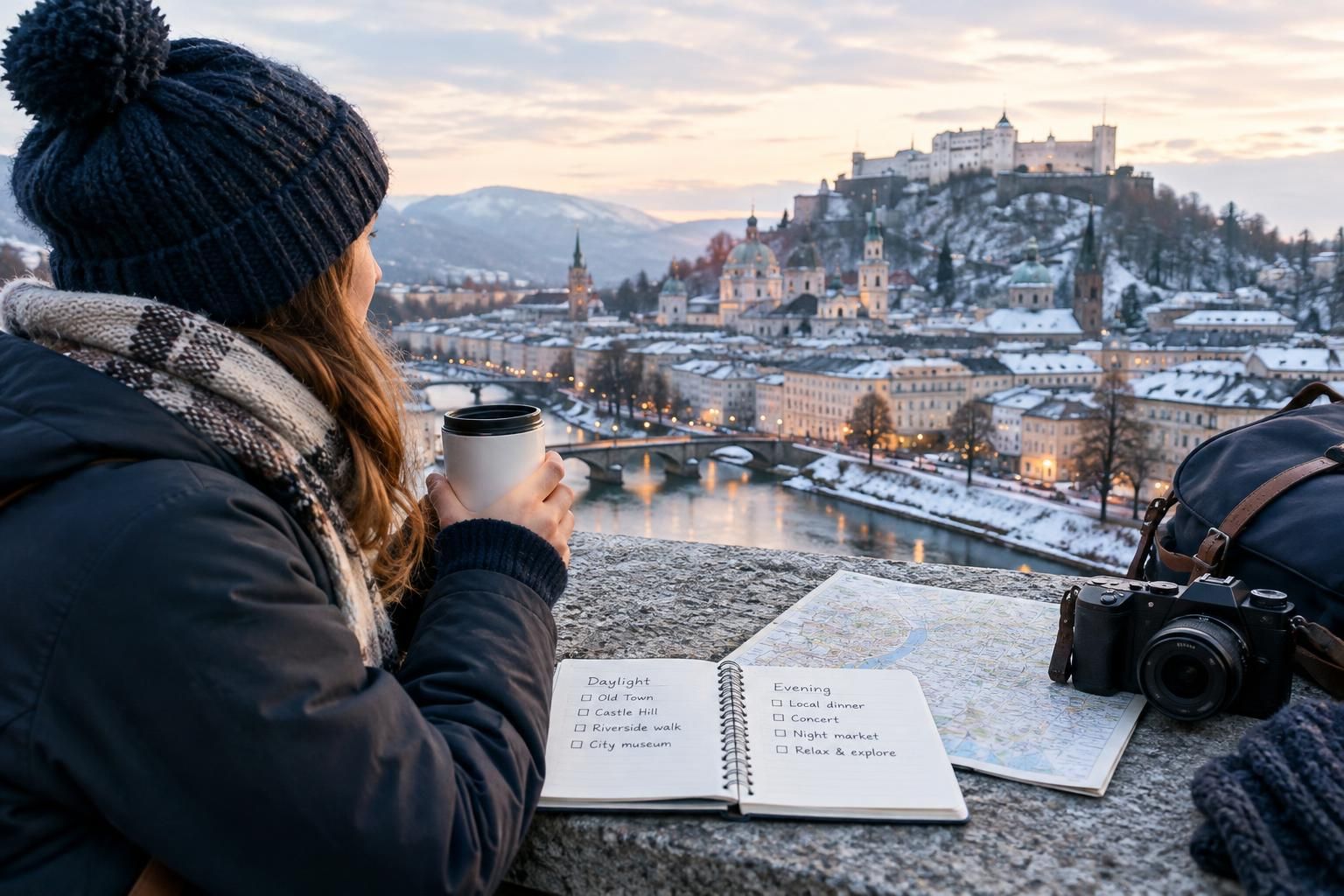
Start by sorting your wish list into three groups: experiences that need daylight, experiences that work in either light or darkness, and activities you would actively enjoy after dark. A riverside walk, botanical garden or hilltop panorama belongs in the first group. A museum or long lunch may fit the second. A performance or an evening meal can provide the shape of the third.
Be specific about why you want to visit somewhere. A historic district might appeal because of its architecture, which you want to see clearly, or its evening atmosphere. Those are different planning needs. Check approximate daylight hours for your destination and travel dates before assigning activities, rather than assuming that late afternoon will still be suitable for sightseeing.
Build each day around one outdoor anchor
Choose one daylight-dependent priority for each full day, then place it within the most useful stretch of daylight. That could be a waterfront neighborhood, a palace garden or a walk linking several architectural landmarks. Give it enough room to include stops without turning the outing into a race against sunset.
Group nearby sights around that anchor instead of crossing the city repeatedly. For example, combine a morning market visit with a walk through the surrounding streets, then move indoors for a late lunch and gallery visit. Keep a second outdoor stop optional. If conditions are pleasant and energy is good, you can extend the walk; otherwise, your main reason for going out is already covered.
Choose a base that reduces daily friction
For a short winter trip, accommodation location can matter more than an impressive list of room features. Compare bases by the journeys you will actually make: reaching your outdoor priorities, returning for a break and finding dinner. A convenient transport connection can be more useful than a geographically central address with awkward routes.
Consider how comfortable the accommodation will be during time indoors. Somewhere to sit, space for damp outerwear and a practical breakfast arrangement can make slower mornings or afternoon breaks easier. If you expect to return before going out again, check whether that journey is realistic. A distant room may be less appealing once reaching it means giving up a sizeable part of the day.
Give evenings a purpose without filling every hour
Darkness does not have to signal the end of the sightseeing day, but neither does every evening need a major booking. Choose a few experiences that do not depend on a view: a concert, a cooking class, a leisurely dinner or an indoor attraction with suitable visiting hours. Confirm actual operating times before building your itinerary around them.
Leave some evenings simple. A neighborhood meal followed by reading or a quiet drink can balance a day spent outside. Avoid relying on seasonal markets, decorative lighting or special events unless you have checked their dates. Your basic plan should still feel worthwhile without temporary attractions, with any seasonal additions treated as a bonus.
Protect daylight from meals, transfers and ambitious day trips
Look closely at what occupies the middle of each day. A lengthy hotel breakfast, a cross-city transfer and an early sit-down lunch can consume much of your outdoor window without providing the experience you traveled for. You do not need to rush meals; simply decide which ones deserve time and place them deliberately.
Apply the same test to excursions. Work through the whole journey, including reaching the station, waiting, onward connections and getting from the arrival point to the sight. Ask how much usable daylight remains at the destination. A nearby town with a compact center may suit a winter day better than a distant landscape reached through several connections. Staying in the city is a valid choice when the excursion would be mostly transit.
Pack for switching between outdoors and indoors
Plan clothing around repeated transitions, not just the coldest moment outside. Removable layers are easier to adapt when moving from a windy square into a warm gallery. Choose footwear suited to the surfaces and conditions you expect, and carry a manageable bag so coats, gloves and other essentials do not become a constant juggling exercise.
Allow time for these transitions in the itinerary. Cloakrooms, changing layers and settling into a café all take a little time. Keep one nearby indoor alternative for your main outdoor outing, but avoid constructing an entirely separate backup holiday. Often the simplest adjustment is to shorten the walk, take a warm break and continue only if the experience still feels enjoyable.
A satisfying winter city break gives daylight a clear job without making darkness an obstacle. Prioritize the outdoor experiences that matter, keep journeys compact and choose indoor plans worth enjoying in their own right. You may cover fewer sights than on a long summer day, but each part of the trip can feel better placed.
AI-assisted evergreen travel guide. Featured image is an AI-generated illustration, not a specific product or booking.