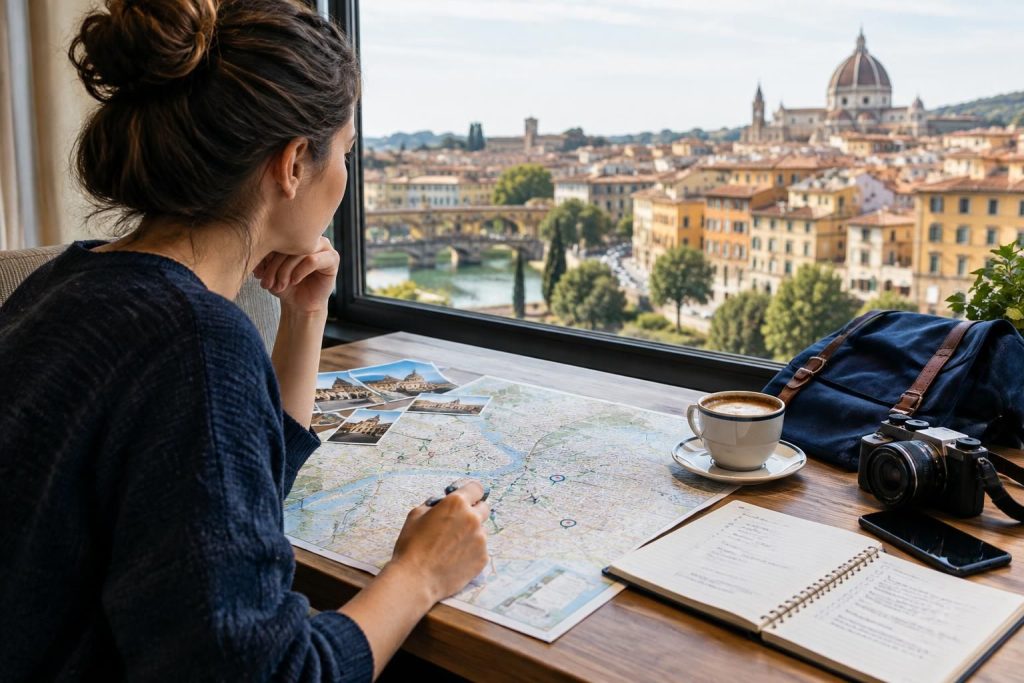
On a longer journey, even enjoyable activities can start to feel like obligations. Packing again, finding the next station, navigating unfamiliar streets and deciding where to eat all take effort. An itinerary that looks manageable at home may feel very different after several moves and a few disrupted nights. Rest days give the trip breathing room. They make space for laundry, a slow breakfast, an afternoon indoors or simply staying in one neighborhood. The aim is not to do nothing on command. It is to create days with fewer demands, so you can enjoy the places you have traveled to see.
Count demanding days, not just travel days
Start by marking the parts of your itinerary that require sustained effort. These might include a long flight, a complicated rail connection, a full-day hike, several hours of driving or a sightseeing day built around timed entries. A day without a hotel change can still be tiring if it runs from an early departure to a late return.
Look for clusters rather than treating every date separately. Three busy city days followed by a transfer and an excursion leave little room to recover. Break up that sequence before adding more attractions. A useful planning question is: if we wake up tired here, what could we drop without losing money or disrupting the next stage?
Place rest days where they can do the most good
There is no universal formula for how often to pause. As a starting point, consider a low-demand day after several active days, then adjust for your usual pace, travel companions and the effort involved. Leave more breathing room around overnight journeys, repeated early starts or activities that are more strenuous than your everyday routine.
Rest is often easiest during a longer stay in one place. Instead of booking two nights in each of three towns, you might choose one town for five nights and make an optional outing from there. This removes repeated packing and check-in tasks while preserving variety. Avoid labeling a hotel-change day as a full rest day: even a short transfer comes with decisions and logistics.
Give a rest day a light structure
A blank day can be surprisingly difficult for travelers who like a plan. Give it one gentle anchor, such as breakfast nearby, a short waterfront walk or time to read in a park. Keep everything else optional. Choose activities that are easy to shorten or abandon, rather than excursions with fixed return times.
Separate a rest day from a catch-up day. Laundry and grocery shopping may fit comfortably, but adding route planning, souvenir shopping and several postponed sights can recreate a busy schedule. Pick one practical task if needed. Leave enough unclaimed time that the day still feels different from the rest of the trip.
Choose accommodation that makes downtime comfortable
For a rest stop, think beyond the room’s location relative to major sights. Consider whether you would be comfortable spending several waking hours there. A place to sit, useful curtains, suitable temperature control and access to simple meals may matter more than being beside a landmark. Check the individual accommodation description rather than assuming these features are included.
The surrounding neighborhood matters too. A room near a grocery shop, a few casual places to eat and an easy walking route can reduce everyday effort. Kitchen facilities may suit travelers who want familiar meals, while others will prefer having food prepared for them. Choose the arrangement that removes work for you, not the one that merely sounds more independent.
Make rest days work for different travel styles
Travel companions do not always tire at the same pace. Discuss downtime before departure, especially if one person enjoys early starts and another prefers slower mornings. Agree that a rest day can include separate activities: one traveler might visit a museum while another stays close to the accommodation. Set a simple meeting point or meal plan without requiring everyone to fill the intervening hours together.
For families, familiar routines and unstructured play may be more restful than another child-focused attraction. Solo travelers might prefer a quiet café or shared lounge to an entire day alone in a room. Rest does not need to mean isolation, and it does not need to look identical for everyone.
Protect the pause in your bookings and budget
A rest day is easier to keep when it has no prepaid activity attached. Concentrate essential reservations on other days where practical, and keep a short list of optional nearby ideas rather than booking a backup attraction for every empty slot. If plans change, you can use that list without feeling committed to completing it.
Include the cost of slower travel when comparing itineraries. An extra night has a cost, but moving on can also involve transport, luggage storage and meals in transit. Compare the whole day rather than accommodation alone. Keep some flexibility later in the trip as well: a planned pause helps, but it cannot predict every moment when you will want a quieter pace.
Before finalizing a longer itinerary, review it for effort as well as interest. Find the busiest stretches, add a low-demand day in a comfortable base, and resist filling it with obligations. You can always take a short outing if you feel energetic. The value of a rest day is having the choice, without needing to rearrange the rest of your journey.
AI-assisted evergreen travel guide. Featured image is an AI-generated illustration, not a specific product or booking.