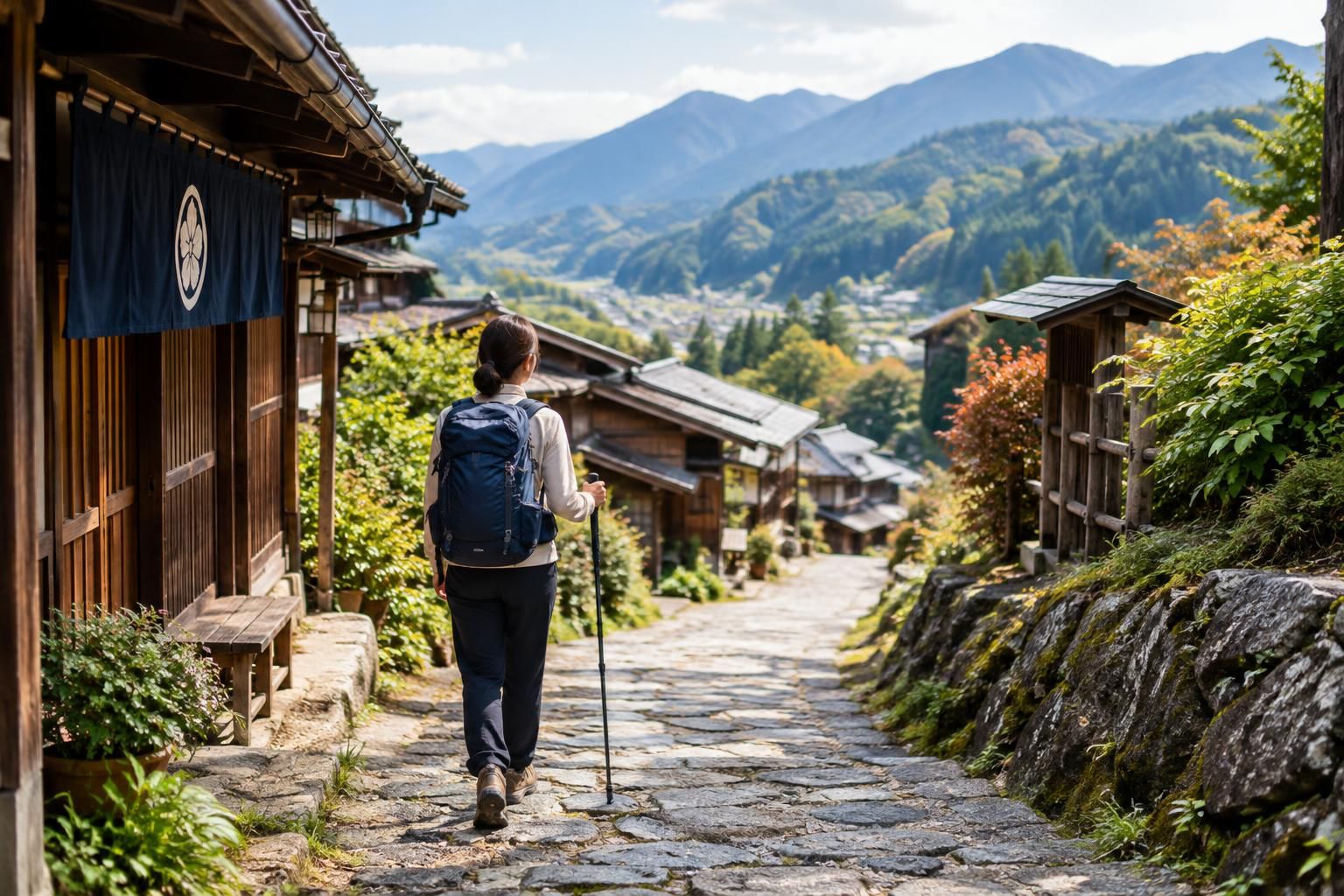
The walk between Magome and Tsumago offers a different rhythm from Japan’s big-city sightseeing: sloping village streets, wooded paths and stretches of countryside along the historic Nakasendo corridor. Its appeal is not simply finishing a famous route, but having time to notice the transition between the two former post towns. You can visit as a day trip, yet an overnight stay gives the journey more breathing room. The most useful planning decisions concern where to sleep, what to carry and how to connect the walk with onward travel.
Decide whether the walk is a stopover or the main event
Magome and Tsumago work well as a rural interlude in a wider central Japan itinerary. A one-night stop can suit travelers moving between larger destinations, provided arrival and departure days are not overloaded. Two nights make more sense if you want time for both villages, a longer walk or a weather buffer. Avoid treating the area as a quick attraction squeezed between substantial rail journeys.
For a single overnight, choose one priority: walk on arrival day and sleep near the finish, or settle in first and walk the following morning. The first option depends more heavily on a smooth arrival. The second gives you a calmer start, but requires a clear plan for collecting luggage and reaching your next destination afterward.
Choose your direction around effort and logistics
The Magome–Tsumago route is roughly eight kilometers, with climbs, descents and changing surfaces. Walking from Magome toward Tsumago generally involves less uphill effort than the reverse, though it is not entirely downhill. Allow a generous half day rather than calculating the visit from distance alone: photographs, rests and time exploring each village all extend the outing.
Direction should also reflect where you sleep and how you arrive. Nakatsugawa is a useful rail gateway for the Magome side, while Nagiso serves as a gateway for Tsumago. Check the relevant local connections for your dates before choosing accommodation. A slightly easier walking direction is not always worth an awkward journey back to your bag or a tightly timed onward connection.
Pick accommodation for the evening you want
Staying in or near a historic village suits travelers who value atmosphere and an early start on foot. A base near a rail gateway can simplify luggage handling and onward travel, but may require an extra local journey to reach the trail. Compare the actual property location, not just a listing that uses the wider Kiso Valley name.
For a small inn or guesthouse, clarify whether dinner and breakfast are included, whether advance meal arrangements are needed and what arrival window the property expects. Mention dietary requirements before committing, since a small kitchen may have limited flexibility. Also check bedding style, bathroom arrangements and any stairs if these affect comfort. Do not assume a late restaurant meal will be easy to arrange nearby.
Make luggage a separate plan
The walk is more enjoyable with a light daypack than with your full travel load. Carry water, a snack, a weather layer, essential medication and a charged phone, leaving room for anything you remove as you warm up. Footwear with dependable grip matters more than specialist equipment for appearance’s sake; village paving and wooded sections can both become slippery when wet.
If this is a stopover between cities, consider forwarding your main suitcase between suitable accommodations and carrying an overnight bag. Confirm acceptance, delivery timing and any storage arrangements directly before relying on that approach. Local luggage transfer or storage may be another possibility, but availability and conditions need checking. Never build the day around an assumed service or an unconfirmed collection deadline.
Treat weather and terrain as itinerary decisions
This is a countryside walk, not a continuous paved promenade. Expect uneven ground, inclines and stretches where shelter is limited. Choose your departure time with daylight and your own pace in mind. In warmer conditions, take breaks before fatigue builds; in cold weather, snow or ice can change the character of the route considerably.
Keep an alternative that still feels worthwhile. If conditions are unsuitable for the full walk, focus on exploring one village, enjoying a leisurely meal and using available transport rather than forcing the original plan. Check local trail information before setting out, and follow signs or notices about closures and wildlife. Downloading the route can help with navigation, but does not replace attention to conditions on the ground.
Leave space for the villages, not just the trail
Magome and Tsumago reward time at either end of the walk. Look closely at the streetscape, browse shops that interest you and choose a meal stop rather than hurrying straight toward the next landmark. If you want to visit a particular historic building or small exhibition, check its visiting arrangements separately instead of assuming everything will fit around the walk.
These are lived-in places as well as destinations. Keep voices low near homes, avoid blocking narrow lanes and ask before photographing people or private interiors. Carry rubbish until you find an appropriate disposal point. Most importantly, leave a margin between finishing the route and your next commitment: a quiet pause at the end is part of the experience, not wasted travel time.
A rewarding Kiso Valley visit starts with a simple structure: one manageable walk, a deliberately chosen overnight base and a luggage plan that does not depend on guesswork. Arrange transport around those choices, keep room for changing weather and resist adding too many extra stops. The result is a rural pause in a Japan itinerary, rather than another day spent watching the clock.
AI-assisted evergreen travel guide. Featured image is an AI-generated illustration, not a specific product or booking.