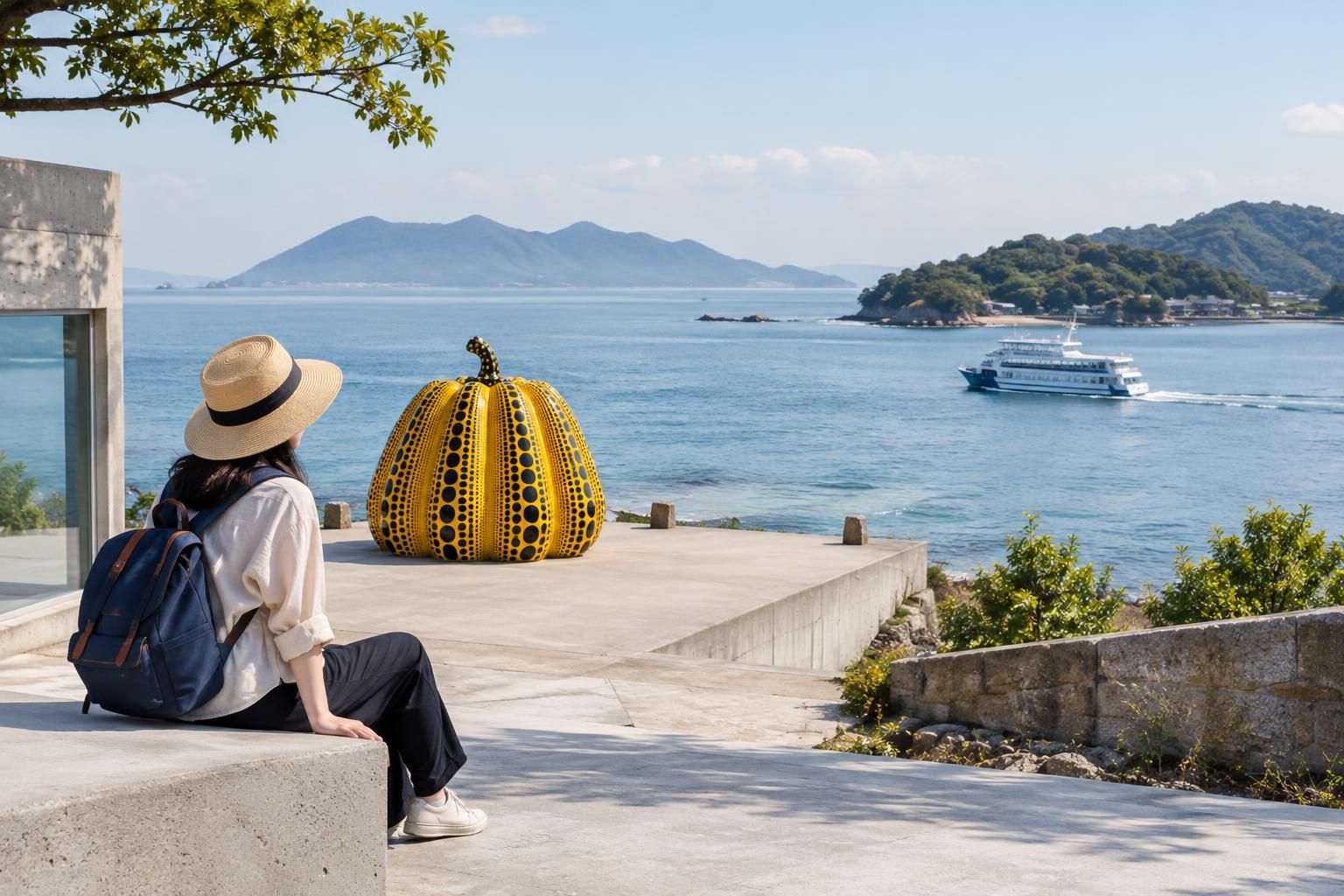
Japan’s Seto Inland Sea offers a different rhythm from a city-to-city itinerary: short sea crossings, hillside villages and art experienced alongside changing light and water. Naoshima and Teshima make a rewarding pairing, but they are not places to approach with a checklist and a tightly packed ferry schedule. Ports, exhibitions and accommodation can sit some distance apart, and a short crossing does not necessarily mean a quick transfer. Start by choosing how much island time you want, then build transport and museum visits around that decision.
Decide whether you want an introduction or an island-focused stay
For a first visit, distinguish between seeing one island well and sampling two. A full day on Naoshima can provide a satisfying introduction to the region’s relationship between art, architecture and landscape. Adding Teshima works better when you can give it a separate day rather than squeeze it between Naoshima visits.
Two nights near or on the islands create room for two substantial sightseeing days, depending on where you arrive from and travel next. Three nights offer more flexibility for weather, slower meals and a less structured afternoon. If your wider Japan trip is already crowded, choose one island and leave something unseen rather than turn the experience into a sequence of transport connections.
Choose your base by its evening rhythm and transport trade-offs
Uno, on Honshu, is a practical gateway to Naoshima and can suit travelers approaching through Okayama. Takamatsu, on Shikoku, is another gateway worth considering, particularly if Shikoku is part of the wider journey. Compare the actual sailings for your intended dates before choosing accommodation: these gateways are not interchangeable for every island or departure.
Staying on Naoshima gives you time to experience the island beyond the main sightseeing hours. Miyanoura is a port-area option, while Honmura places you near village-based art sites. Neither removes the need to plan journeys to other parts of the island. Smaller island accommodation may also mean fewer meal choices, so establish dinner arrangements before arrival.
A mainland base can simplify onward travel and provide more evening flexibility, but it makes the return ferry a firm boundary to your day. An island base trades some convenience for atmosphere. Choose according to which matters more to you, rather than assuming an island overnight is essential.
Build each day around one reservation and one island
Some major art sites use advance reservations or timed admission, while others have different entry arrangements. Before committing to a route, check the requirements and operating calendar for the places that matter most to you. Do not assume every venue opens on the same days or that one ticket covers everything.
Use your highest-priority visit as the day’s anchor. On Naoshima, that might mean organizing a museum-focused day around the southern part of the island, with a separate window for Honmura rather than repeatedly crossing between areas. On Teshima, allow the main art visit to shape your route instead of treating it as a brief stop.
Leave space on either side of a timed entry. Finding the entrance, storing belongings, walking uphill or waiting for local transport can absorb a meaningful part of the day. Art that depends on silence, natural light or patient observation also benefits from a schedule that lets you stop watching the clock.
Treat ferries and island transport as part of the itinerary
Plan the outward crossing, the journey from the arrival port to your first stop, and the return connection together. Record the correct ports, not just the island names: arriving at a different port can change the entire day’s route. When an onward train matters, avoid making the last plausible ferry your only workable option.
On the islands, compare walking, local buses and bicycle rental against the actual distances and terrain. Cycling can be appealing, but hills, heat, rain and confidence on unfamiliar roads all affect whether it is enjoyable. An electric-assist bicycle may reduce effort, but it does not remove weather exposure or the need to understand the route.
Keep a simple offline note with accommodation directions, reservation details and the transport options you intend to use. Verify current timetables and service notices close to travel rather than relying on an old itinerary.
Travel light and plan meals before you get hungry
A small overnight bag is easier to manage across ferry terminals, local transport and village lanes than a large suitcase. If the islands fall between longer stays, consider whether your main luggage can remain at your previous base or be transferred separately. Confirm storage or forwarding arrangements rather than assuming they will be available.
Carry water, a compact rain layer, sun protection and shoes comfortable for walking and standing. Plan a realistic lunch stop near the area you will actually be visiting. Travelers with dietary requirements should establish suitable meal options in advance and carry a useful snack; an unplanned search for lunch can consume the gap between an exhibition visit and a ferry.
Keep a weather alternative that does not require another crossing
Rain changes the appeal of exposed walks and cycling, while wind can affect sea travel. A museum day is not automatically weatherproof if reaching each building requires outdoor travel. Identify which part of your plan can be shortened, moved or dropped without sacrificing the main reason for visiting.
For a two-island stay, keep your least committed day flexible where possible. If conditions disrupt a crossing, spending more time near your base is often preferable to improvising a complicated replacement route. Build extra margin before a flight or another difficult-to-change departure.
The strongest Naoshima and Teshima itinerary is usually the one with fewer connections and more breathing room. Choose a gateway that fits your wider route, give each island its own day, and organize key reservations before filling the remaining hours. That leaves space for what makes this part of Japan distinctive: the relationship between the art, the villages and the sea.
AI-assisted evergreen travel guide. Featured image is an AI-generated illustration, not a specific product or booking.