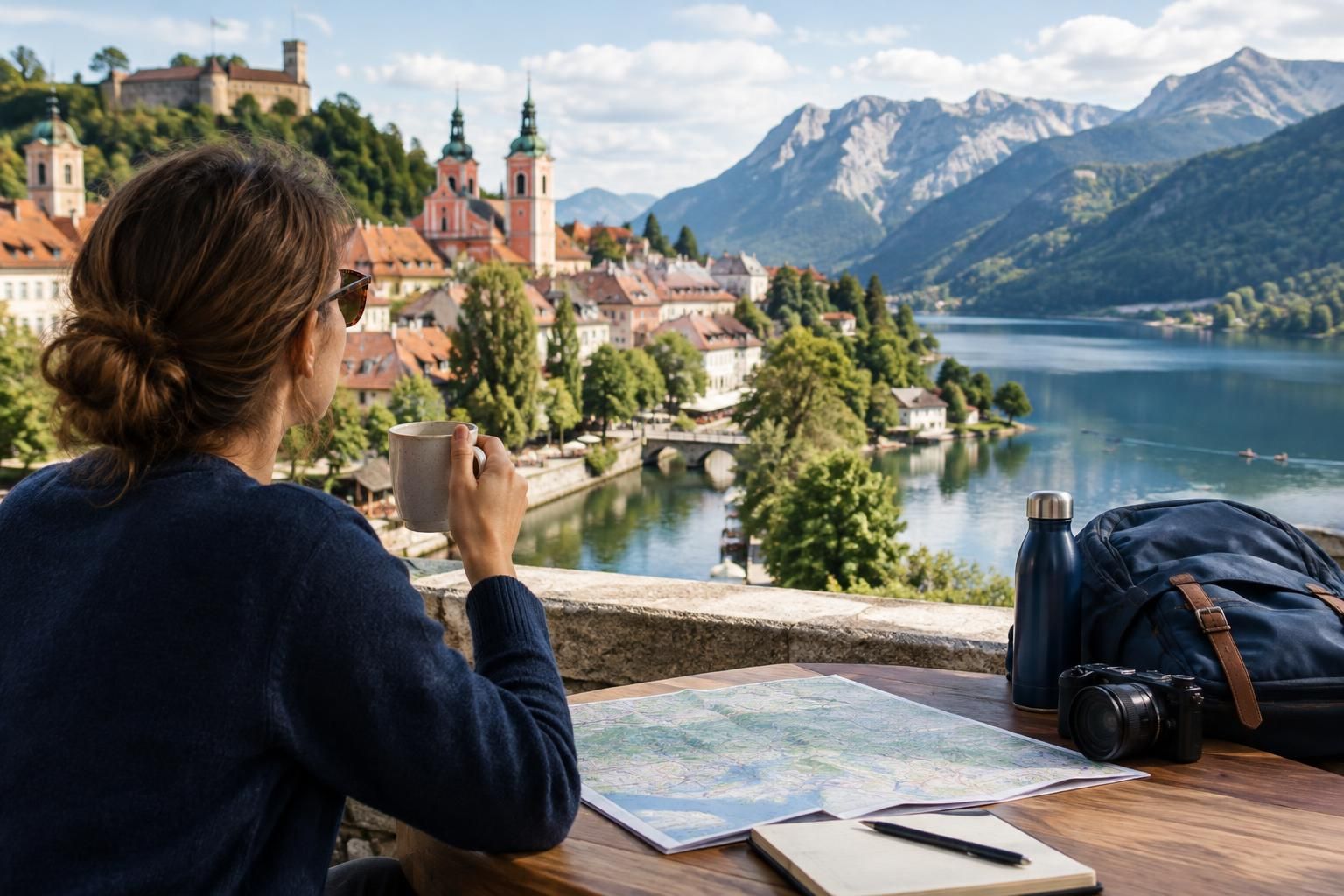
Slovenia lends itself to a holiday that changes pace halfway through: a few days of urban wandering in Ljubljana, followed by a lakeside stay at Bohinj. The contrast is the attraction. In the capital, you can build days around architecture, markets and café stops; beside the lake, the landscape becomes the main event. For a first visit, seven nights gives both places breathing room without requiring a different bed every evening. The key is to choose accommodation around your transport needs and treat mountain excursions as optional additions, not the foundation of every day.
Split the week according to the holiday you want
Three nights in Ljubljana and four at Bohinj makes a balanced starting point. That gives the city two full days and leaves enough lake time for a quiet day as well as an excursion. Reverse the emphasis if museums, restaurants and urban neighborhoods interest you more than outdoor time. Two nights by the lake can feel brief once arrival, departure and uncertain weather are considered.
The order should follow your arrival and departure logistics rather than a rigid city-first rule. Check the complete journey between your accommodation and your departure airport or station. If an early departure would make the lake-to-airport transfer awkward, put Ljubljana at the end. Avoid creating a final morning that depends on several tightly timed connections.
Choose Ljubljana accommodation for easy everyday walking
For a short stay, a useful base is one from which you can comfortably walk to the riverside center while still managing your luggage on arrival. Compare the actual walking route, not just the distance shown on a map. Pedestrian areas, steps and an apartment without a lift can matter more than being a little closer to a landmark.
A central room suits travelers who want to step out for dinner and return easily. A quieter residential setting may work better if you value sleep, extra space or a kitchen. Check whether the room faces a busy street or courtyard, and look at practical details such as luggage storage and access instructions. These choices have more impact on a three-night visit than an extensive list of hotel facilities.
Give Ljubljana two distinct, unhurried days
Use your first full day for the city’s shape: the Ljubljanica river, bridges, old-town streets and the castle area. Choose whether the uphill walk fits your energy rather than treating it as compulsory. Leave a generous gap for lunch and time to sit beside the river. A compact center can encourage overplanning because everything appears close together.
Make the second day more personal. Architecture enthusiasts can focus on Jože Plečnik’s influence on the city; others might pair a museum with Tivoli Park or spend longer browsing food stalls and shops. Verify visitor arrangements for any essential interior. Keep one substantial indoor option in reserve, but avoid filling every wet-weather hour with another ticketed attraction.
At Bohinj, the exact village matters
Bohinj is an area, not simply a lakeside address. Ribčev Laz, near the lake’s eastern end, is a useful starting point when comparing accommodation for a first visit. Stara Fužina may appeal if village surroundings and access to nearby walks are priorities. Bohinjska Bistrica is another option to assess, particularly if rail forms part of your journey, but staying there is not the same as staying beside the lake.
Before booking, map the route from the nearest transport stop to the property, then check your access to groceries and evening meals. A rural apartment can be appealing yet inconvenient without a car. Ask about gradients, footpaths and luggage access if these affect your comfort. For self-catering, plan a simple first-night meal rather than assuming you will want to shop after the transfer.
Build lake days around effort, not a checklist
Create three interchangeable day plans: an easy lakeside day, a moderate walking day and a low-visibility day. The easy version might combine a short shoreline stroll, a village lunch and reading by the water. For the moderate option, choose a marked route whose distance, ascent and surface suit everyone. A lakeside setting does not mean every nearby path is level or straightforward.
A waterfall visit, gorge walk or mountain viewpoint can provide a focal point, but each brings its own access and terrain considerations. Check conditions and operating arrangements before setting out, especially for routes involving seasonal facilities. Do not make a high viewpoint your only satisfying plan. When clouds obscure the mountains, village walks, a long lunch and an indoor cultural visit can still give the day a clear purpose.
Decide whether a car adds enough value
A car-free version is worth considering if you are happy with two bases and a small number of outings. Compare current public-transport options for your actual travel dates, including the last stretch to your accommodation. Check return journeys before choosing an excursion. Rail access to the wider Bohinj area does not remove the need to plan onward travel to the lake.
A rental car makes more sense when your accommodation is remote or you want several dispersed stops. Balance that flexibility against parking arrangements, unfamiliar roads and the risk of turning restful days into driving days. Either way, pack luggage you can move comfortably, footwear with suitable grip, rain protection and layers. Leave room in the itinerary as deliberately as you leave room in the suitcase.
The strongest Ljubljana-and-Bohinj itinerary does not try to collect every Slovenian highlight. It gives the capital enough time to become familiar, then lets the lake change the rhythm. Choose bases that simplify ordinary tasks, plan transfers before adding excursions and keep outdoor days interchangeable. You will have a trip with structure, but enough freedom to enjoy a riverside afternoon or a clear mountain morning when it comes.
AI-assisted evergreen travel guide. Featured image is an AI-generated illustration, not a specific product or booking.