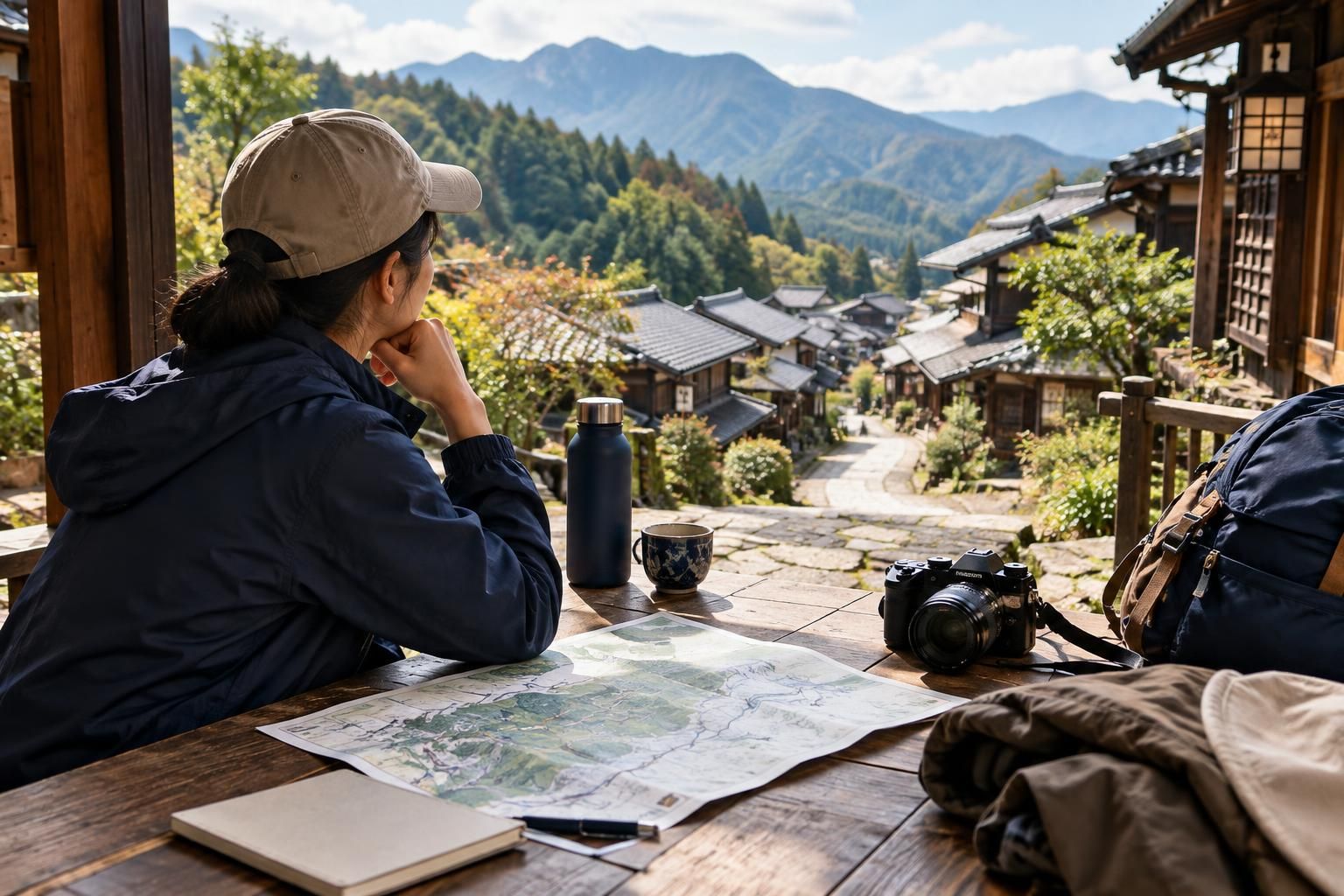
A night near Magome and Tsumago offers a different rhythm from Japan’s major cities: sloping village streets, wooded paths and an evening shaped by your accommodation rather than a sightseeing checklist. These former post towns lie along the historic Nakasendo route linking Edo, now Tokyo, with Kyoto. Walking between them can make a rewarding short countryside break, but the experience works best when you plan the overnight stay and onward journey together. Instead of treating the walk as a gap between trains, give it enough room to become the focus of your visit.
Decide whether one night gives you the pace you want
One night suits travelers who want a countryside interlude without building an entire hiking itinerary. A useful structure is to arrive in the area during the afternoon, explore your overnight village, then walk between Magome and Tsumago the following morning. Continue to your next destination only after allowing time for lunch, village wandering and the connection back to a railway station.
Two nights are worth considering if your approach journey is long, you enjoy photography or you want a more adaptable walking day. An extra night also reduces the pressure to walk in unsuitable conditions simply because you have an onward reservation. Avoid combining a late arrival, the full walk and a fixed dinner time into one tightly packed afternoon.
Choose your overnight village before choosing a room
Magome’s hillside setting creates a strong sense of arrival, with a main street that climbs through the village. Tsumago offers another atmospheric base, with traditional streetscapes and access to the other end of the walk. Either can work; the better choice depends on your approach route, accommodation preferences and where you intend to travel afterward. Staying in a nearby transport town is another option if easier luggage handling matters more than sleeping in a post town.
Look beyond photographs when comparing traditional inns and smaller guesthouses. Check whether bathrooms are private or shared, whether bedding is on the floor, and whether stairs form part of the route to your room. If meals are included, establish the arrival and dinner arrangements before committing. Evening dining should be planned rather than assumed, particularly when staying somewhere small and rural.
Treat the walk as a half-day outing, not a transfer shortcut
The commonly walked route between Magome and Tsumago is roughly eight kilometers, passing through woodland and rural settlements. It includes climbs, descents and uneven surfaces, so distance alone is not a good guide to the effort involved. Give yourself a generous half-day rather than planning around your fastest normal walking pace. Stops for photographs, navigation and a rest are part of the appeal.
Walking from Magome toward Tsumago generally involves less total ascent than the reverse direction, although it is not an entirely downhill route. Choose direction alongside your overnight location and transport plan. Wear footwear suited to uneven ground, carry water and a snack, and use a map you can access without mobile reception. Check local route information and conditions before setting out.
Keep large luggage separate from the walking day
A small daypack makes this visit substantially easier. If the Kiso Valley is a short detour between longer city stays, consider forwarding your main suitcase to your next hotel, subject to delivery timing and the receiving property’s agreement. Carry what you need for the overnight stay, including toiletries, a change of clothes and any essentials you cannot do without.
Do not build the itinerary around an assumed luggage-transfer or storage service. Confirm whether a suitable option operates for your dates, where bags must be collected and whether collection fits your onward journey. If you cannot establish a workable arrangement, stay somewhere you can return to after the walk or choose a shorter out-and-back outing without your suitcase.
Work backward from the onward connection
Nakatsugawa and Nagiso are useful railway gateways to consider when mapping this area. Compare the complete journey to your accommodation, including the local connection from the station, rather than focusing only on the intercity train. A modest-looking gap on a map can still involve waiting, a bus journey or a taxi arrangement.
For departure day, identify a comfortable target connection and leave space before it. Avoid making your final local transport option the only one that works. If your next stop requires a long rail journey, a simple village lunch and early departure may be more enjoyable than adding another attraction. Confirm current transport arrangements once your dates are set.
Let weather and village life shape the experience
Season affects both the atmosphere and the practical demands of the walk. Summer can bring heat, humidity and rain; colder periods can bring snow or ice. Spring and autumn also call for layers and a weather check rather than assumptions about comfortable conditions. Pack rain protection that you can reach easily, and have a village-focused alternative if the trail is unsuitable.
Leave time to enjoy the post towns without turning every stop into a task. Browse craft shops, pause over tea or look closely at the buildings and the way the streets follow the terrain. These are inhabited places as well as visitor destinations: keep voices considerate, respect private thresholds and ask before photographing people. A quiet hour can be as memorable as completing the route.
The most satisfying Magome–Tsumago visit starts with a few practical decisions: where to sleep, what to do with your suitcase and how to leave without rushing. Build the walk around those choices, keep a weather alternative and resist adding too much. One well-planned night can give this small stretch of the Nakasendo a distinct place in a wider Japan journey.
AI-assisted evergreen travel guide. Featured image is an AI-generated illustration, not a specific product or booking.