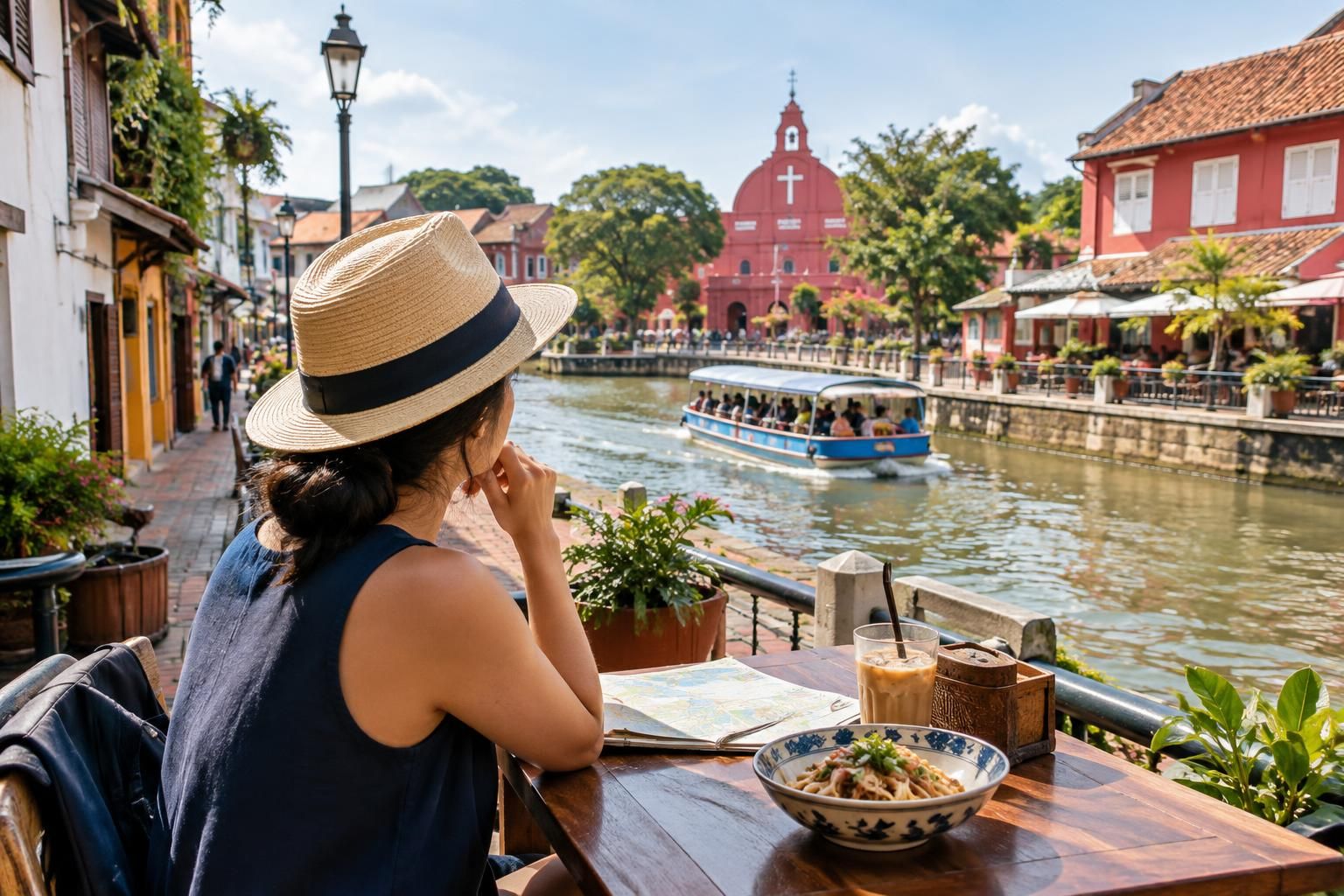
Melaka rewards a different rhythm from a big-city break. Its appeal lies in the details: shophouse facades, courtyards, riverside walks and food shaped by overlapping cultural traditions. A brief visit can become a sequence of photographs and queues, especially when long road journeys bookend the day. Two nights create room to explore early, retreat from the afternoon heat and return to the streets after dinner. Whether you are adding Melaka to a Kuala Lumpur trip or building a journey through Peninsular Malaysia, the most useful decision is not how many sights to fit in, but how to protect time on the ground.
Decide whether Melaka fits your route
Melaka makes the most sense when it complements your direction of travel rather than creating an unnecessary detour. Consider it as a separate stay from Kuala Lumpur or a stop on an overland journey toward southern Malaysia and Singapore. Sketch the complete door-to-door journey before committing: reaching a departure terminal, the intercity trip and the final transfer to your accommodation all count as travel time.
Two nights give you one uninterrupted day plus parts of your arrival and departure days. That is a useful starting point for travelers interested in architecture, food and gentle exploration. Choose a longer stay if you enjoy museums and unstructured afternoons. If your wider itinerary is already crowded, dropping another stop is often more rewarding than squeezing Melaka into a single afternoon.
Choose accommodation for walking and resting
For a short visit, look around the historic center near Jonker Street or within a manageable walk of the river. Staying close to the streets you want to explore makes it easier to step out before breakfast and return for a midday break. A place slightly removed from the busiest shopping and dining streets may suit light sleepers better than a room directly above evening activity.
Historic character and practical comfort do not always come together. When comparing converted shophouses with newer hotels, check for stairs, lifts, window placement, air conditioning and possible street noise. Travelers with large suitcases or limited mobility should ask about the actual route to the room. A map can help with location, but it will not reveal an awkward staircase or a bedroom facing a busy courtyard.
Build the stay around three unhurried outings
Use your arrival afternoon for orientation rather than a demanding sightseeing list. Settle in, walk a short stretch of the river and find a straightforward dinner nearby. If the journey takes longer than expected, you will not have lost the centerpiece of the visit. Keep any arrival-day museum visit optional.
Make the following morning your main heritage walk. You might connect Dutch Square, the surrounding historic streets and Bukit St. Paul, choosing one or two interiors to investigate rather than entering every attraction. Reserve the late afternoon for a different perspective: quieter side streets, another river section or a café stop followed by dinner. On departure morning, repeat a favorite walk or have a leisurely breakfast instead of crossing town for one last sight.
Explore the food without turning every meal into a project
Melaka is a rewarding place to explore Peranakan food, alongside Malay, Chinese and Indian influences. For a balanced stay, choose one meal that deserves advance planning and leave the others flexible. A sit-down Nyonya meal can provide that focus; dishes associated with the tradition include ayam pongteh and versions of laksa. Recipes and menus differ, which is part of the interest.
Balance richer meals with simple breakfasts, small snacks and enough time between stops. Chicken rice balls or cendol might be something to try, not obligations to complete. If you have dietary restrictions, ask about ingredients rather than relying on a dish name: stocks, sauces, seafood and garnishes may not be obvious. Avoid organizing the whole trip around a particular night market session without first checking that it matches your dates.
Plan for heat, rain and uneven walking conditions
Compact distances can make Melaka look effortless on a map, but heat, road crossings and changes in pavement can slow a walk considerably. Put your longest outdoor outing earlier in the day and keep an indoor alternative for the afternoon. A museum, a long lunch or a rest at your accommodation can be a deliberate part of the itinerary rather than a fallback.
Pack breathable clothing, comfortable shoes with grip, sun protection and a compact umbrella. Carry water and keep electronics protected from rain. Travelers using wheelchairs or traveling with a stroller should examine individual routes and entrances rather than assuming that a central location guarantees easy access. Break the day into small areas so that retracing your steps remains manageable.
Keep transfers and departure day simple
Intercity coach travel is an option to compare when planning a Melaka stop. Check the precise departure and arrival points, then work out the onward journey to your accommodation. Terminal locations matter as much as the city names on a booking. Keep your accommodation address available offline, along with essential journey details.
Avoid treating departure day as both a full sightseeing day and a tightly timed connection day. If you are continuing to an airport or crossing an international border later, allow a generous margin and consider whether an overnight nearer the next departure would be less stressful. Packing the night before leaves the final morning free for breakfast rather than luggage sorting.
The strongest two-night Melaka itinerary leaves space between its highlights. Choose a convenient base, give one morning to heritage streets and let meals and river walks shape the remaining hours. You will gain more from returning to an interesting lane or lingering over lunch than from turning a compact city into an exhausting checklist.
AI-assisted evergreen travel guide. Featured image is an AI-generated illustration, not a specific product or booking.