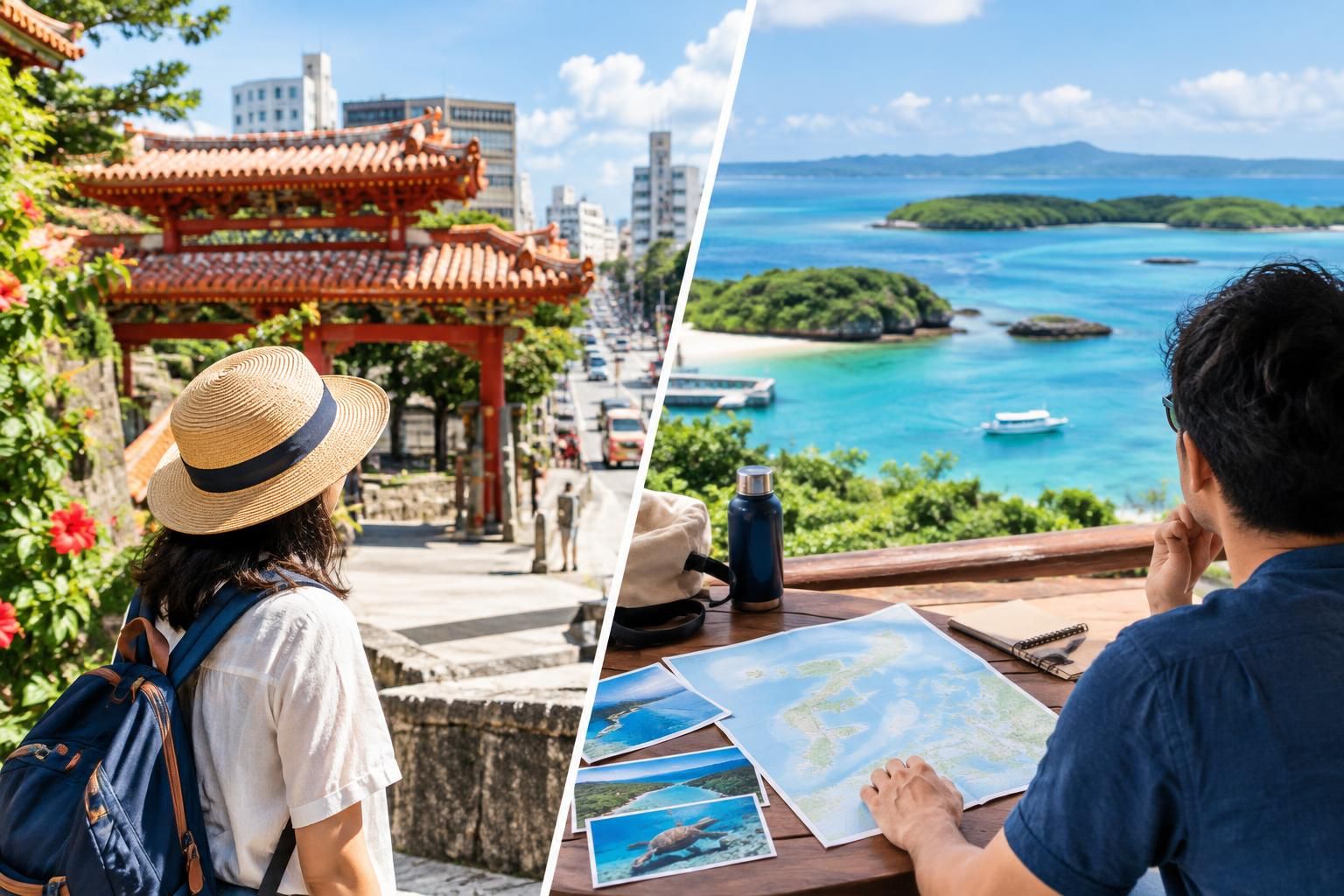
An Okinawa trip can mean wandering a city shaped by Ryukyuan history, staying beside a quiet beach or taking boats to smaller islands. Those experiences do not necessarily belong in the same base. Naha, on Okinawa’s main island, and Ishigaki, in the Yaeyama Islands, offer two quite different starting points. Choosing between them is less about finding the better destination than deciding how you want your days to work: independent urban exploring, planned coastal excursions or outings organized around ferries and the sea.
Start with the geography, not the beach photographs
Okinawa Prefecture stretches across a long chain of islands. Naha and Ishigaki are not neighboring stops that you can casually connect by a short local ferry. Combining them generally means adding a flight, another airport journey and a second accommodation check-in. Treat them as separate destinations when estimating how much usable holiday time you have.
For a four- or five-night stay, choose one base unless visiting both is a central goal. With a longer trip, a split can work, but give each place enough time to absorb an unsettled-weather day. A useful planning exercise is to list your three most important experiences before choosing flights. If those experiences cluster around one island group, there is little reason to add the other.
Choose Naha for city life with selected island excursions
Naha suits travelers who enjoy restaurants, markets, pottery and cultural sightseeing alongside coastal outings. Its urban character makes it a practical choice if you want several things to do without arranging a full-day excursion every morning. The Tsuboya pottery area and the city's food neighborhoods offer a different experience from a beach-resort stay.
The important distinction is between staying in Naha and exploring the whole main island. Northern beaches and other dispersed sights can involve substantial travel from the city. If your wish list is dominated by those places, compare a northern accommodation base or a two-base main-island trip rather than assuming Naha is convenient for everything. For a short stay, one carefully chosen coastal outing may be more satisfying than repeated long journeys.
Choose Ishigaki for a smaller city and a sea-focused rhythm
Ishigaki makes sense when island scenery, beaches and boat outings are the main purpose of the trip. Staying around the city center can put dining and the ferry terminal within a manageable area, while accommodation elsewhere on the island may offer a quieter setting. These are different styles of holiday, even though both use Ishigaki as a base.
Nearby island visits need their own planning. Taketomi appeals for its village landscape and an unhurried walk or cycle, while Iriomote calls for more deliberate decisions about transport and activities. Avoid treating every island as an interchangeable half-day stop. Pick one that matches your interests, confirm the practical details before committing and leave room to change plans if sea conditions disrupt boats.
Match your accommodation to the journeys you will repeat
In Naha, proximity to a monorail station can simplify some city and airport journeys, but it does not solve transport across the entire main island. Compare the actual location of your room with the meeting points for any tours and the neighborhoods where you expect to eat. A slightly less central property may lose its appeal if every evening requires another journey.
On Ishigaki, choose between access and setting. A central stay favors ferry outings and varied meals; a coastal stay favors time around the property and nearby shore. Before booking a remote room, establish how you will reach restaurants, buy everyday supplies and get back after an excursion. Check practical room features too: laundry access, somewhere to dry wet clothing and comfortable indoor space can matter as much as a sea view.
Decide how much transport you want to organize
A car-free Naha stay can combine urban exploring with selected organized excursions or public-transport journeys. The limitation is flexibility outside the city: a map can make dispersed attractions look easier to combine than they are. Build each outing around a small geographic area, and check both the outward and return journey rather than planning only how to get there.
On Ishigaki, staying near the center can simplify a ferry-focused trip, but reaching different parts of Ishigaki itself still requires planning. Compare buses, taxis, excursions and a rental car according to your intended days, not an assumption that one option is always necessary. If you plan to drive, confirm the applicable documentation and rental conditions before reserving. Keep arrival and departure days light rather than using them for distant sightseeing.
Build a trip that still works without perfect beach weather
Okinawa’s subtropical setting brings heat, humidity and the possibility of disruptive weather. Choose travel dates with seasonal conditions in mind, but do not build an itinerary that depends on uninterrupted sunshine or a boat operating on one particular day. Keep your most important sea excursion away from the final available slot, and understand cancellation terms before booking weather-dependent activities.
For five nights in Naha, a balanced outline might include two city days, one main-island excursion, one sea-focused outing and flexible time around arrival and departure. For five nights in Ishigaki, consider a local orientation day, one nearby-island visit, one excursion around Ishigaki and a spare day. Pack sun protection, a light rain layer and footwear suited to your planned activities, with a dry change of clothes for boat days.
Choose Naha if you want a city-based holiday with cultural interest and selected coastal trips. Choose Ishigaki if the sea and nearby islands are the main attraction. Neither base needs an ambitious checklist to justify the journey. The strongest plan puts accommodation near the journeys you will actually make, allows for weather changes and leaves enough time to enjoy the island you chose.
AI-assisted evergreen travel guide. Featured image is an AI-generated illustration, not a specific product or booking.