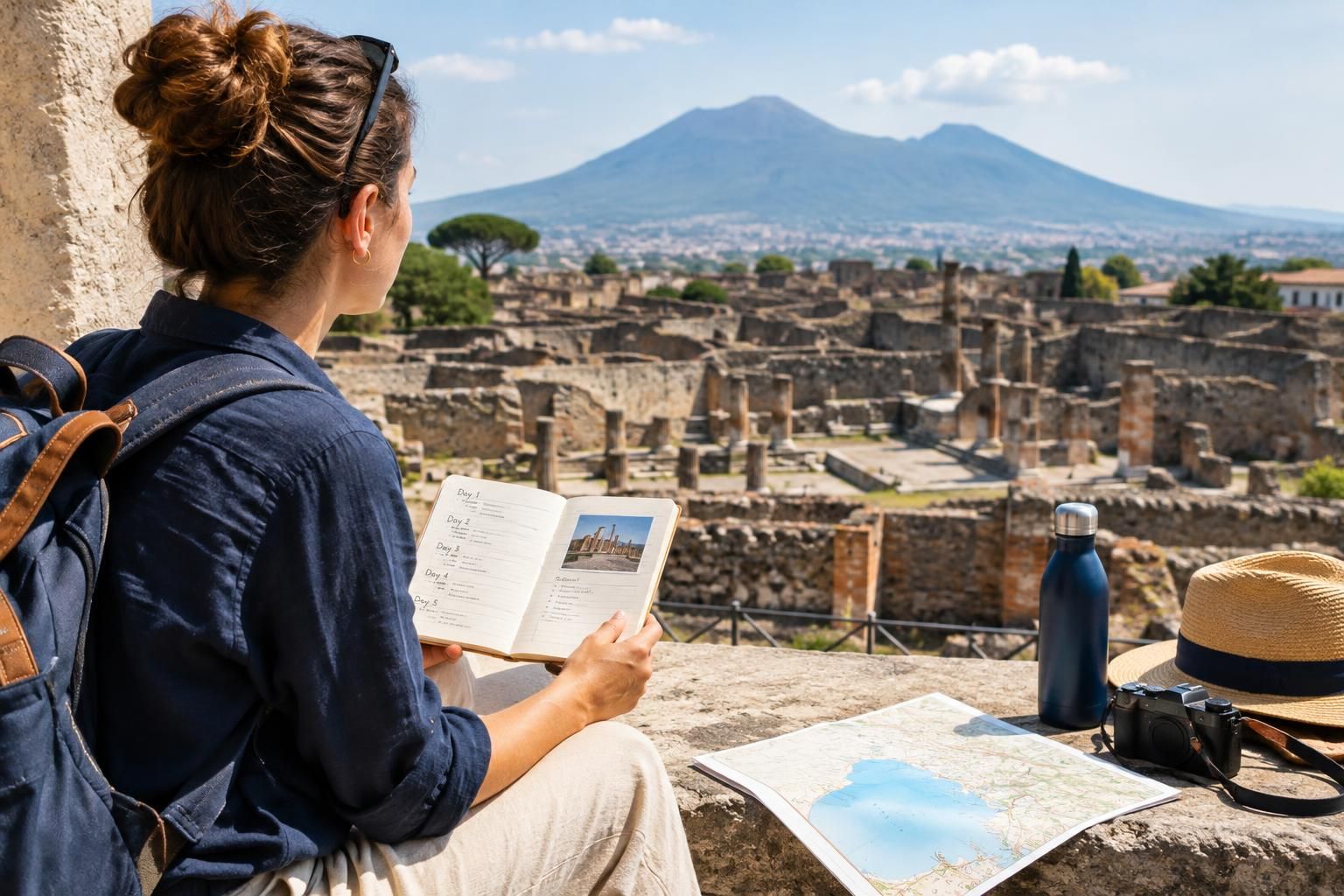
You do not need to recognize every Roman emperor to enjoy the archaeology around Naples. The appeal is often more immediate: a worn doorstep, a painted room or a street that makes an ancient town feel unexpectedly familiar. The challenge is choosing enough to understand without spending the whole trip navigating ruins. A five-night stay in Naples gives you room for Pompeii, the smaller site of Herculaneum and museum time, alongside the living city’s food, waterfront and neighborhoods. Rather than treating these places as a checklist, build the trip around one major archaeological visit per day and leave space to absorb what you have seen.
Give each ancient site a different purpose
Pompeii is the place to appreciate the scale of a Roman town. Streets, public spaces, homes and commercial buildings form a broad urban landscape, so exploring it involves choices rather than simply following one short circuit. Make it your main outdoor archaeology day, not a stop squeezed between a morning arrival and an afternoon transfer.
Herculaneum offers a different perspective. Its smaller footprint and surviving architectural details can make domestic spaces easier to imagine, although the visit still involves walking and uneven surfaces. Naples’ National Archaeological Museum adds another layer through objects and artworks removed from their original settings. Together, the three visits connect town planning, household life and material culture without requiring a specialist background.
Choose a Naples base for evenings as well as departures
Staying in Naples avoids repeated hotel changes and gives the trip an identity beyond the excavation sites. The historic center suits travelers who want dense streets, churches and meals close together. Around Piazza Municipio and the lower part of the city, you can balance central sightseeing with waterfront walks. Near the main railway station, departure convenience may matter more than neighborhood atmosphere.
Compare the actual route between your accommodation and the transport you expect to use, rather than judging by a map pin alone. A short distance can involve busy crossings, slopes or luggage-unfriendly paving. Read room descriptions for lift access, air conditioning and whether windows face a busy street or an internal courtyard. If sleep is a priority, ask about the room’s position rather than assuming a neighborhood will be uniformly quiet.
Build a five-night itinerary with recovery space
Use arrival day for settling in, a nearby meal and a short orientation walk. On the first full day, visit the archaeological museum and explore a manageable part of Naples. This introduces objects and visual details you may recognize later. Put Pompeii on the second full day, keeping the evening deliberately simple.
Make the third full day lighter: choose a neighborhood walk, a church or another indoor cultural stop, then spend time by the waterfront if conditions appeal. Visit Herculaneum on the fourth full day. This order separates the two outdoor sites and leaves some flexibility to exchange days around weather and your energy. If archaeology is only one interest among several, omit Herculaneum rather than combining both excavations into a rushed day.
Treat transport and site entry as separate decisions
Regional rail is a practical starting point for planning trips from Naples to Pompeii and Herculaneum, but destination names require attention. A station serving the modern town is not necessarily the most convenient one for your chosen excavation entrance. Before traveling, match the rail stop, walking route and intended gate. Check the return journey too, especially if your outward and return routes differ.
Decide whether you want independent exploration, an audio guide or a guided visit before buying admission. A guide can help beginners understand buildings that otherwise resemble fragments, while independent visits allow more pauses and selective wandering. Confirm what any booking includes, which entrance it uses and whether additional areas need separate arrangements. Access, exhibitions and transport details can change, so check those practical points close to your visit.
Make large excavation sites easier to enjoy
At Pompeii, select a few themes instead of trying to see everything: public life around the forum, domestic decoration and everyday commerce make a useful beginner’s framework. Use the site map to connect a manageable group of places, and allow for detours when individual buildings are inaccessible. At Herculaneum, slow down enough to notice room layouts, thresholds and relationships between neighboring properties.
Wear shoes suited to irregular paving, and carry only what you are comfortable keeping with you throughout the visit. Sun protection, a refillable water bottle and an extra layer are useful considerations depending on the season and forecast. Do not plan around finding shade, seating or refreshments exactly when you want them. Follow barriers and posted instructions, and leave walls, painted surfaces and loose material untouched.
Budget for understanding, not just admission
Compare the full cost of your preferred approach: accommodation, local travel, admissions, guiding and meals during excursion days. A combined ticket or pass is worthwhile only if its included places match your actual itinerary and its conditions suit your dates. Adding another site simply to justify a pass can make a short break less satisfying.
Keep some spending and time for Naples itself. A relaxed lunch, a neighborhood bakery stop or an unhurried museum visit can provide a welcome contrast to a demanding outdoor day. If funds are limited, prioritize interpretation where you most want help understanding the remains, rather than adding more admissions. One well-understood site often stays with you longer than several hurried ones.
The strongest Naples archaeology break is not the one with the most ruins. It gives Pompeii enough time, uses Herculaneum or the museum to deepen the picture, and leaves room for the modern city. Choose a convenient base, separate demanding visits and keep your daily ambitions selective. You will return with a clearer sense of ancient life rather than a blur of stone streets.
AI-assisted evergreen travel guide. Featured image is an AI-generated illustration, not a specific product or booking.