Maramureș, in northern Romania, rewards travelers who prefer a small area explored carefully to a long checklist of sights. Wooden churches, carved gateways, hay meadows and villages along river valleys give a trip its shape, but the most satisfying days leave room between planned stops. A week allows you to combine architecture and local history with gentle walks and time at your accommodation. The main planning challenge is not finding enough to do: it is choosing a base that keeps rural journeys manageable and approaching living communities with curiosity rather than expectations of a staged rural idyll.
1. Define a compact area rather than touring the whole region
For a first visit, consider concentrating on the Mara, Cosău and Iza valleys. Villages such as Breb, Budești and Desești offer different starting points for exploring wooden architecture and agricultural landscapes. Treat these as possible bases to compare, not places you must all visit. A map can make neighboring valleys look interchangeable, while the actual road connections may create a much longer outing.
Choose two or three priorities before selecting accommodation. If wooden churches matter most, group the buildings you want to see geographically. If your interest is village walks and craft traditions, prioritize a comfortable guesthouse with helpful local knowledge. Add Sighetu Marmației as a contrasting town day rather than trying to include every corner of Maramureș.
2. Choose a guesthouse for its practical details
A village guesthouse can anchor this kind of holiday, especially when it offers a pleasant garden, shared sitting space or meals by arrangement. Look beyond rustic photographs. Ask about private bathrooms, heating, stairs, parking and whether bedrooms face a road or courtyard. Light sleepers should remember that rural settings can include dogs, farm activity and early household routines.
Clarify meal arrangements before committing, including dietary needs and whether dinner must be requested ahead. An accommodation kitchen is useful if you want flexibility, but nearby groceries and restaurants should not be assumed. For travelers without a car, the location of the guesthouse within the village can matter as much as the village itself.
3. Decide how much transport independence you need
A rental car is worth considering if you want to link small villages, churches and countryside stops on your own timetable. Keep driving days modest and allow time for navigation, village traffic and breaks. Do not build the itinerary around the fastest journey estimate alone. Arriving in daylight also makes finding a rural property less stressful.
Without a car, simplify rather than attempting the same itinerary through multiple connections. Choose one accessible base and investigate public transport for your actual dates, then consider an arranged transfer or driver for a few grouped outings. Confirm pickup points, return arrangements and the full cost before agreeing. A locally guided day can also add context that is difficult to gather from looking at buildings alone.
4. Visit wooden churches with time and flexibility
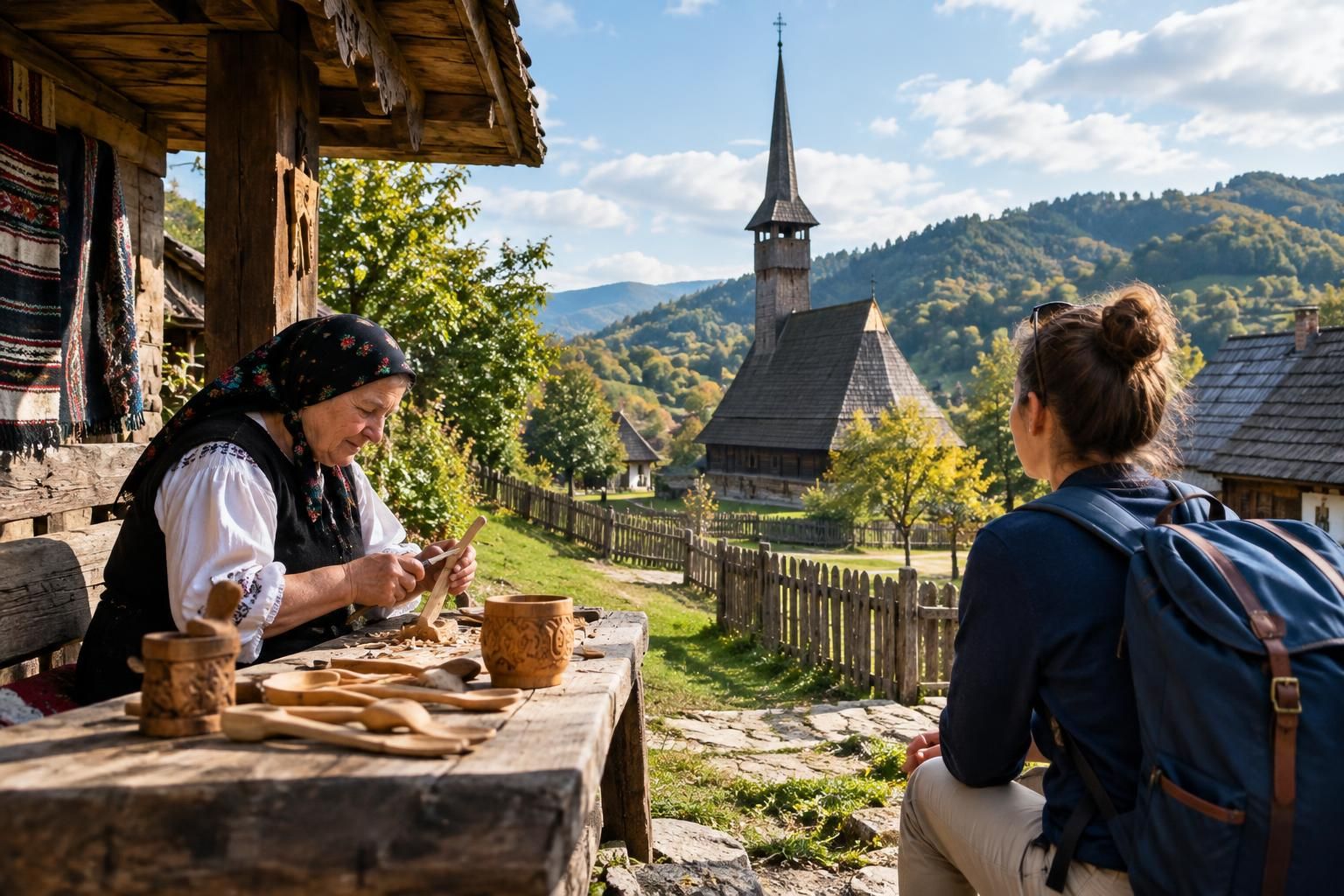
The wooden churches of Maramureș are a compelling focus, with tall rooflines, timber construction and interiors that reward close attention. Budești, Desești and Ieud are examples to consider when shaping a route. Two thoughtfully chosen church visits in a day can be more rewarding than a string of brief stops, especially if you are interested in architectural differences.
These are religious places, not simply sightseeing objects. Access, services and photography arrangements can vary, so check locally and keep an alternative nearby. Dress respectfully, avoid interrupting worship and ask before photographing inside. If a church is closed, use the time for a village walk rather than treating the whole outing as unsuccessful.
5. Make craft encounters intentional and respectful
Woodworking, weaving and other craft traditions provide another way to understand the region. Ask your host whether there are workshops that welcome visitors and whether an introduction or appointment is appropriate. A working studio may not function like a shop, and a demonstration should not be assumed to be available on demand.
If you hope to buy something, think about transport before choosing a large carved object or fragile piece. Ask who made it, what materials were used and how it should be cared for. Always request permission before photographing people, homes or workspaces. Everyday chores, clothing and family occasions are not performances arranged for travelers.
6. Give the week a rhythm, with room for weather
For seven nights, keep arrival day simple, then alternate fuller excursions with days close to your base. One day might pair two churches with lunch and a short stroll; another could focus on Sighetu Marmației and its historical sites. A visit to Săpânța’s Merry Cemetery could form a separate outing or fit a town-focused day, depending on your base and preferred pace.
Leave at least one day largely uncommitted. In settled weather, ask about suitable public walking routes rather than assuming every field track is open to visitors. After rain, muddy ground may make a village lane more appealing than a meadow path. Pack grippy footwear, waterproof layers and a small day bag, and retain an indoor option for a wet afternoon.
A rewarding Maramureș holiday depends on a compact route, a well-chosen guesthouse and realistic expectations about rural access. Plan a few meaningful visits, arrange transport deliberately and leave space for ordinary village life without expecting it to entertain you. That balance makes a week feel varied without turning it into a succession of long drives.
AI-assisted evergreen travel guide. Featured image is an AI-generated illustration, not a specific product or booking.