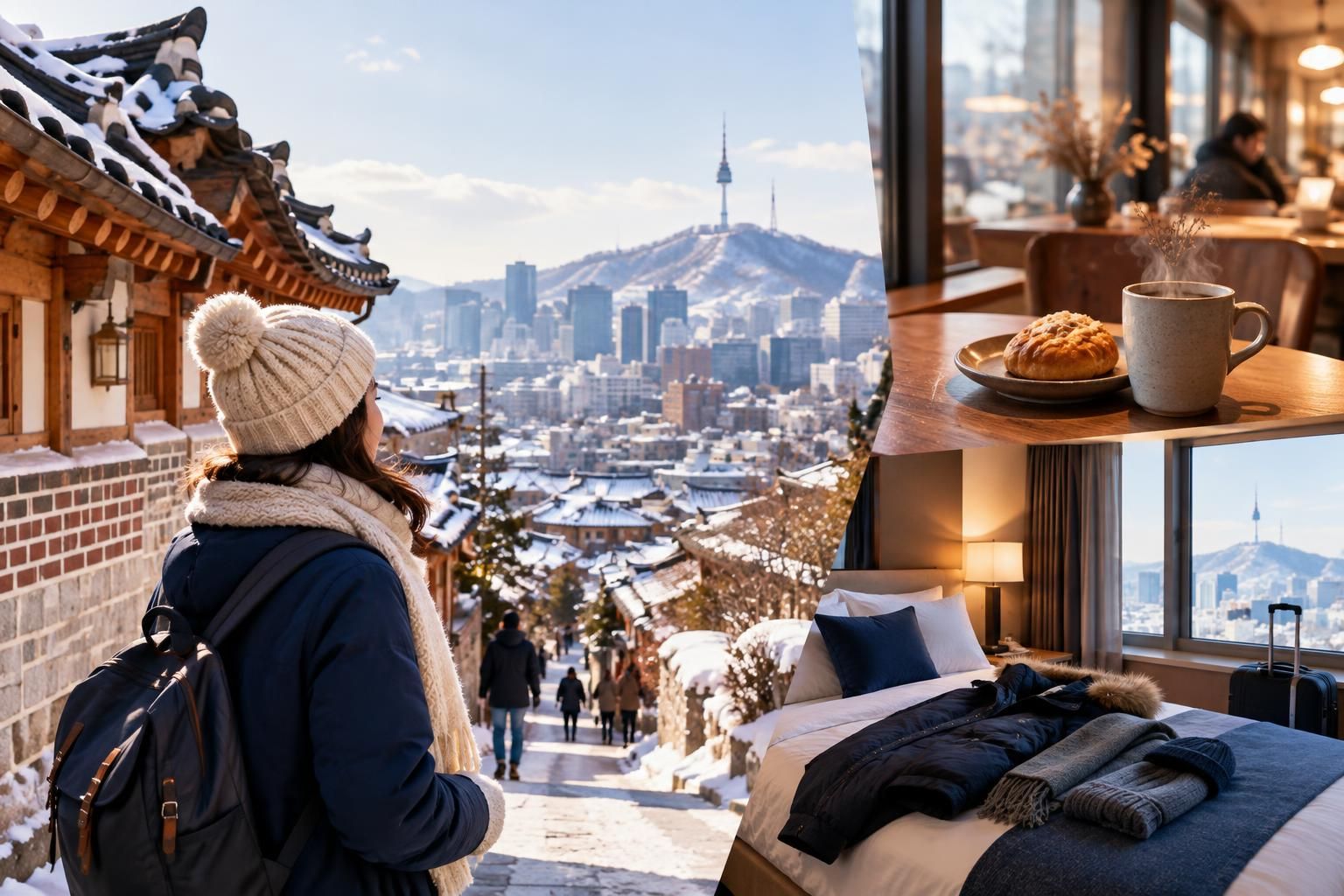
Seoul can make a rewarding winter city break: palace courtyards, hillside lanes and riverside views offer a different atmosphere from the city’s busy indoor markets, galleries and restaurants. The challenge is not finding enough to do. It is arranging those experiences so that cold weather, shorter daylight and repeated cross-city journeys do not exhaust your enthusiasm. A comfortable trip starts with a well-connected base and compact daily routes. Rather than treating winter as an obstacle to a standard sightseeing checklist, build an itinerary around alternating outdoor exploration with genuinely worthwhile indoor stops.
Choose a base for the journey home, not just the morning departure
When comparing accommodation, look beyond the nearest station symbol. A hotel several blocks uphill from an exit may feel very different after dinner in cold weather. Check the actual walking route, the usefulness of nearby rail lines and whether arriving with luggage involves stairs or a complicated interchange. An easy return matters more than being equally close to every attraction.
Jongno can suit a trip centered on historic neighborhoods and palaces. Myeongdong is worth considering for a central, shopping-oriented stay, while Hongdae may appeal if evening dining and a lively neighborhood are priorities. These are starting points, not interchangeable choices. Compare individual properties for room heating, bathroom arrangements, luggage space and the distance to restaurants you would happily use on a tired evening.
Build each day around one compact neighborhood cluster
Avoid pairing attractions simply because they appear on the same must-see list. A palace visit, a distant shopping district and a river walk can create a day dominated by transfers and repeated exposure to the cold. Instead, choose one main outdoor experience and add nearby places where you can spend meaningful time indoors.
For example, a central history day might combine Gyeongbokgung with parts of Seochon and a warm lunch. Another day could focus on Insadong, nearby galleries and selected lanes around Bukchon. Do not assume that every lane forms an easy walking circuit: slopes and residential streets affect the route. Treat homes as homes, keep voices low and follow any posted visitor restrictions.
Use daylight for views and flexibility for the rest
Put your most weather-sensitive activity in the brighter part of the day. Palace grounds, elevated viewpoints and longer neighborhood walks are more enjoyable when you are not racing fading light. Save shopping, a relaxed dinner or an indoor exhibition for later. Leave enough flexibility to swap days rather than committing every outdoor experience to a fixed slot.
A river walk can be a pleasant addition, but exposed spaces may feel much colder than sheltered streets. Make it an optional short outing rather than the backbone of a day. Likewise, a hillside route should have an easy alternative if paths are icy. Before setting out, check the forecast and the attraction’s current access information; winter conditions can change what feels practical.
Plan warm breaks that contribute to the trip
Indoor time need not be filler between the important sights. Choose a museum that matches your interests, a craft-focused gallery, a bookstore or a traditional teahouse as part of the day’s purpose. One substantial indoor visit often works better than several hurried café stops, especially if your group has different tolerances for the cold.
Use meals as deliberate pauses. A sit-down lunch gives everyone time to remove layers, rest and reconsider the afternoon. Markets can add variety, but covered does not necessarily mean warmly enclosed, and stalls may offer limited seating. Keep an alternative nearby rather than assuming a market meal will provide the same recovery time as a restaurant. Budget for these breaks as part of the itinerary.
Pack for frequent transitions between cold streets and heated rooms
Choose layers that are easy to adjust rather than relying on one bulky outfit. A warm outer layer, insulating midlayer and comfortable base layer let you adapt during train journeys and indoor visits. Gloves, a hat and a scarf are useful without taking much luggage space. A small day bag should have room for the items you remove indoors.
Footwear deserves particular attention. Bring shoes with dependable grip and enough room for comfortable socks, and avoid making new shoes your only option. A pair that handles damp pavement is more useful than one chosen solely for photographs. Carry a compact power bank if you depend heavily on your phone for navigation, and keep the phone protected from prolonged cold exposure.
Give a short stay a rhythm instead of a checklist
For a four-night visit, use the arrival day for settling in and finding an easy dinner near your accommodation. Make the next day a historic-neighborhood outing, followed by a museum-led day with a shorter outdoor walk. Reserve the final full day for the area that best matches your interests, such as contemporary design, shopping or another palace district.
Keep one optional activity each day, not three. If you feel comfortable and the weather cooperates, add it; otherwise, stopping early is a sensible choice. Avoid making the last evening your only chance for a major experience. Packing, an unhurried meal and a straightforward departure route are worth protecting, particularly when winter clothing makes luggage more cumbersome.
A satisfying winter visit to Seoul is less about staying outdoors longer and more about arranging the city intelligently. Choose accommodation with an easy return route, group sights geographically and make indoor experiences part of the plan rather than emergency substitutes. With adjustable layers and a little unclaimed time, you can enjoy both the city’s open spaces and its warmer, quieter corners.
AI-assisted evergreen travel guide. Featured image is an AI-generated illustration, not a specific product or booking.