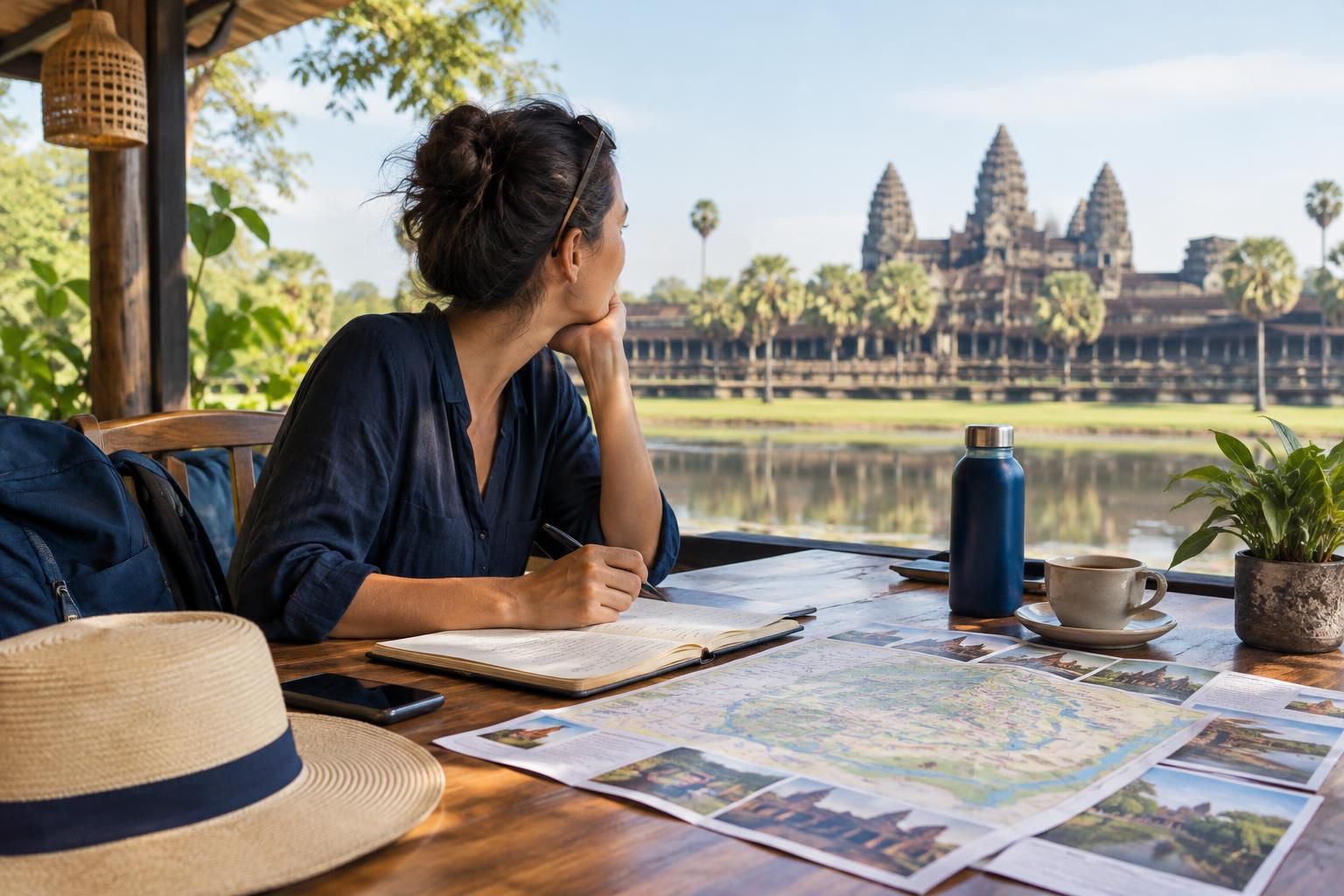
Angkor deserves more than a race between famous viewpoints. Its temple complexes reward attention to carved details, changing perspectives and the relationship between buildings and landscape. Yet distances, uneven surfaces and outdoor exposure can make an ambitious itinerary feel exhausting. A better approach is to base yourself in Siem Reap, choose a few priorities and organize each outing around how you actually enjoy exploring. For many travelers, four nights offers a useful starting point: enough room for contrasting temple visits, a quieter city day and some flexibility if an early start loses its appeal.
Choose the shape of your stay before choosing temples
Start with the number of substantial outdoor outings you want, rather than the longest possible monument list. A balanced four-night stay might include an arrival afternoon in Siem Reap, one day focused on major Angkor sites, one lighter city day and another temple outing. This is a planning framework, not a prescription; travelers who love archaeology may prefer more temple time, while mixed-interest groups may value longer breaks.
Treat arrival and departure days conservatively. A hotel change, meal and orientation walk can fill an afternoon without adding a major excursion. Before assigning temple days, check the current admission arrangements and any conditions attached to the ticket you intend to buy. Do not assume that every ticket structure allows the same pattern of visits.
Group sites by geography and the experience you want
Use a map to build coherent outings instead of linking every famous name into one day. Angkor Wat can anchor a visit centered on monumental architecture and detailed reliefs. Angkor Thom, including the Bayon, offers a different focus on faces, gateways and the scale of an ancient urban enclosure. Ta Prohm adds a striking relationship between masonry and trees. Give each stop a purpose so the buildings do not blur together.
Choose one essential site for each outing and treat additional stops as optional. More distant monuments, such as Banteay Srei, need their own transport calculation rather than being added casually to a crowded afternoon. Ask a guide or driver to explain the proposed sequence and travel time. A route that looks compact on a regional map may still involve substantial riding and walking.
Decide whether sunrise genuinely suits your trip
Sunrise is an option, not an entrance requirement for a meaningful Angkor visit. It involves waking early, arranging transport and potentially waiting before beginning a physically demanding day. If photography or the atmosphere of dawn matters to you, build the rest of that day lightly. If you struggle with early starts, a rested visit may be more rewarding than an iconic moment experienced through fatigue.
Plan for sustained outdoor exposure regardless of your start time. Carry drinking water, sun protection and a light rain layer, and wear footwear suited to irregular stone and steps. Build seated breaks and a proper meal into the route. Shade and shelter vary, so do not rely on every stop providing a comfortable place to recover.
Choose transport for the whole day, not just the first ride
A driver-arranged outing can simplify travel between dispersed sites, while a guide adds interpretation that transport alone does not provide. Clarify whether you are booking a driver, a guide or both. Agree on the route, pickup point, waiting arrangements and what happens if you want to finish early. For a group, compare the full arrangement rather than only the headline vehicle cost.
Cycling may appeal to confident riders who enjoy making the journey part of the experience, but distance, heat and road conditions deserve realistic consideration. Do not judge suitability from a short city ride. Travelers with limited walking tolerance should also discuss surfaces, steps and vehicle access before committing to a route; arriving near a temple does not mean the visit itself is step-free.
Pick a hotel that supports recovery and easy meals
In Siem Reap, choose between a central setting with convenient meals and a quieter property where returning for a long break feels appealing. Central does not automatically mean quiet, and an outlying location can add repeated transport decisions. Examine the immediate surroundings, room position and practical route to restaurants rather than choosing solely by distance from a map pin.
Useful features include effective cooling, somewhere to dry damp clothing and breakfast arrangements compatible with your plans. If you want a midday return, discuss that when organizing transport rather than assuming it is included. Travelers sensitive to stairs should ask about the actual route to their room. A comfortable base matters more when your sightseeing days involve prolonged walking.
Leave room for Siem Reap and respectful exploration
Use a non-temple day for a market browse, Cambodian food, a craft workshop or a museum visit chosen around your interests. Keep at least part of it unscheduled. A gentle day between temple outings can make the second outing feel fresh, particularly when companions have different levels of enthusiasm for architectural detail.
At religious and heritage sites, dress respectfully, follow posted guidance and avoid climbing or touching fragile features. Ask before photographing people, especially during worship. Check any excursion involving animals or community visits carefully, considering what participation involves rather than relying on a reassuring label. Fewer, thoughtfully chosen activities often create a more satisfying stay than a packed collection of brief stops.
The strongest Siem Reap itinerary gives Angkor both attention and breathing space. Choose a few meaningful priorities, group them sensibly and arrange transport around your preferred pace. With a comfortable base and permission to skip an optional stop, temple days become opportunities to notice more rather than simply cover more ground.
AI-assisted evergreen travel guide. Featured image is an AI-generated illustration, not a specific product or booking.