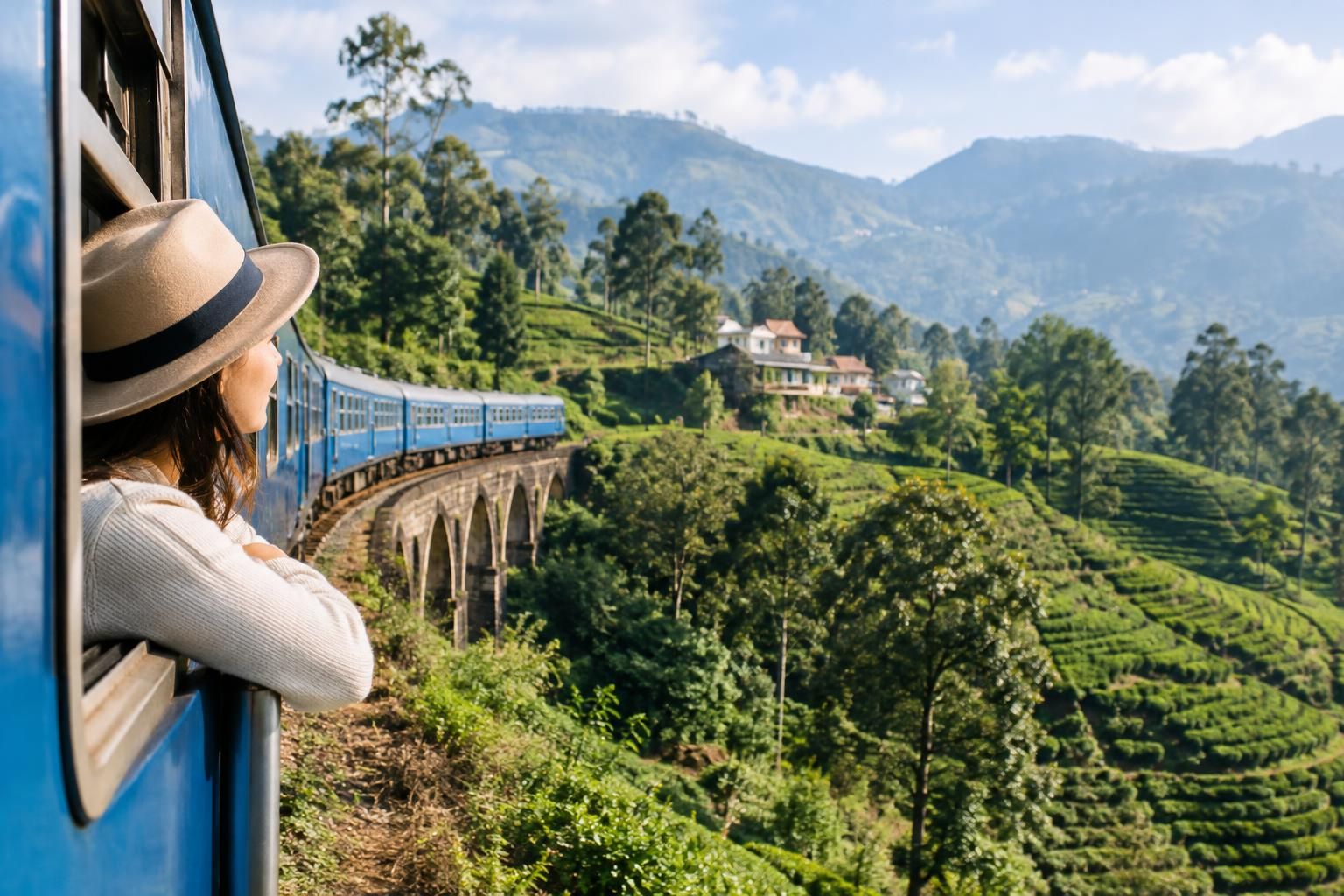
Sri Lanka’s hill-country railway offers a different perspective from the road: tea-covered slopes, small stations and valleys unfolding beyond the window. Yet a long scenic journey can become tiring when it sits between early hotel checkouts, luggage handling and another transfer after arrival. The most useful planning question is not how much railway you can cover, but which section fits the trip you actually want. By choosing one manageable train leg and giving the surrounding places enough time, you can make the journey a highlight rather than an endurance test.
Start with your overnight stops, not the longest train ride
Kandy, Nuwara Eliya and Ella serve different purposes in a hill-country itinerary. Kandy suits travelers interested in a substantial city stop, with religious heritage, markets and lakeside walks. Nuwara Eliya offers a highland setting and access to tea-growing landscapes. Ella works well for travelers who want a smaller base with walking excursions and places to pause between outings.
Choose the places you want to experience before connecting them by rail. If your main interest is walking around Ella, a long journey followed by one hurried night is a poor trade. If you prefer gardens, tea landscapes and cooler evenings, time around Nuwara Eliya may matter more than reaching every famous viewpoint. Two well-chosen bases usually offer more flexibility than a string of overnight stops.
Use Nanu Oya to divide the journey
Nanu Oya is the railway access point commonly used for Nuwara Eliya; the station and town are separate places, so allow for a road transfer. That distinction makes it a useful planning hinge. Rather than treating Kandy to Ella as one essential ride, consider Kandy to Nanu Oya or Nanu Oya to Ella as your scenic train experience.
Choose the first option if you want to end with a highland stay around Nuwara Eliya. Choose the second if you are already spending time there and want to continue toward Ella. Neither choice needs to be defended as the definitive stretch. Cloud, rain, seating and your own energy all influence the experience. A shorter ride that fits your route can be more rewarding than a longer one chosen only for completeness.
Judge the journey door to door
The train ride is only one part of a transfer day. Add the journey from your accommodation to the departure station, time to orient yourself, luggage handling and the onward trip at the other end. A property outside town may offer peaceful views while adding substantial effort on arrival and departure.
Compare rail and road for each leg rather than committing to one mode throughout. Road transport can provide a more direct link between rural accommodation, while the train makes sense when the journey itself is an activity. Before committing, check the timetable, reservation arrangements and seat options for your intended date. Keep the arrival evening simple, and avoid placing a prepaid excursion immediately after a connection.
Choose accommodation for access as well as scenery
A hillside room can look close to a station or town center on a map while involving a steep approach. Read the access description carefully and ask about steps, vehicle access and the final stretch to the entrance. Travelers carrying heavy bags, accompanying children or managing limited mobility should treat these details as core selection criteria, not minor conveniences.
For a short stay, easy access to meals may be worth more than an isolated panorama. For several nights, a quieter property can work well if you understand how outings and transfers will be arranged. In the highlands, also consider provisions for cool or damp weather: suitable bedding, somewhere to dry clothing and a comfortable indoor place to sit can make a noticeable difference.
Pack for the carriage and the hills
Keep the bag you need during the ride small enough to manage easily. Put drinking water, a modest snack, a light layer, a rain shell and any personal essentials within reach rather than buried in your main luggage. Download your accommodation details and a map before leaving. Carrying less overall also makes station changes and accommodation approaches less awkward.
Choose clothing that works across warm lowland conditions and cooler hill-country evenings. Shoes with reliable grip are more versatile than footwear chosen only for photographs, especially if your plans include damp paths. During the ride, enjoy the view from your seat or another permitted passenger area; an open doorway is not a necessary part of the experience. Keep belongings clear of aisles and avoid blocking other passengers for pictures.
Leave space for the landscape beyond the window
A balanced plan might include two nights around Nuwara Eliya, a train journey toward Ella, and three nights there before continuing elsewhere. Another traveler might prefer time in Kandy, a train ride to Nanu Oya and a highland stay followed by an onward road journey. These are itinerary patterns, not schedules: adapt them to your wider route and tolerance for moving.
Give each base one main outing and some unassigned time. A tea-focused visit, a town walk or a countryside excursion can provide context that the train window cannot. Where paths cross estates or working land, use established visitor routes and ask before entering or photographing workers closely. Keep a weather-flexible alternative rather than making every day depend on clear views.
The strongest hill-country itinerary is not necessarily the one with the longest train ride. Choose the places where you want to spend time, use one rail section to connect them, and account for the less glamorous details of bags, station transfers and hillside access. That leaves more energy for the landscapes you came to enjoy, both from the carriage and after you step off.
AI-assisted evergreen travel guide. Featured image is an AI-generated illustration, not a specific product or booking.