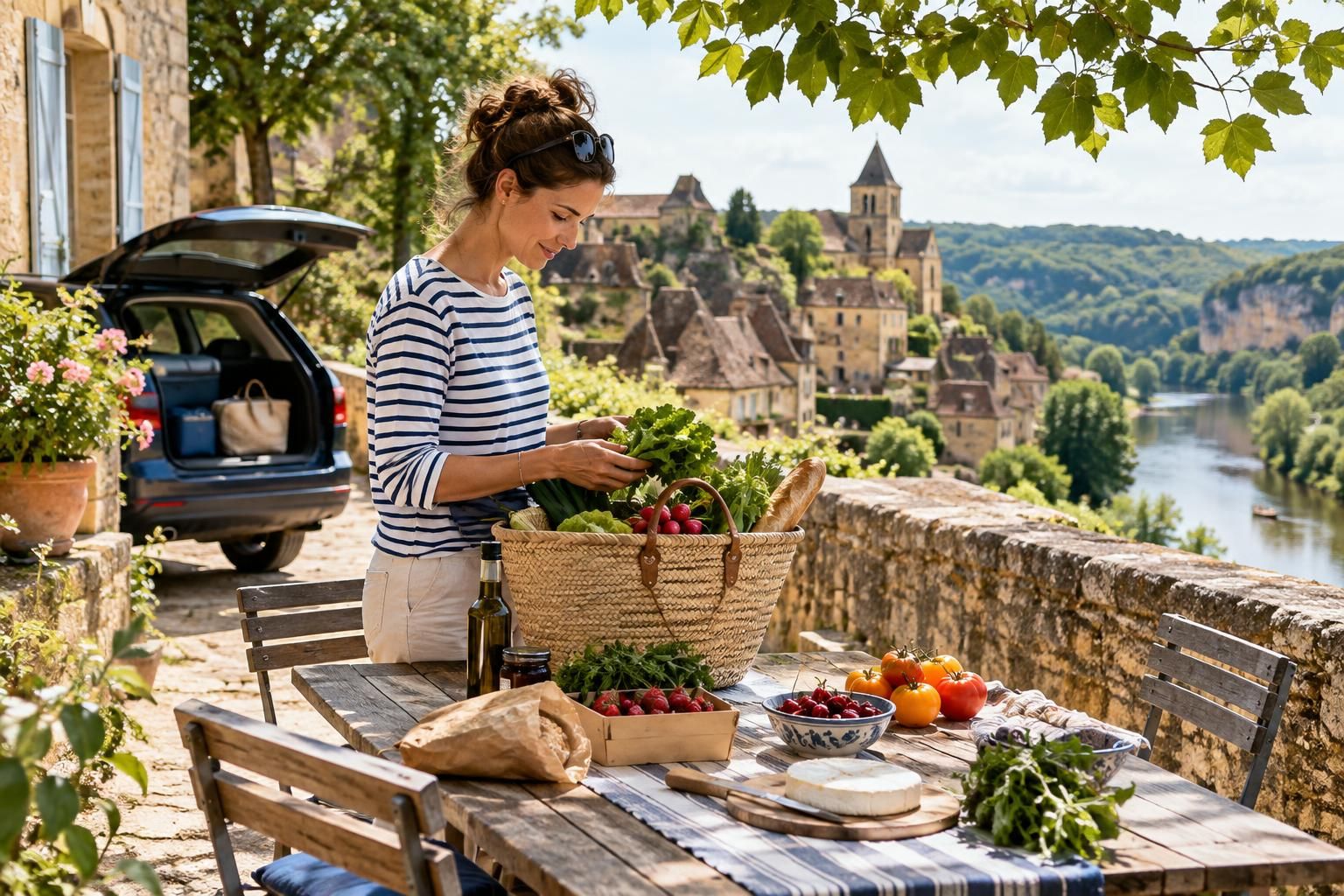
In the Dordogne, a good holiday can revolve around something as simple as deciding where to eat lunch. Medieval streets, limestone villages, gardens and river valleys provide plenty of reasons to explore, but a self-catering base gives the week a quieter rhythm: shop for a few appealing ingredients, take one manageable outing and return without a dinner reservation dictating the afternoon. Sarlat-la-Canéda and the surrounding countryside make a useful focus for this kind of trip. The key is choosing accommodation and daily distances that support the experience rather than spending the week maintaining an ambitious itinerary.
Choose between a walkable town stay and a countryside kitchen
Stay in or near central Sarlat if you want evening walks, food shopping on foot and the option to leave the car unused for a day. Before booking, establish how luggage reaches the property, whether there are stairs and where you would park. A central address can be atmospheric but inconvenient if every grocery bag requires a long walk from the car.
A rural cottage or apartment suits travelers who value outdoor meals, more space and quiet evenings at home. Look around the area between Sarlat and the Dordogne River rather than choosing solely from photographs of the building. A remote-looking terrace may mean driving whenever you need bread. For a first visit, favor a base with a straightforward route to a village and several possible outings nearby.
Check the accommodation details that shape everyday life
For a week of light cooking, useful equipment matters more than a large kitchen. Check for a refrigerator, hob, adequate pans, a sharp knife or suitable preparation tools, and somewhere comfortable to eat. If you expect to roast vegetables or reheat prepared dishes, confirm that an oven is actually included. A kitchenette does not necessarily provide one.
Read the practical details with your routine in mind. Laundry facilities can reduce packing, while shade and ventilation matter if you plan to spend afternoons indoors. Ask about outdoor seating if terrace meals are central to the trip. Check linen, cleaning arrangements and waste instructions too, so departure morning does not become an unexpected household project.
Make arrival day deliberately uncomplicated
A car is generally the most flexible choice for a village-focused week, especially with groceries and countryside accommodation. Compare arriving through a larger transport hub with collecting a car closer to your base, but judge the whole journey: transfers, luggage handling and the final drive all count. Do not assume a small local station will offer the vehicle collection arrangements you need.
Keep the first shopping list short: breakfast, drinks and one easy evening meal. Build in time to find the property before adding a sightseeing stop. For driving days, save parking locations and accommodation directions in advance. In historic villages, aim for designated parking rather than following navigation toward a central square through increasingly narrow streets.
Use three outing areas instead of a daily checklist
Organize the week around small geographic clusters. Give Sarlat its own unhurried day for lanes, architecture, browsing and a long lunch. Use another day for the river corridor around La Roque-Gageac and Beynac-et-Cazenac, choosing one village as the main visit rather than treating both as boxes to tick.
For a contrasting landscape and historical theme, consider an outing toward Les Eyzies and the Vézère Valley. Prehistoric sites and interpretive visits can require advance planning, so select a particular experience and check its booking arrangements before fixing the day. Add a garden, château or second village on another outing only if it genuinely interests your group.
Leave at least one day substantially empty. It can absorb rain, a slow morning or the discovery of somewhere worth revisiting. A map may suggest that many places are close together, but winding roads, parking and walks from the car can make short distances feel like full excursions.
Shop for meals you will realistically want to prepare
Treat markets as a way to choose lunch, not as an obligation to provision the entire week. Confirm market days locally and take a compact shopping bag. Bread, seasonal produce, cheese and a few prepared items can make a satisfying meal without extensive cooking. Buy modest quantities first, particularly when refrigerator space is limited.
Balance market browsing with an ordinary grocery shop for breakfast staples and simple suppers. Dordogne food traditions include walnuts, duck and rich regional dishes, but you need not build every meal around them. Travelers with dietary requirements can bring a written explanation in French and ask specific questions rather than assuming a dish or prepared food is suitable.
Let weather and energy decide the final shape of each day
In warmer conditions, explore exposed village streets earlier and keep the afternoon flexible. Cobbles, slopes and steps make supportive footwear useful even when the itinerary sounds gentle. Carry water and a light layer, and keep a rain jacket accessible rather than buried beneath shopping.
If a river activity appeals, make it a separate outing rather than an extra squeezed between village visits. Conditions, physical demands and operator requirements need checking at the time. For a lower-effort day, choose a town walk, a seated lunch and an afternoon back at your accommodation. The kitchen should create freedom, not an expectation that you cook every night.
A rewarding Dordogne week needs fewer commitments than its map might suggest. Choose a base that makes shopping and parking manageable, plan a handful of contrasting outings and leave space to eat well without elaborate preparation. The advantage of self-catering is not simply controlling meal costs: it is having somewhere comfortable to return when the best plan is bread, a few local ingredients and no further driving.
AI-assisted evergreen travel guide. Featured image is an AI-generated illustration, not a specific product or booking.