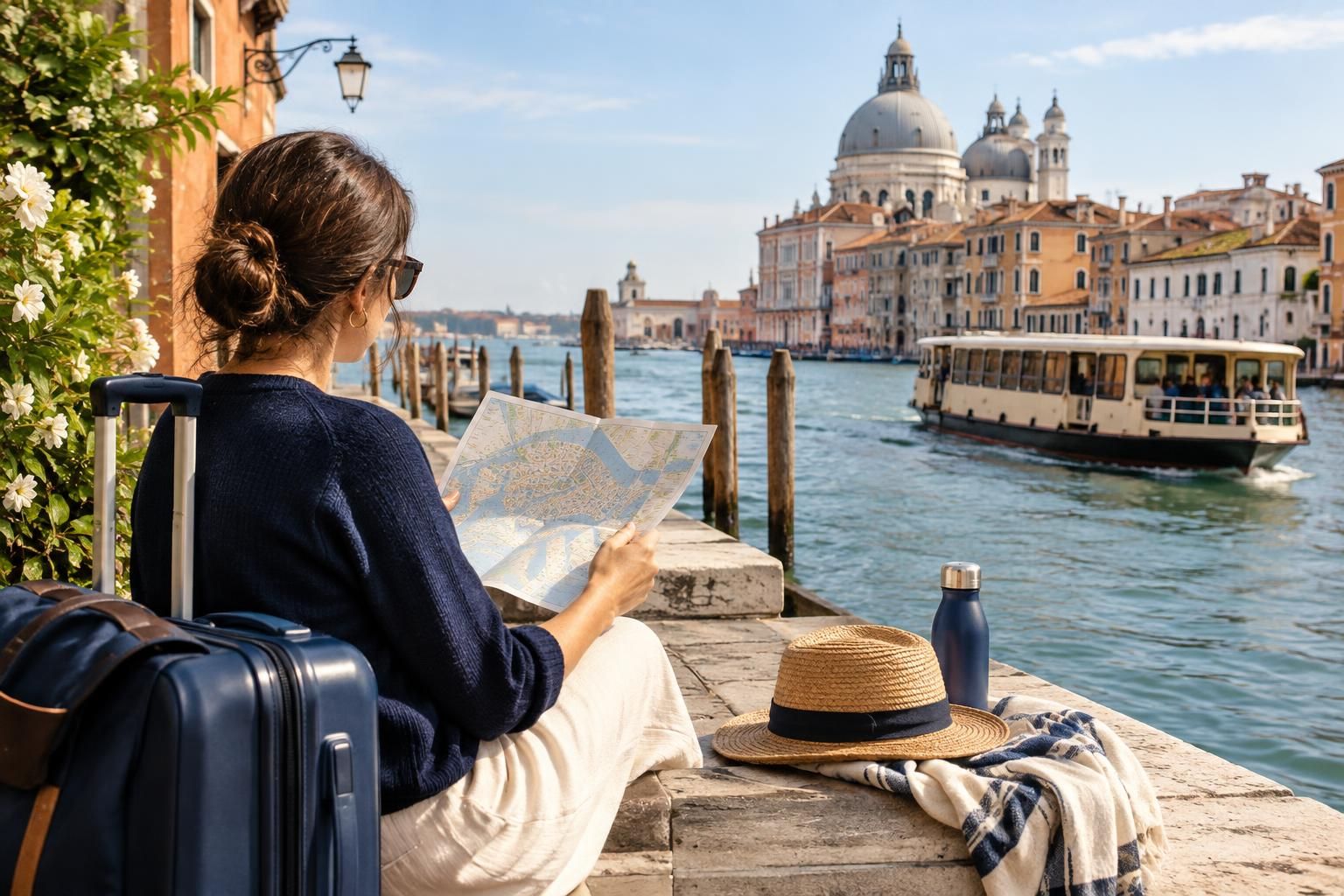
Venice rewards travelers who allow time for its geography. A short distance on a map can involve several bridges, a winding lane or a boat journey, while a quiet canal may sit just beyond a busy pedestrian route. Staying for three nights lets you experience more than a circuit between the railway station, Rialto and St. Mark’s Square. The key is not to fit everything in, but to choose a convenient neighborhood, group sightseeing sensibly and leave enough space for the city itself.
Choose a neighborhood around your priorities
Venice’s six historic districts, known as sestieri, offer different starting points. Cannaregio suits travelers who want residential streets and convenient access to the railway station, although its eastern reaches are farther away. Dorsoduro is a useful choice for art-focused stays, with the Accademia area, smaller canals and the broad Zattere waterfront providing varied walking routes.
San Marco places major landmarks close at hand, but proximity does not necessarily mean a quieter or simpler stay. Castello stretches from streets near the central sights toward more residential areas and the gardens in the east. Santa Croce can work well for arrivals through Piazzale Roma. Compare individual addresses rather than relying on district names: the nearest bridge, boat stop and main walking route matter more than a neighborhood label.
Make arrival and luggage part of the accommodation decision
Before booking, trace the complete journey from your arrival point to the property. Venezia Santa Lucia is the railway station in historic Venice; Venezia Mestre is on the mainland. If arriving by air, compare the available land and water connections for your travel dates, then identify the final walking section. A room described as central can still require an awkward approach with bags.
Pack for bridges and steps rather than smooth pavement alone. A smaller suitcase or manageable backpack is easier to carry across canals and through narrow passages. Ask accommodation providers about stairs, lifts, luggage storage and check-in arrangements. Travelers with mobility requirements should examine the specific route and building carefully; a nearby boat stop does not by itself establish step-free access.
Build three days around geographic clusters
Use the arrival afternoon for settling in and a short neighborhood walk. Find a nearby place for breakfast, locate your most useful boat stop and explore without a major reservation. This makes the first day productive without making it fragile: a delayed arrival need not disrupt an expensive or tightly timed activity.
Give one full day to the San Marco area and a second to a contrasting district. For example, combine St. Mark’s Square and a chosen major attraction with a walk toward Castello. On another day, focus on Dorsoduro’s art collections, canals and waterfront. Leave Rialto for a separate walk or include it when the route naturally fits. One substantial indoor visit per day is often enough; adding several can turn Venice into a sequence of queues and interiors.
Use walking and water transport for different purposes
Walking reveals the city’s small-scale details, while public water transport makes the lagoon geography easier to understand. Do not judge a boat journey by distance alone: routes, stops, waiting and the walk at either end all affect the total journey. Check current route information before committing to a connection, especially when catching an onward train or flight.
Compare individual fares with any available transport passes using the journeys you actually expect to make. A mostly walkable itinerary may not need the same ticket as a stay involving several island trips. Also distinguish public water buses, water taxis and gondola rides when budgeting. They serve different purposes, and a scenic ride should not be confused with the most practical way to reach your accommodation.
Choose one lagoon excursion, not an island checklist
A three-night stay can accommodate a lagoon outing, but it will take time from Venice itself. Murano is a natural option for travelers interested in glassmaking; Burano offers a different townscape and a history associated with lace. Choose according to your interests rather than assuming both belong on every itinerary. Adding more stops means more transfers and less unhurried time ashore.
Keep an island trip flexible when possible. Wind, rain or transport disruption can make a neighborhood museum or a long lunch a better use of the day. If seeing the lagoon is your priority, protect a generous block of time rather than squeezing it between a morning reservation and an evening departure.
Budget for the experience and leave room for the weather
Compare the whole cost of staying in historic Venice with a mainland base: accommodation, transport, meals and the value of returning easily to your room. A mainland stay may suit a tighter budget or a broader regional trip; a historic-center stay makes early walks and evening wandering easier. Read room descriptions closely, including bathroom arrangements, stairs and whether a canal view matters enough to pay extra.
Build a mix of outdoor walks and indoor options for any season. Summer can call for slower afternoons, while cooler months may bring damp weather and shorter daylight. High water can affect low-lying areas, so consult local information near departure. Check current visitor requirements and booking conditions separately, and avoid scheduling every hour. Venice is easier to enjoy when a detour is part of the day rather than a failure of the plan.
A rewarding three-night Venice stay starts with a practical address and a modest itinerary. Choose one major sightseeing cluster each day, carry luggage you can manage across bridges and treat a lagoon excursion as a choice rather than an obligation. The time left between those plans gives you space to notice the city beyond its landmarks.
AI-assisted evergreen travel guide. Featured image is an AI-generated illustration, not a specific product or booking.