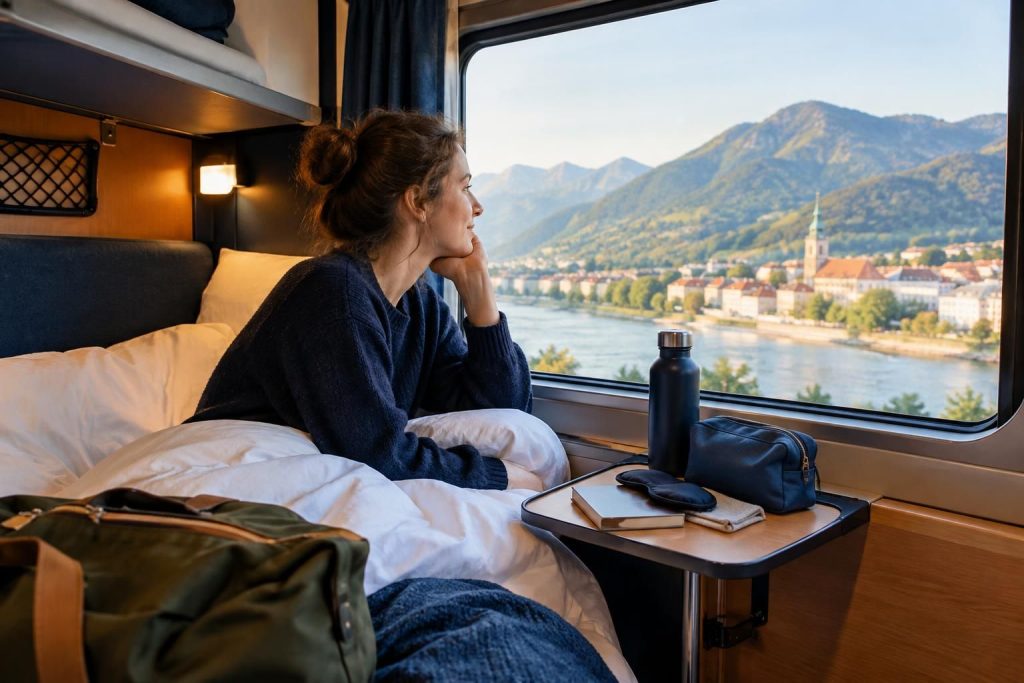
An overnight train can be a memorable part of a Vietnam trip, but it works best as a deliberate choice rather than an automatic substitute for a flight or hotel. You exchange a conventional bedroom for a moving compartment, and a free sightseeing day for an evening departure and morning arrival. The useful question is not simply whether you can sleep on the train, but whether the whole journey suits your route, comfort needs and plans on either side. Start with one potential sleeper journey, then build enough flexibility around it to make the experience worthwhile.
Choose the journey before committing to the experience
Vietnam’s north–south railway makes sleeper travel worth considering for some longer journeys between northern and central Vietnam, or between central and southern destinations. However, a route that looks convenient on a map may involve an awkward departure or arrival. Compare the timetable for your intended date, including station transfers, rather than judging only by time aboard.
For a trip linking Hanoi, Hue and Hoi An, for example, investigate whether a sleeper journey between Hanoi and Hue fits your plans. Hoi An requires an onward road transfer from a rail gateway such as Da Nang, so the train is not the entire journey. Avoid adding a railway stop solely to justify the sleeper: each destination should earn its place independently.
Compare the full cost, not just the ticket
A sleeper can replace a night of accommodation, but the saving is not necessarily equal to a hotel bill. Include transport to both stations, any extra meal costs, luggage storage and the possibility of paying for early room access. If you keep a hotel room for a shower before departure, that also changes the calculation.
Compare the train with a realistic alternative: a flight plus airport transfers, or a daytime journey plus accommodation. Then consider the value of your energy. Someone who sleeps lightly may prefer a daytime train with scenery and a proper bed afterward. A traveler comfortable with shared spaces may find the overnight journey a worthwhile experience even without a financial saving.
Choose a sleeping arrangement you can actually tolerate
Look carefully at the specific train and accommodation offered. Berth count, compartment layout, bedding and onboard facilities can differ. Do not assume that every option described as a sleeper provides the same space or privacy. A berth in a shared compartment is not equivalent to a private room, even when the listing uses reassuring comfort labels.
If available, a lower berth may suit someone who wants to avoid climbing, while an upper berth involves negotiating a ladder or steps in a moving carriage. Check dimensions if height is a concern. Couples and families should verify berth positions rather than assume seats bought together will be adjacent. If privacy is essential, establish exactly what a booking includes before paying.
Pack one small bag for the night
Arrange your luggage so you can manage the journey without repeatedly opening a large suitcase. Keep a toothbrush, tissues, an eye mask, earplugs, charging cable and a light layer in a small overnight pouch. Wear comfortable clothes that work for both sleeping and walking through shared areas. Pack water and a simple meal or snack rather than depending on a particular onboard food option.
Keep your ticket information, identification and valuables accessible and under your control. Save essential journey details offline, including the destination station and accommodation address. Large luggage can be awkward in a confined compartment, so check storage arrangements where possible and pack within whatever you can lift and maneuver yourself. Avoid leaving loose items scattered around your berth before arrival.
Make both ends of the journey easy
On departure day, keep sightseeing close to your accommodation or the station rather than attempting a distant excursion. Allow time to retrieve bags, eat and reach the correct station without rushing. Confirm the station name on your booking: a city’s familiar name does not necessarily tell you which entrance or departure point you need.
Treat the arrival morning as a transition, not a full sightseeing session. Ask your accommodation about luggage storage and room-access arrangements, without assuming an early check-in. A relaxed breakfast and one nearby activity are better first commitments than a tightly timed tour. Leave a buffer before flights, boats or other important connections, since a late train can affect the rest of the day.
Use one sleeper journey to improve the wider itinerary
For a first attempt, choose one overnight leg and balance it with several nights in the next destination. This gives you time to recover if sleep is fragmented and reduces repeated packing. An illustrative route might combine a Hanoi stay, an overnight journey to Hue if the timetable suits, time exploring Hue, and a separate transfer toward Da Nang or Hoi An.
Keep the railway experience in proportion. Looking out at stations, sharing a compartment and waking somewhere new can be part of the appeal, but darkness limits scenery and sleep is never assured. If coastal views matter more than saving a daytime transfer, consider taking that portion of your route in daylight instead. The best transport choice supports the trip you want, rather than becoming a challenge to complete.
Choose an overnight train in Vietnam when the route, departure time and sleeping arrangement genuinely fit your plans. Compare door-to-door costs, pack for a compact shared space and protect the following morning from ambitious commitments. One well-placed sleeper journey can add variety to an itinerary without making every transfer an endurance exercise.
AI-assisted evergreen travel guide. Featured image is an AI-generated illustration, not a specific product or booking.