Yogyakarta makes a rewarding base for exploring central Java, but its appeal extends beyond trips to Borobudur and Prambanan. Palace traditions, batik workshops, neighborhood food stalls and everyday street life deserve space alongside the major monuments. The planning challenge is distance: a temple that looks nearby on a regional map can still consume much of a day once transport and time on site are included. A stay of four or five nights lets you combine cultural outings with unhurried city time, rather than treating Yogyakarta as a place to sleep between excursions.
Choose your base for evenings, not just sightseeing departures
Central Yogyakarta suits travelers who want to step out for food and short walks without arranging transport every time. The area around Malioboro offers a busy commercial atmosphere, while streets nearer the Kraton, the royal palace complex, can suit a more heritage-focused stay. Prawirotaman is another area to consider for accommodation and places to eat.
Choose the actual street as carefully as the neighborhood. A room facing a busy road may feel very different from one inside a courtyard. Check recent descriptions for noise, stairs, cooling and vehicle access. If you plan several afternoons indoors, a comfortable room or shaded communal space is more useful than a long list of amenities you will barely use.
Give Borobudur and Prambanan separate places in the itinerary
Borobudur, a Buddhist monument northwest of Yogyakarta, and Prambanan, a Hindu temple complex to the east, offer different architectural experiences. Combining them into one outing may be possible with arranged transport, but separate visits leave more room for looking closely, resting and absorbing what you see.
Before committing to transport, check the current admission arrangements for each site. Entry to a wider complex and access to particular structures may not be the same thing. Ask what a proposed visit actually includes, how much walking it involves and where the driver will wait. Avoid making sunrise the defining feature of your plan; a satisfying visit depends more on suitable access and a manageable pace.
Make batik a hands-on experience rather than a shopping stop
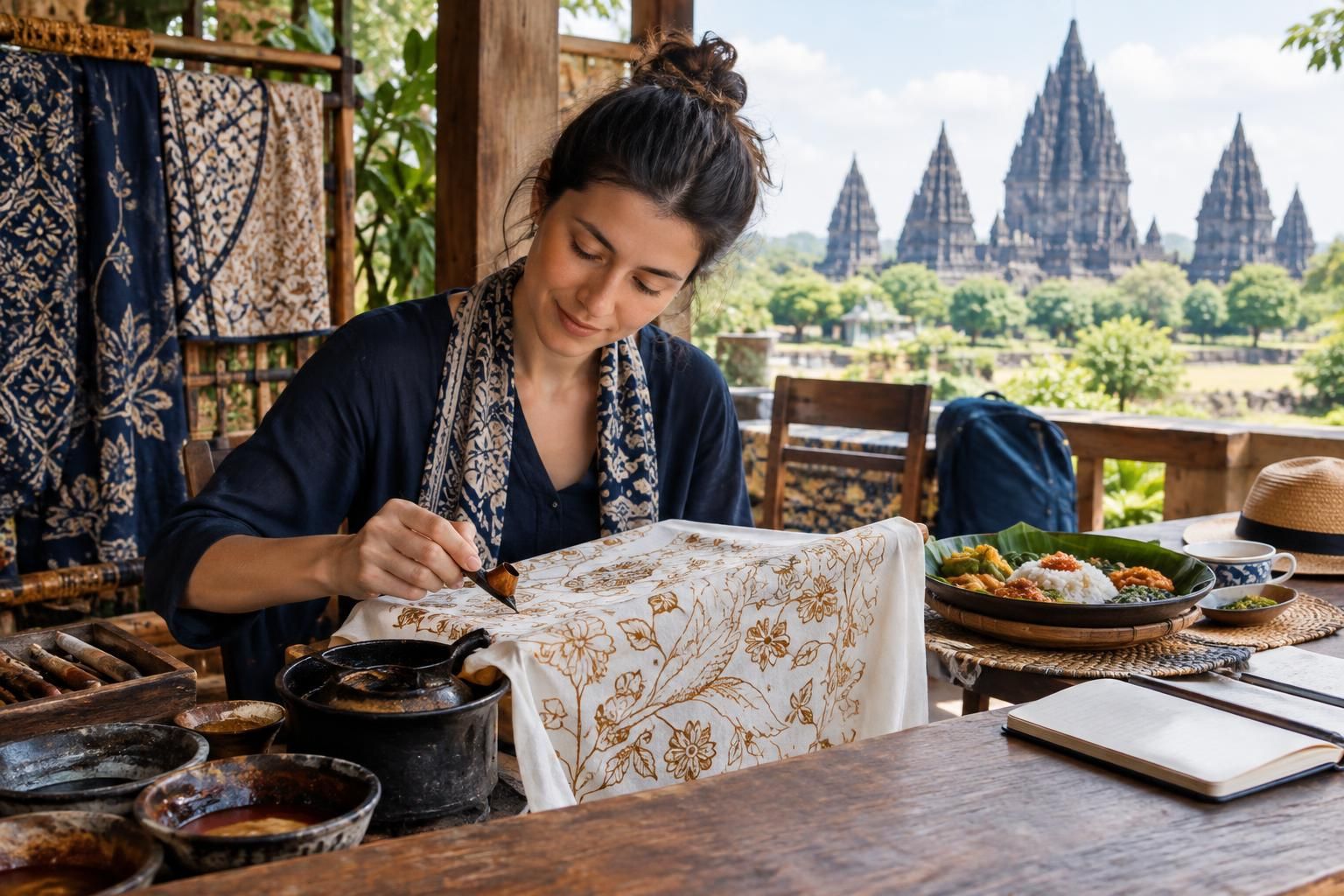
A batik session adds a different rhythm to a monument-heavy trip. The process uses wax to resist dye, allowing patterns to emerge through successive stages. Depending on the workshop, you might draw with a canting tool, work with stamps, or complete a simplified introductory piece.
Ask about the process before choosing a session. Will you design something yourself, or trace a prepared pattern? Which stages will you do personally? How long will finishing and drying take? Schedule the workshop early enough in your stay to allow for collection if needed. Wear clothes you would not mind marking, and leave space in your luggage for the finished textile.
Build a city day around one compact area
The Kraton area and Taman Sari provide a useful starting point for a city-focused day, but avoid assuming that every nearby attraction belongs in the same walking circuit. Heat, road crossings and indirect entrances can make short map distances feel longer. Pick one main visit, then add neighborhood streets, a meal and another stop only if your energy holds.
Kotagede offers a different focus, with historic lanes and a silversmithing tradition. It works well as a separate half-day rather than an afterthought following a distant temple excursion. When entering workshops or residential lanes, ask before photographing people or working spaces. A small purchase is not a substitute for permission, and observing quietly can be more rewarding than trying to document everything.
Use food to structure breaks, not create another checklist
Gudeg, made with young jackfruit, is closely associated with Yogyakarta and is a useful starting point for exploring local cooking. It often has a sweet flavor profile and may come with several accompaniments. Ask what is included, especially if you avoid meat or other ingredients; the main vegetable does not necessarily describe the whole plate.
Plan one food destination at a time rather than crossing the city for every meal. After a substantial temple outing, eating near your accommodation may be the better choice. For a more exploratory day, browse menus before ordering and choose a few contrasting dishes across meals. Carry drinking water, and allow regular seated breaks rather than relying on snacks while walking.
Organize transport around geography and realistic buffers
Group stops by area rather than by theme. A craft workshop on the opposite side of the city may pair poorly with a temple visit, even if both sound like cultural highlights. Compare public transport, taxis and arranged drivers according to the specific journey, your group size and how much flexibility you want.
For a driver-led outing, agree on the stops, waiting time, parking costs and whether any shopping visits are proposed. For arrival and departure days, confirm the exact airport or railway station shown on your booking rather than assuming all gateways are equally convenient. Leave a generous buffer before onward travel, and keep your final morning free of distant excursions.
Keep one flexible block in a four-night stay
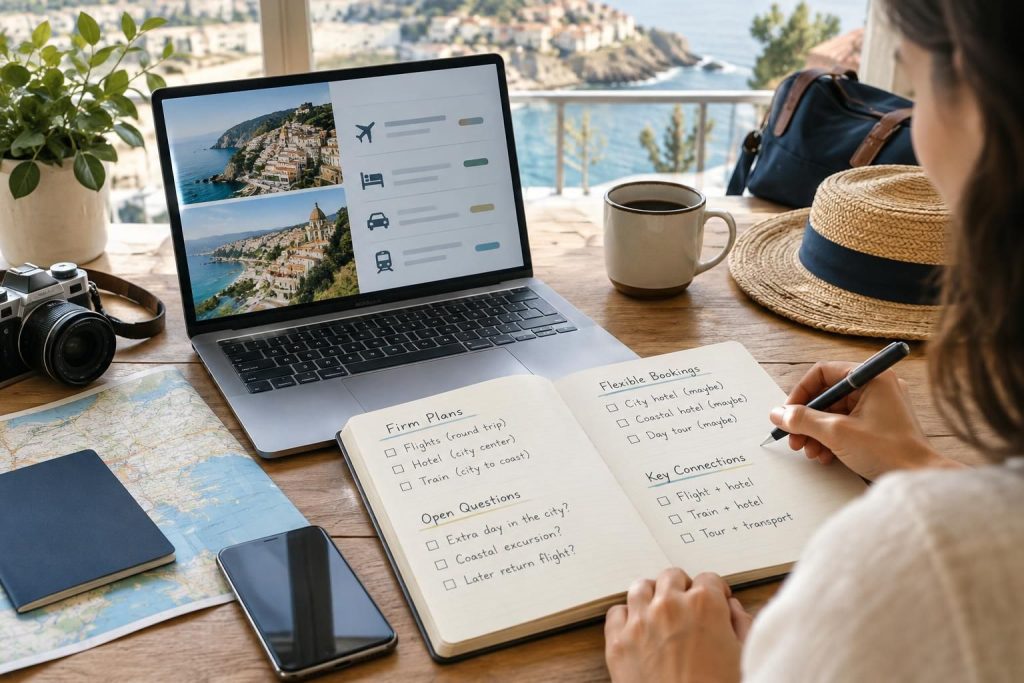
A workable sequence is arrival and a local meal, one day for Borobudur, one city-and-batik day, and one day built around Prambanan. Keep the remaining arrival or departure hours modest. With a fifth night, add Kotagede or another slow city day rather than automatically extending your sightseeing radius.
Pack light, breathable clothing, comfortable footwear, sun protection and a compact rain layer. Check dress expectations for the places you intend to enter. Keep your workshop or city day movable so it can absorb poor weather, fatigue or changed access arrangements without forcing you to abandon a major priority.
The strongest Yogyakarta itinerary gives its famous temples room without allowing them to occupy the entire trip. Choose a base that makes ordinary evenings easy, separate the longer outings, and reserve meaningful time for a craft or neighborhood experience. You will leave with a broader sense of the city—and fewer memories of simply moving between sights.
AI-assisted evergreen travel guide. Featured image is an AI-generated illustration, not a specific product or booking.