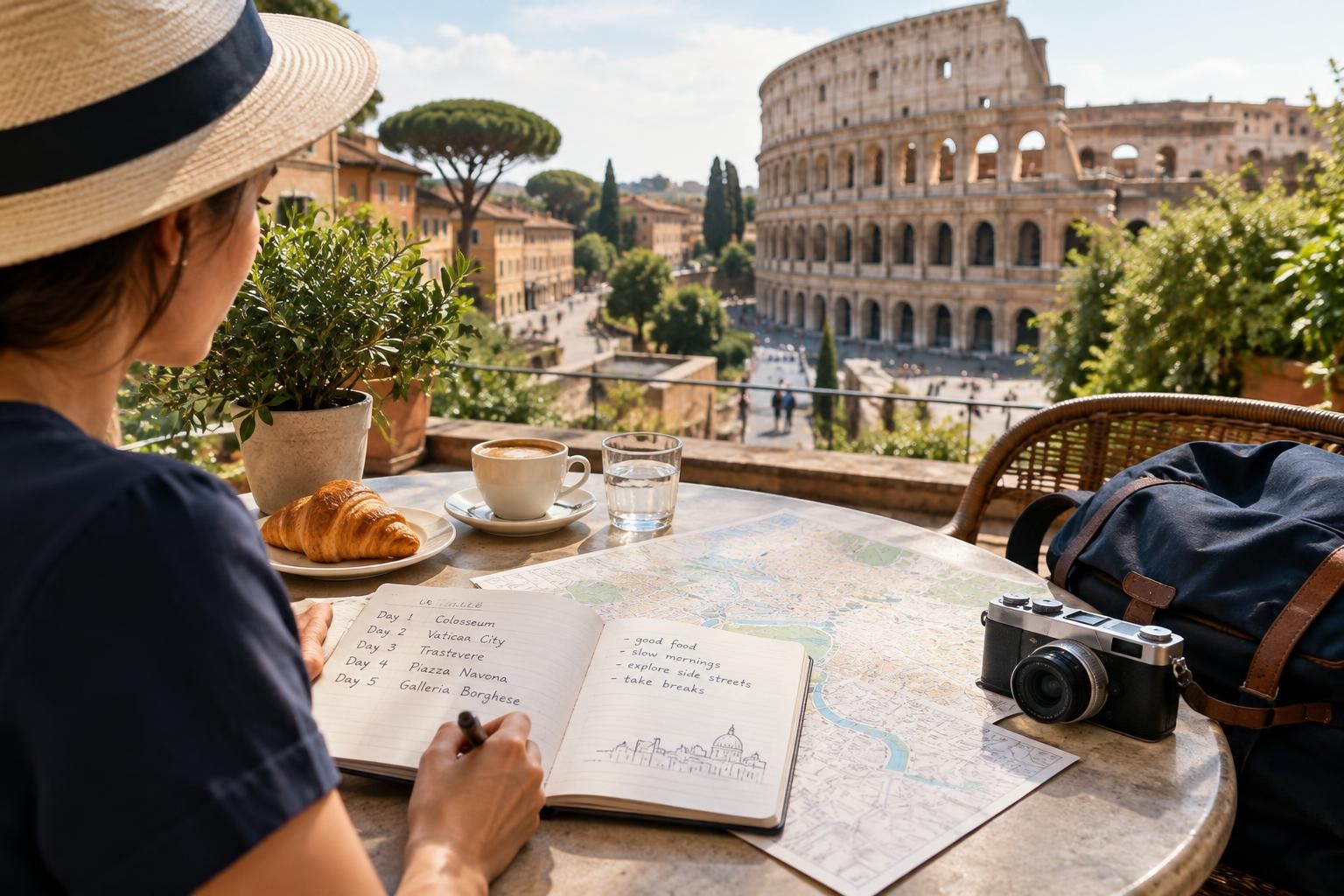
Rome can make a short itinerary look deceptively simple: a few famous monuments, some churches and plenty of pasta. The difficulty is fitting those ambitions around distances, uneven paving, busy entrances and the attention each place deserves. A five-night stay offers room to approach the city differently. Choose one main sight for each full day, then build a loose neighborhood outing around it. This gives the Colosseum, Vatican Museums or a favorite art collection space to register, without turning every afternoon into a race across town.
Decide what deserves your best hours
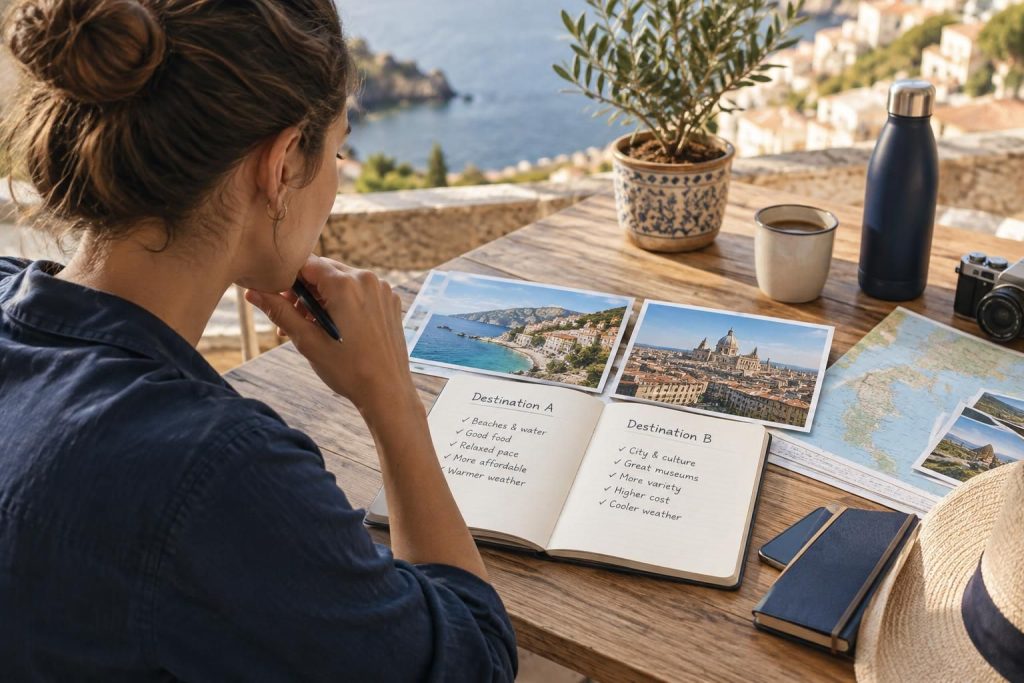
Before choosing accommodation or reserving visits, each traveler should name two priorities. Be specific: ancient Roman engineering, Renaissance painting, neighborhood food or simply long walks with interesting stops. Use those preferences to select three or four anchor experiences. A couple fascinated by antiquity might devote separate outings to the Colosseum area and Capitoline Museums; someone more interested in art might replace one with the Borghese Gallery.
Treat an anchor as the day's main commitment, not necessarily its longest activity. A compact gallery can still demand plenty of concentration. Keep any second museum, interior visit or distant excursion optional. If your group has different interests, a split morning followed by a shared lunch can work better than asking everyone to complete the same checklist.
Choose a base for the days you actually want
Mark your anchors on a map before comparing rooms. The historic center suits travelers who want atmospheric walks and the possibility of returning to their accommodation between outings. Monti can appeal if ancient Rome is a major focus. Prati is worth considering for a Vatican-focused day and a more regular street layout. Trastevere offers an appealing neighborhood setting, but check the route from a specific property to your planned visits rather than assuming everything is close.
For a five-night stay, practical room details matter more than a photogenic entrance. Look for clear information about stairs and lifts, street noise, temperature control and luggage storage. If midday breaks are central to your plan, a cheaper room far from your daily routes may be a false economy. Compare the total journey from door to destination, including walking at either end.
Group sights into neighborhoods, not popularity rankings
Build each day around a compact area. An ancient Rome day might combine your chosen major visit with a walk through Monti. A Vatican day could continue toward Borgo and the river, rather than crossing the city for another headline attraction. For a historic-center day, choose a loose route linking the Pantheon area, Piazza Navona and nearby streets, leaving individual interiors optional.
Give Trastevere and the Jewish Quarter room as neighborhood explorations rather than treating them only as meal stops. Across the trip, vary the rhythm: a demanding museum day, a wandering day and an archaeological day feel different even when all involve walking. Avoid filling every gap on the map. An unplanned square or a quiet pause can be more rewarding than another destination reached while tired.
Reserve selectively and leave real margins
For any essential attraction, check its official visitor information before fixing the rest of that day. Reservation arrangements, entry procedures and access to particular areas can change. Distinguish between an entry reservation and a guided experience, and understand what your chosen option includes. Do not build a tightly timed chain around several bookings simply because their locations appear close together.
Allow room for finding the entrance, navigating the building and taking a break afterward. On arrival day, make only a light neighborhood plan; a delayed journey should not unravel the itinerary. Keep one half-day without a major commitment later in the stay. It can absorb something postponed, accommodate a shared recommendation or simply provide a slower finish after several stimulating days.
Plan walking, transport and meals together
Walking reveals Rome's smaller details, but it should be a choice rather than a rule. Check whether public transport makes sense for the longer leg of an outing, then explore on foot within the neighborhood. The nearest station is not always the most useful starting point once the final walk is included. Save your accommodation address and an offline map, and check current ticket arrangements before using local transport.
Build meals into the route without turning every lunch into another appointment. Identify a general area for eating near the end of your morning visit, with a second area in mind if the first feels too crowded. A seated lunch or return to your room can divide the day into two manageable outings. Wear shoes already comfortable on uneven surfaces and carry only what you need for that stretch.
Use a flexible five-night framework
For a stay with four full days, a workable outline is arrival and a local walk; ancient Rome; the Vatican area; the historic center; then a chosen gallery or neighborhood day before departure. This is a planning framework, not a fixed order. Arrange the days around your actual interests, confirmed visits and the forecast, with indoor and outdoor alternatives where practical.
In warmer conditions, favor shorter exposed walks and longer breaks rather than assuming you will keep moving all afternoon. During wetter or cooler periods, keep a nearby indoor option in mind without booking every possible fallback. For the final evening, stay relatively close to your base, revisit somewhere you enjoyed and leave enough time to pack without sacrificing the whole evening.
A slower Rome trip is not about seeing as little as possible. It is about giving your priorities enough time and removing journeys that add effort without much pleasure. With one main sight each day, a well-positioned base and genuinely optional extras, five nights can feel like a satisfying visit rather than an unfinished checklist.
AI-assisted evergreen travel guide. Featured image is an AI-generated illustration, not a specific product or booking.