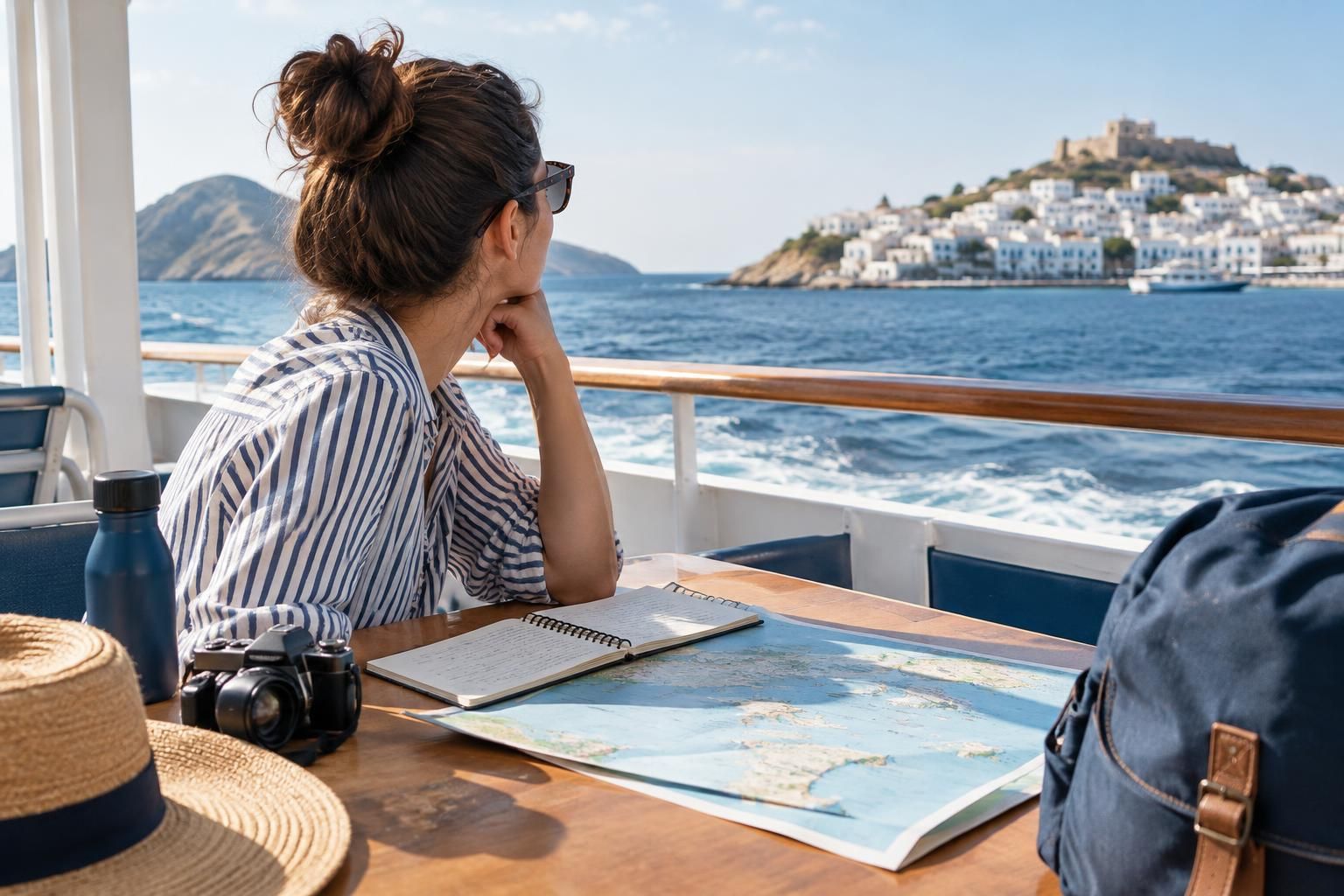
A Greek island-hopping holiday works best when the map is only the starting point. Two islands that look close together may not fit neatly into the same itinerary, while a ferry journey can take more of the day than its advertised crossing time suggests. For a first trip, the most useful decision is often what to leave out. A compact route, longer stays and a sensible mainland buffer can create more time for village walks, swimming and unhurried meals. Here is how to turn an appealing collection of islands into a practical holiday.
Choose one island group and two contrasting stops
Start with the kind of days you want rather than a list of famous names. Do you picture sandy beaches, archaeological sites, harbor towns or walking between villages? Pick one main priority and one secondary interest. This makes it easier to choose islands that complement each other instead of repeating the same experience.
For example, Naxos and Paros are a pairing to investigate for a Cyclades trip centered on villages, beaches and waterfront towns. Travelers drawn to neoclassical architecture might consider Syros as one stop instead. Treat these as destination ideas, not guaranteed transport combinations: confirm that suitable sailings connect your chosen ports on your actual dates. Avoid adding another island group simply because it appears nearby on a national map.
Allocate nights before choosing individual ferries
For roughly a week on the islands, two bases are usually enough. Three nights give you two complete days between arrival and departure; four or five nights allow more room for a beach day, an inland excursion and a change of plan. A short stay can still work, but it should have a clear purpose rather than serve as a place to tick off.
Sketch the trip in nights, including any mainland stays, before committing to accommodation. An illustrative ten-night plan might include one night in Athens, four nights on the first island, four on the second and a final mainland night. This is a planning framework rather than a timetable. Adjust it around your arrival airport, ferry options and how much city time you actually want.
Treat every ferry transfer as a travel day
A crossing involves more than time aboard. Add packing, checkout, reaching the port, the required boarding margin, disembarkation and the journey to your next room. Even a relatively short sailing can interrupt the middle of the day. Avoid attaching a prepaid excursion or an ambitious sightseeing plan to an island arrival.
Compare the whole journey when choosing a sailing. A convenient departure and arrival may matter more than the shortest crossing. Vessel layout, seating arrangements, outdoor access and luggage storage can also affect comfort; check the details for the specific service rather than assuming all ferries are alike. If motion tends to bother you, factor that into your choice and keep your arrival plans light.
Choose accommodation around local transport, not just views
A harbor stay can simplify arrival and provide easy access to meals, but the ferry port is not always the island's most convenient holiday base. Some ports sit away from the main town, while a beach property may require additional transport for almost every outing. Before booking, map the actual arrival port, accommodation entrance and places you expect to visit.
Without a car, a walkable town with practical transport links is often a useful compromise. Check seasonal bus information and transfer arrangements for your dates, including how you will handle an early departure. Ask about stairs and vehicle access if carrying luggage is a concern. A hillside room may offer an attractive outlook while making repeated walks in the heat less appealing.
Build flexibility around weather and onward travel
Wind and sea conditions can disrupt ferry plans, so avoid making an island crossing the sole bridge to an important flight on the same day. Returning to the mainland in advance creates breathing room, although no fixed buffer removes every risk. The right margin depends on the consequences of missing your onward journey and the alternatives available.
Keep a simple fallback plan: know where you could stay longer, understand the conditions attached to your bookings and retain some room in the budget for changes. Save reservation details offline and check operator messages during the trip. For the final mainland stay, choose a location that suits your airport journey rather than automatically returning to the neighborhood where you began.
Pack for repeated boarding and plan fewer daily commitments
Choose luggage you can manage independently over uneven paving, steps and busy boarding areas. Keep travel documents, water, a light layer, sun protection and anything needed during the crossing in a small day bag. Your main luggage may not be convenient to access while aboard, so separate essentials before reaching the port.
On each island, plan one anchor activity per day and leave the rest flexible. Pair a village visit with a relaxed lunch, or a beach outing with an evening in town, rather than trying to circle the island daily. Pack footwear suitable for both paved lanes and rougher paths, and check the demands of any walk separately. A spare afternoon is useful time for discovering what you enjoy once you arrive.
The strongest Greek island itinerary is not necessarily the one with the most stops. Choose a compact pairing, give each island enough nights to settle in and account for the full effort of moving between them. With sensible onward-travel margins and accommodation that fits your daily plans, island-hopping can feel like a holiday rather than a sequence of departures.
AI-assisted evergreen travel guide. Featured image is an AI-generated illustration, not a specific product or booking.