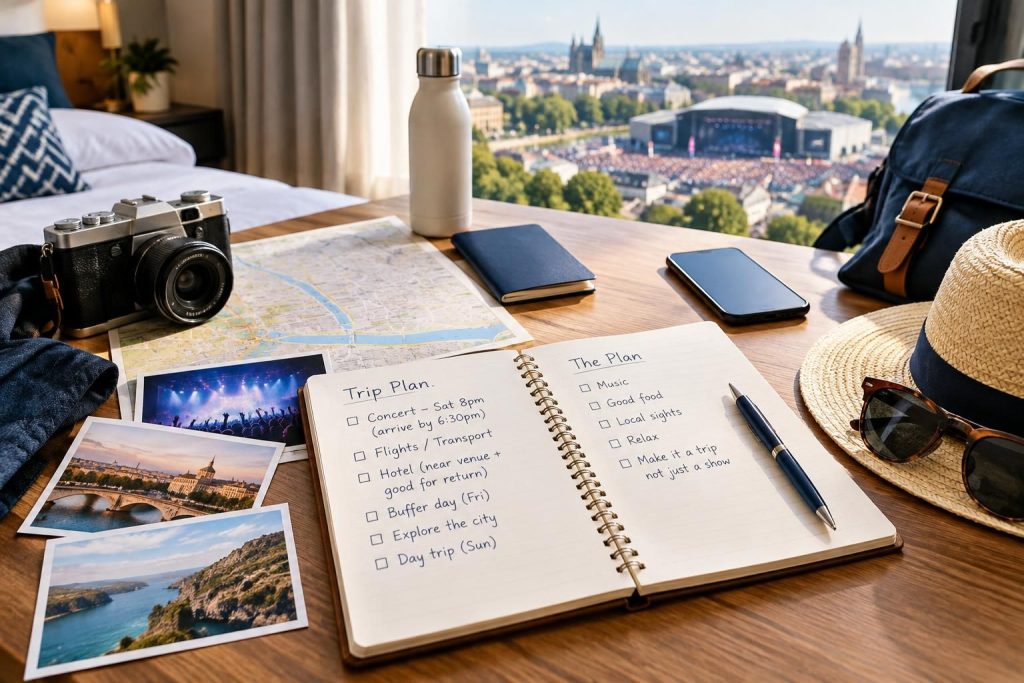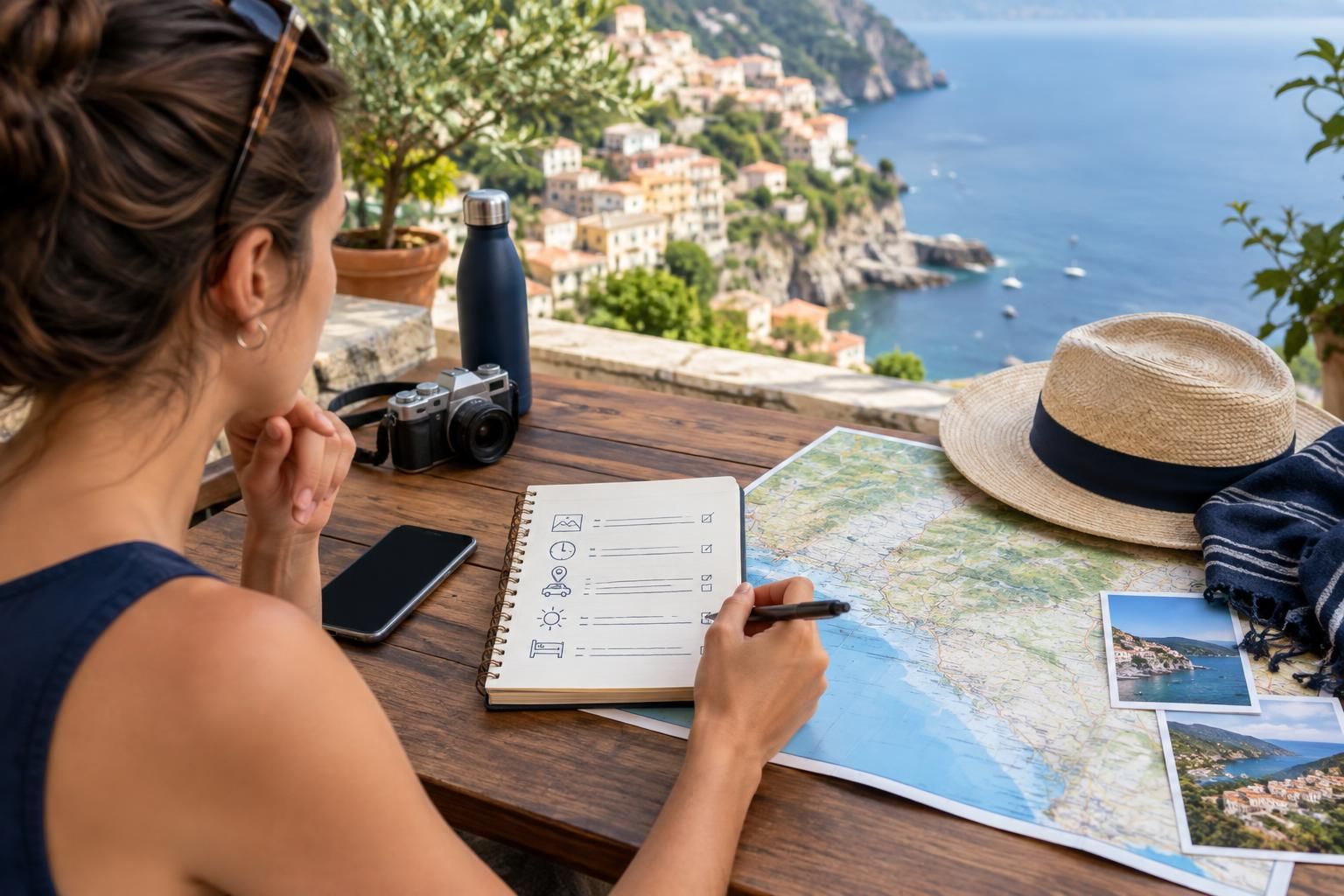
A seaside town, mountain village or nearby historic city can look like an obvious addition to a holiday. Yet a place that seems close on a map may require several connections, while a less famous destination can offer a satisfying change of scene with much less effort. The key is to judge the whole outing, not just the destination. Before reserving transport or setting aside a day, consider what you want to experience, how much usable time you will have and what you would give up at your main base.
Start with the experience, not the list of nearby places
Give each possible day trip a clear purpose. Perhaps you want to walk beside the sea after several museum days, explore a smaller town or spend an afternoon in a landscape unlike your city base. A destination becomes easier to evaluate when you can finish the sentence: “I want to go there because…”
Look for a meaningful contrast rather than another version of something already in your itinerary. If your main destination offers historic streets and excellent galleries, a second city with similar attractions may add less than a quiet lakeside walk. Familiar experiences can still be worthwhile, but they should reflect your interests rather than a sense of obligation.
Calculate the journey from door to door
The headline train or bus journey is only one part of the outing. Add the journey from your accommodation to the departure point, a reasonable waiting margin, any connections and the final stretch to the place you actually want to explore. Repeat that calculation for the return rather than assuming it will be equally straightforward.
For example, a hypothetical one-hour rail journey could become nearly two hours each way once local travel and waiting are included. That might be worthwhile for a destination you are excited about, but less appealing for a casual lunch and short stroll. Use total travel time to compare options fairly, especially when one destination has a central station and another requires an onward transfer.
Build a minimum worthwhile day
Before creating a packed itinerary, identify the smallest version of the excursion that would feel rewarding. This might be one significant attraction, a relaxed meal and a neighborhood walk. For an outdoor outing, it could be a single manageable route with time to pause rather than several scattered viewpoints.
Then estimate whether that simple plan fits comfortably between arrival and departure. Include time for finding your way, eating and moving between places. If the day only works when every connection aligns perfectly and every visit is rushed, reduce the scope or reconsider the trip. A destination with many attractions does not require you to see them all.
Check the details that can determine the whole outing
Some excursions depend on one crucial element: admission to a particular site, transport to a trailhead or a boat crossing. Identify that dependency before committing to the rest of the day. Check the relevant operator or attraction information for your intended date, including reservation requirements, service patterns and any seasonal limitations.
Also consider what happens once you arrive. A compact town may suit spontaneous exploring, while a spread-out area may need local transport or a prearranged tour. Assess walking distances, terrain, places to rest and access needs for everyone traveling. A nearby destination is not automatically an easy destination.
Choose independent travel or a tour for a specific reason
Independent travel often suits places with a straightforward connection and a walkable center. It gives you control over meal stops, pace and how long you spend in each place. A guided excursion may make more sense when the appeal lies in several dispersed stops, interpretation adds value or organizing the transport would take disproportionate effort.
Compare the actual shape of the day rather than the transport price alone. For a tour, examine the balance between time traveling, guided visits and free exploration. For an independent outing, count all likely transport legs and booking tasks. Neither format is inherently better; choose the one that lets you spend more of the day doing what matters to you.
Protect the return and account for the following day
Work backward from a comfortable return to your accommodation. Identify a preferred service and, where possible, a later alternative, checking that any onward connections also work. Avoid building the outing around the final possible departure when an earlier option would allow a less pressured day. For driving trips, include parking, breaks and the return journey in your effort estimate.
Consider where the excursion sits in your wider itinerary. A long outing immediately before an early departure may leave little time to eat, pack and rest. Equally, a demanding day trip after several busy sightseeing days may feel less rewarding than expected. Put it where you have enough energy to enjoy it, not merely where the calendar has a gap.
Compare it with staying local
Before making the final choice, ask what the same time and money could buy at your main base. A neighborhood you have not explored, a longer visit to a favorite museum or an unhurried afternoon might offer more satisfaction than another journey. Staying local is a genuine option, not a failed excursion.
Keep one closer alternative if the longer outing depends heavily on weather or a particular activity. That could mean choosing a nearby town instead of a rural route, or replacing a coastal excursion with a local cultural day. Set a decision point before any cancellation deadline or other commitment so the alternative remains practical.
A worthwhile day trip has a clear purpose, enough usable time and logistics that match your appetite for effort. Choose it because the experience adds something you genuinely want, not simply because the destination is nearby or well known. One well-chosen excursion can broaden a holiday without making the rest of it feel hurried.
AI-assisted evergreen travel guide. Featured image is an AI-generated illustration, not a specific product or booking.