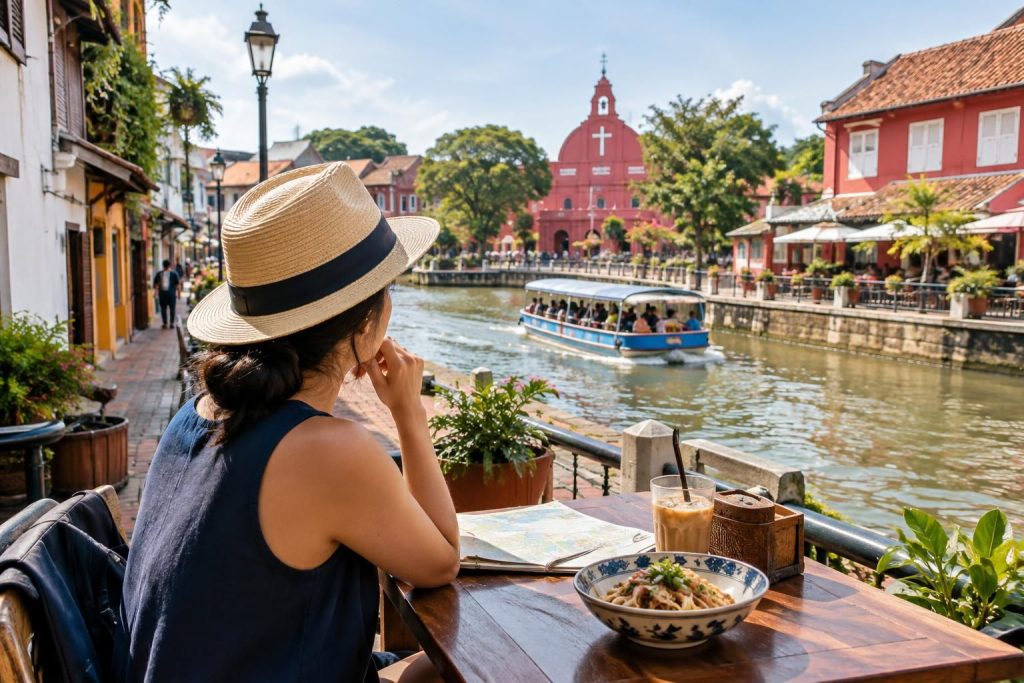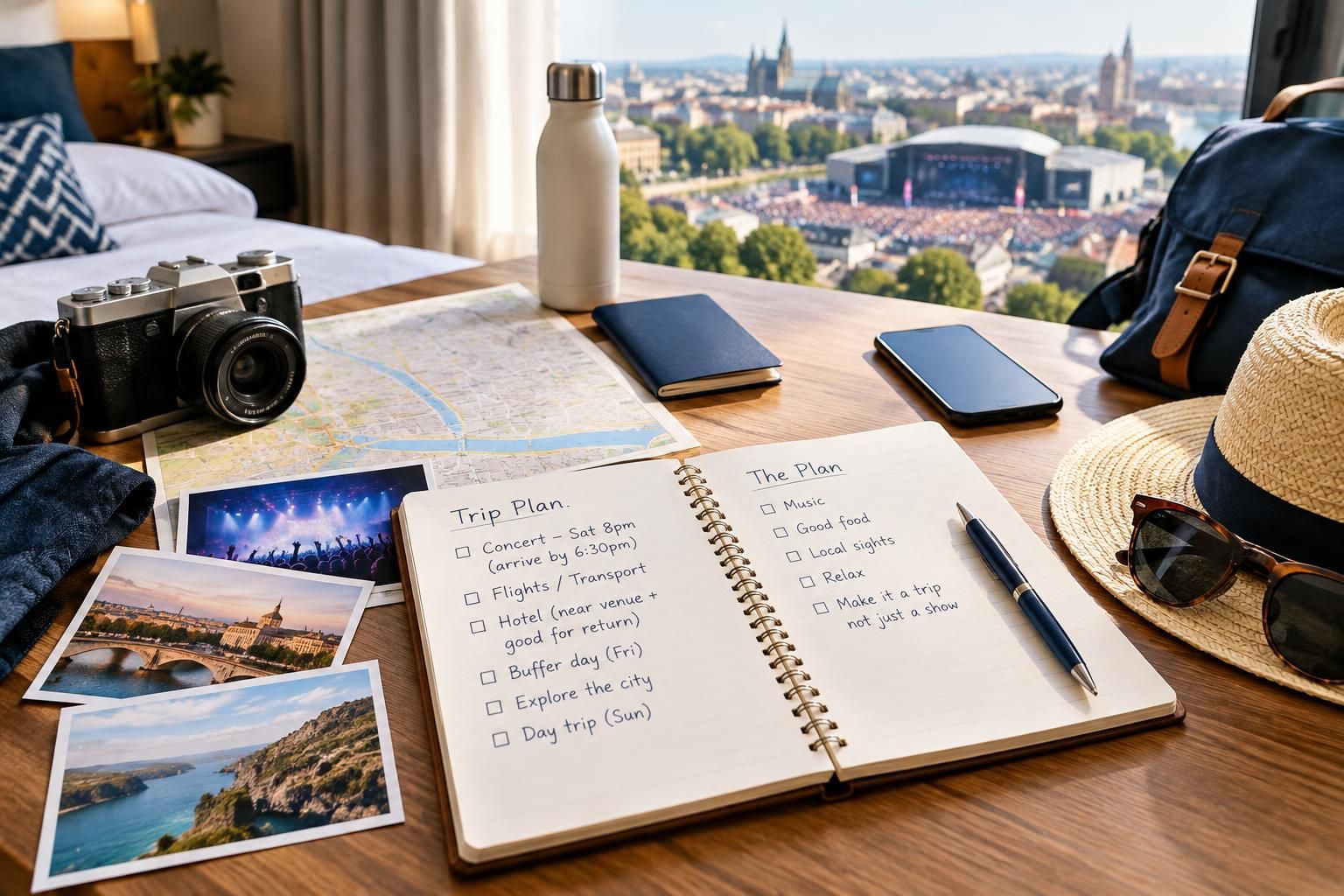
A trip built around a wedding, concert, sporting occasion or festival has a natural highlight. It also has a constraint that an ordinary holiday may not: you cannot simply move the main experience to tomorrow if your plans unravel. The solution is to treat the event as an anchor, then arrange transport, accommodation and sightseeing around it. A few deliberate choices can protect the reason you are traveling while leaving space to enjoy the destination itself.
1. Define the full commitment, not just the start time
Begin with a short event brief: the date, location, expected duration and anything you need to do beforehand. A wedding might involve a rehearsal or collecting formalwear. A race might require registration before the main day. A concert may involve an entry process that makes the advertised performance time a poor target for arrival. Separate confirmed details from assumptions you still need to resolve.
Include the time immediately afterward. You may want to stay for a farewell breakfast, wait for crowds to disperse or simply sleep before traveling again. Mark these surrounding commitments on your itinerary before adding attractions. This reveals how much of the trip is genuinely free rather than making every unfilled hour look available.
2. Build a buffer where a delay would hurt most
Work backward from the event and identify the most fragile connection. This could be a flight followed by a regional train, a ferry crossing or a long drive from another city. Avoid making the success of the entire trip depend on every stage running perfectly. When the event matters more than another sightseeing stop, arriving earlier is often the more useful trade-off.
There is no single buffer that suits every journey. Consider the number of connections, the alternatives if one fails and the personal cost of missing the occasion. An extra night near the venue may be worthwhile for an important family celebration. For a more casual event, a simpler journey with fewer transfers might be enough. Place spare time before the commitment, where it can actually protect it.
3. Choose accommodation for the journey back
Do not judge a base only by how easy it is to reach the venue in daylight. Think through the return journey when you may be tired, dressed formally or traveling alongside a crowd. Compare staying within a manageable walk, near a useful transport connection or in a quieter area farther away. Each choice has a different balance of convenience, rest and travel effort.
Check practical details that affect the event day: access to your room after returning, space to prepare and somewhere to keep belongings if check-in and checkout do not align with your plans. If you are considering two bases, count the packing and transfer time as well as the room cost. One well-positioned stay can be more useful than moving solely to shorten a single journey.
4. Keep the event day deliberately light
Give the main day a simple structure: an easy meal, one optional activity and enough time to get ready and travel. Avoid placing a distant excursion or another tightly timed booking before the occasion. Even enjoyable sightseeing can become a source of stress when you spend it watching the clock.
Plan the small practicalities that are easy to overlook. Decide when you will eat, where you will change and which belongings you actually need to carry. Establish whether the venue has requirements concerning bags, clothing or admission documents rather than assuming ordinary sightseeing arrangements will work. If you need special clothing or equipment, keep it easy to find instead of buried beneath everything else.
5. Build the holiday around a few contrasting experiences
Once the fixed commitment is protected, choose two or three experiences that give the rest of the trip its own identity. Pair a busy festival with a quiet garden visit, a city concert with a relaxed neighborhood afternoon or a family wedding with a scenic outing. Contrast can make the journey feel more balanced than filling every day with similar high-energy activities.
Group optional plans by area rather than scattering them across the destination. Keep one nearby idea for a short free window and another for a full day. If the event leaves you more tired than expected, you can choose the smaller plan without feeling that the itinerary has failed. Leave the morning afterward especially flexible when a late finish is possible.
6. Agree on companions, costs and a fallback
When traveling with others, clarify which parts of the trip are shared. One person may be attending the event while another is mainly interested in the destination. Agree on meeting points, independent time and who is responsible for each booking. Discuss which event-related expenses belong in the shared budget, particularly extra nights, special transport or clothing preparation.
Finally, decide what you would do if the event were moved or canceled, or if you could not attend. You do not need a second complete itinerary. Identify a few destination experiences that would still make the journey worthwhile, and understand the change or cancellation terms attached to your major bookings. This keeps one uncertain element from defining the value of the entire trip.
The strongest event-centered itinerary gives the fixed commitment breathing room without making every other day revolve around it. Protect your arrival, make the return journey practical and keep surrounding plans easy to adjust. With those foundations in place, the event can remain the highlight while the destination becomes more than a backdrop.
AI-assisted evergreen travel guide. Featured image is an AI-generated illustration, not a specific product or booking.