Bangkok becomes easier to enjoy when you stop treating it as a checklist of scattered landmarks. A temple visit, a market lunch and an evening across town may look close together on a map, yet moving between them can consume much of the day. Heat, road traffic and the walk between a station and your actual destination all affect the pace. A better approach is to organize each day around one area, with a nearby alternative if your energy or the weather changes. For a first visit, think in clusters: the historic city, the river, Chinatown and the modern shopping and residential districts.
Choose your base by the journeys you will repeat
Start with your likely mornings and evenings rather than the hotel room alone. A base around Siam can suit travelers interested in shopping and rail-based outings. Sukhumvit may appeal if you want a broad choice of dining areas and access to urban rail, although the district is extensive: a hotel described as being in Sukhumvit is not necessarily a short walk from a station. Check the actual walking route, including crossings and the distance along side streets.
A riverside or historic-city stay creates a different rhythm, with more emphasis on temples, waterfront time and boat journeys. The trade-off may be less straightforward access to some rail-based destinations. If evening food exploration is a priority, consider whether you would prefer staying around Chinatown or simply visiting it for one planned evening. For a short city break, one well-chosen base usually makes more sense than changing hotels to follow each sightseeing cluster.
Give the historic city its own day
Group major historic sights around Rattanakosin instead of combining them with distant shopping or nightlife plans. The Grand Palace area and Wat Pho provide a natural focus, but two substantial visits can already make a full sightseeing day once you allow for arrival, entry arrangements, walking and breaks. Choose your main priority first and make the second stop optional.
Build lunch and a seated rest into the same area. If you also want to visit Wat Arun, treat the river crossing as a separate step rather than assuming everything forms one continuous walk. Check visitor arrangements and clothing requirements before setting out. Clothing that covers shoulders and knees is a practical starting point for temple visits, while easily removable footwear helps where shoes must be left outside.
Use the river as a route, not an extra checklist
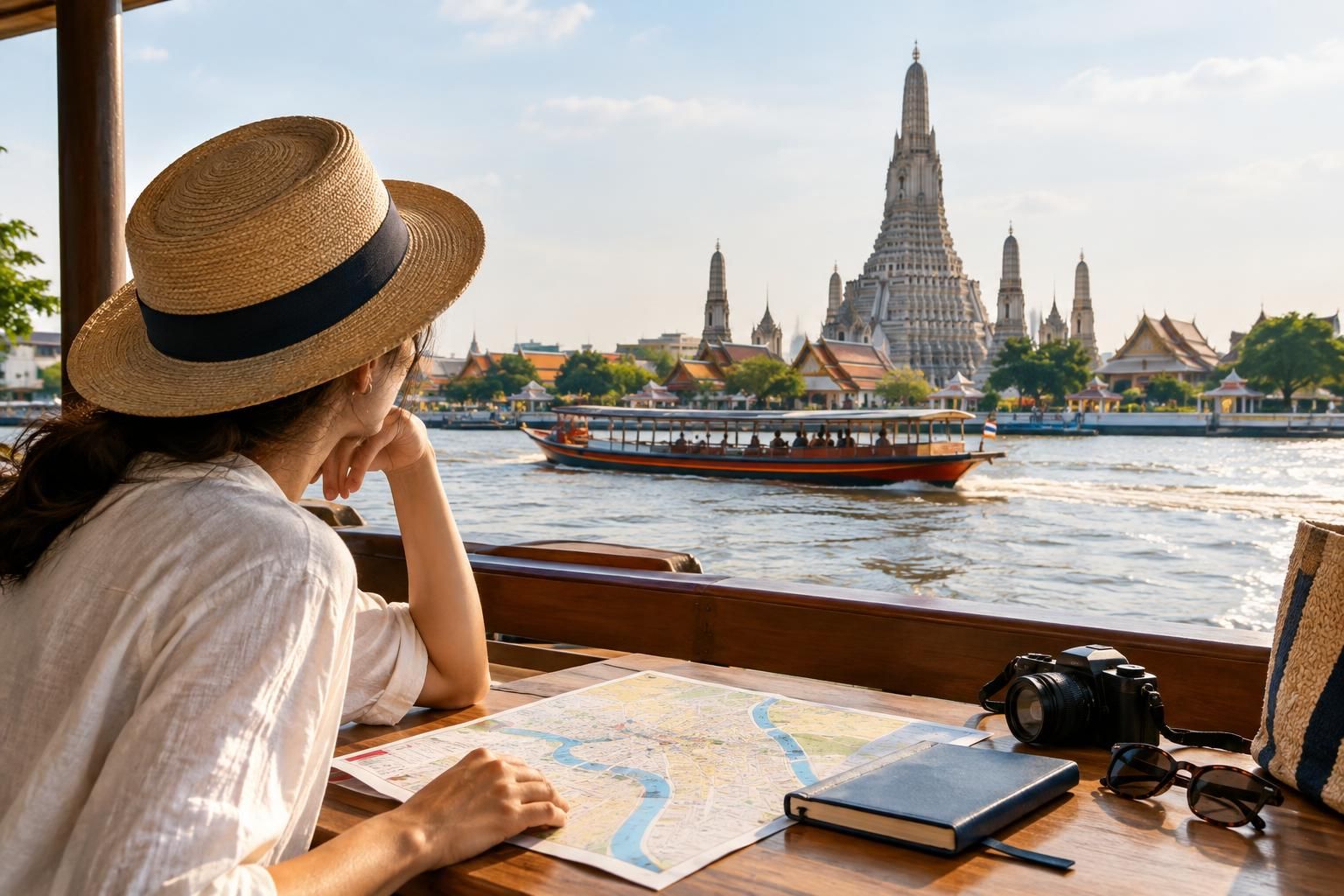
The Chao Phraya gives Bangkok a different perspective, but a river outing works best with a clear purpose. You might use a boat journey to reach a sightseeing area, connect two riverside stops or simply spend part of the day watching the waterfront. Avoid trying to visit every interesting pier. Boarding, finding the correct service and walking from the landing point all take time.
Before traveling, distinguish between transport services, sightseeing boats and private excursions rather than assuming every boat serves the same purpose. Confirm the route, direction and payment arrangements locally. Pick one principal stop and one optional addition, then leave room to linger. If you are staying away from the river, identify your return connection before heading out so that the evening does not end with an improvised cross-city journey.
Plan Chinatown around eating and wandering
Chinatown rewards a slower approach than a tightly timed sequence of food stops. Build an outing around Yaowarat and the surrounding lanes, with space for browsing, a drink and a few dishes that catch your interest. If food is the main reason for visiting, keep the preceding meal light and avoid committing to a large dinner elsewhere afterward.
Decide whether your priority is daytime street detail or evening atmosphere; trying to capture both can turn a compact outing into a long wait. Businesses and individual vendors keep different hours, so do not make the whole visit depend on one stall. Keep a saved map of your accommodation and return options, and leave enough flexibility to take a break from crowded streets.
Keep modern Bangkok days geographically compact
Use a separate day for the shopping, galleries, cafés or neighborhood exploration that interests you beyond the historic core. Siam is a logical anchor for a shopping-focused day. A Sukhumvit outing can instead concentrate on a small stretch around selected rail stops. The useful unit is not the entire district but a manageable pocket with a few things you genuinely want to do.
An indoor stop can provide a welcome pause, but avoid letting shopping centers become compulsory attractions if shopping is not your interest. Pair one main activity with a nearby meal and an optional second stop. Save tempting places across town for another day rather than adding a lengthy detour simply because they appear on the same city guide.
Build a four-night stay with room to adjust
For four nights, use the arrival day to settle in and explore near your hotel. Give one full day to the historic city, another to a compact modern-city cluster, and a third to the river or a personal interest. Chinatown can be an evening outing or part of that third day, depending on your base. Keep departure day simple rather than relying on it for a major attraction.
Carry a compact day bag with water, sun protection, a lightweight rain layer or umbrella, and a charged phone. Save destination names and accommodation details offline. Each evening, review the next day's route and remove any stop that creates disproportionate travel. One anchor activity, one nearby addition and one flexible meal plan are often enough to give a Bangkok day shape without making it feel like a transport exercise.
A rewarding Bangkok trip does not require crossing the city several times a day. Choose a base that supports your interests, group outings by area and count transfers as part of the itinerary. The time you save is useful for the less scheduled pleasures: a longer lunch, a waterfront pause or a street you decide to explore simply because you are already there.
AI-assisted evergreen travel guide. Featured image is an AI-generated illustration, not a specific product or booking.