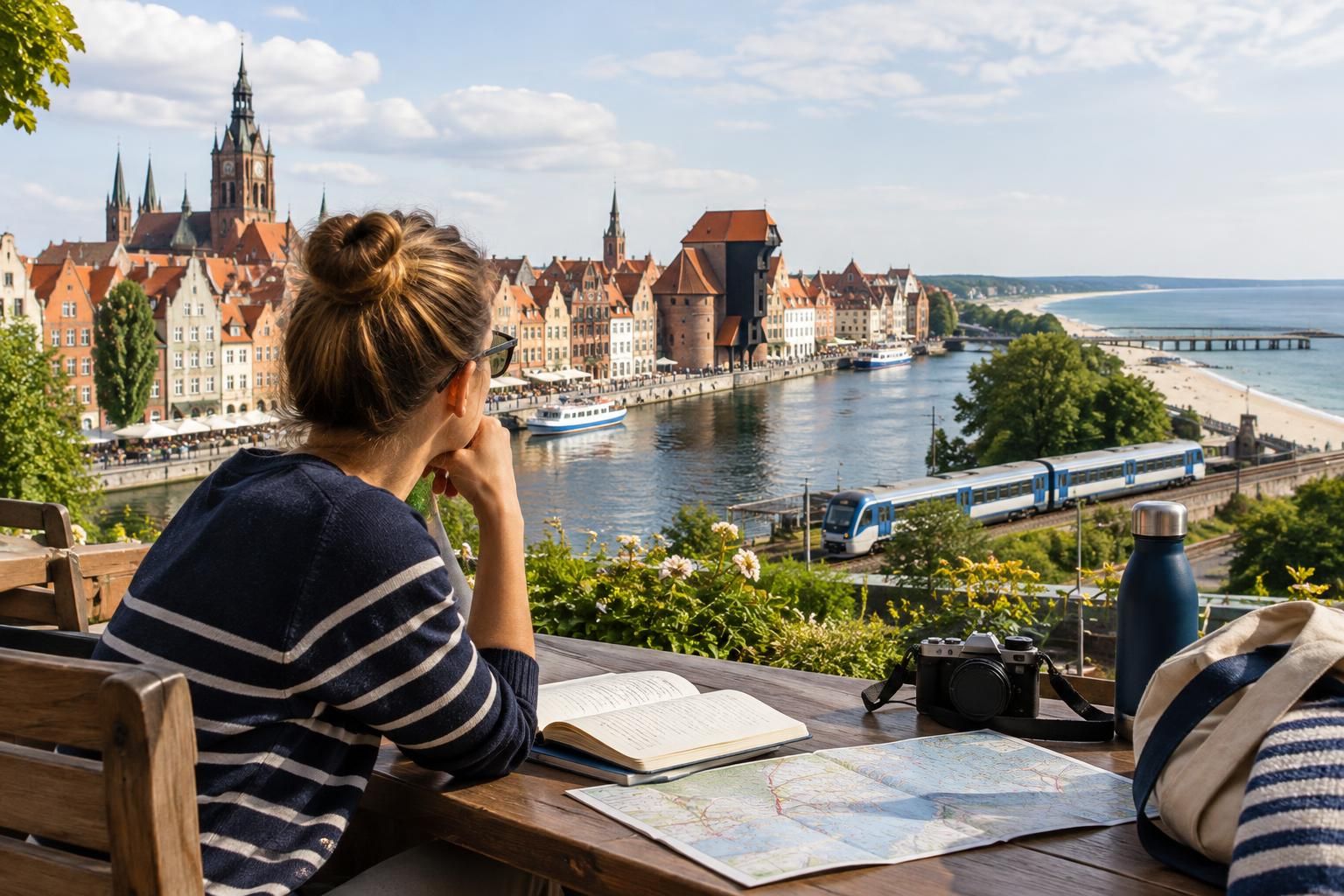
Poland’s Baltic coast suits travelers who want a city break without spending every day between museums and monuments. Gdańsk offers an atmospheric historic center and a substantial maritime story, while neighboring Sopot and Gdynia add beaches, seaside walks and a different urban character. Together, these cities form the core of the Tricity area. A week gives you time to enjoy their contrasts without changing hotels repeatedly. The key is to decide whether you want your everyday surroundings to feel primarily urban or coastal, then organize outings around geography and weather rather than a rigid checklist.
Choose your base according to how you want evenings to feel
Gdańsk is the natural starting point if architecture, history and restaurants matter more than having sand nearby. Staying in or near the Main Town puts its distinctive streets within easy reach, although a picturesque address is not automatically convenient for regional trains. Compare the walk to a station with the walk back after dinner. If you prefer quieter nights, consider accommodation a few streets away from the busiest pedestrian areas.
Sopot makes more sense if your ideal day includes an early beach walk and a relaxed return to the sea after sightseeing. Gdynia can appeal to travelers interested in modern architecture and a more everyday city atmosphere. For most first visits, one base is sufficient. A split stay adds packing and transfer time, so reserve it for a trip where several dedicated coastal days are a priority.
Build a week with different kinds of days
For seven nights, a useful outline is two days exploring central Gdańsk, one substantial history-focused day, one outing to Sopot, one to Gdynia and one flexible day. Keep arrival day light and departure day largely uncommitted. This structure provides variety without turning each morning into another transport exercise.
Avoid treating the three cities as a single day-trip circuit. Their proximity can make that tempting, but traveling between several centers leaves less time for the details that distinguish them. Give Sopot a beach-and-town day rather than a brief stop for a photograph. In Gdynia, combine a waterfront walk with time for its streets and architecture. Your flexible day can become another beach outing, an indoor cultural day or simply a slower return to somewhere you enjoyed.
Use rail for the main journeys, then plan the last stretch
The regional rail corridor makes a car unnecessary for a trip centered on Gdańsk, Sopot and Gdynia. However, a station named for a city does not necessarily place you beside your intended beach or attraction. Before each outing, identify both the arrival station and the onward walk, tram or bus journey. Group places by neighborhood instead of crossing the urban area repeatedly.
Check the operator, ticket coverage and validation arrangements for the journeys you actually intend to make; do not assume every local transport service uses the same ticket. Save your accommodation address and a map for offline use. A modestly sized bag is easier to manage through stations and along historic streets, especially if you arrive before your room is ready.
Let Baltic weather shape the order, not the success, of your trip
A coastal holiday here works best when beach time is an opportunity rather than the trip’s only purpose. Wind can change the feel of a sunny day, and a pleasant waterfront lunch does not necessarily translate into an afternoon for swimming. Pack a wind-resistant outer layer, a light insulating layer and shoes comfortable enough for both pavements and firm seaside paths.
Keep an indoor alternative beside each outdoor plan. A museum or gallery day in Gdańsk can exchange places with a coastal outing when the forecast changes. For beach days, carry water, sun protection and a layer you can put on immediately after sitting still. If swimming is part of your plan, assess conditions and local notices at the time rather than assuming that a busy beach means suitable conditions.
Balance major history with ordinary neighborhood time
Gdańsk’s appeal includes reconstructed historic streets, maritime heritage and places associated with the Second World War and the Solidarity movement. These subjects deserve more than hurried gaps between meals. Choose one substantial museum or historical visit for a day, allowing time afterward to absorb what you have seen rather than immediately adding another demanding stop.
Balance that concentration with less structured hours. Browse food shops, take a waterfront walk or spend an afternoon in Oliwa, known for its cathedral and park. This also helps avoid the impression that the entire region consists of monumental facades and beach promenades. When choosing meals, vary the setting as well as the food: a simple neighborhood lunch can be a useful counterpoint to dinner in a heavily visited historic area.
Add a longer excursion only if it improves the week
Malbork, with its large brick castle complex, is a possible inland excursion for travelers especially interested in medieval history. The Hel Peninsula offers a different coastal landscape, but getting there and moving around can take more of the day than a glance at the map suggests. Treat either as a deliberate full-day choice, not a small addition to an already busy itinerary.
Before committing, compare total door-to-door travel with the time you want at the destination. Check transport options and any entry arrangements close to your visit. If an excursion would consume your only unplanned day, consider staying local instead. Another afternoon by the water may contribute more to the holiday than an additional destination.
A rewarding Baltic week does not require three hotels or a long list of excursions. Choose a base that suits your evenings, give each city a distinct role and keep the order of your days flexible. With history, neighborhood time and coastal walks sharing the itinerary, Gdańsk and its neighbors offer a varied holiday even when the weather changes.
AI-assisted evergreen travel guide. Featured image is an AI-generated illustration, not a specific product or booking.