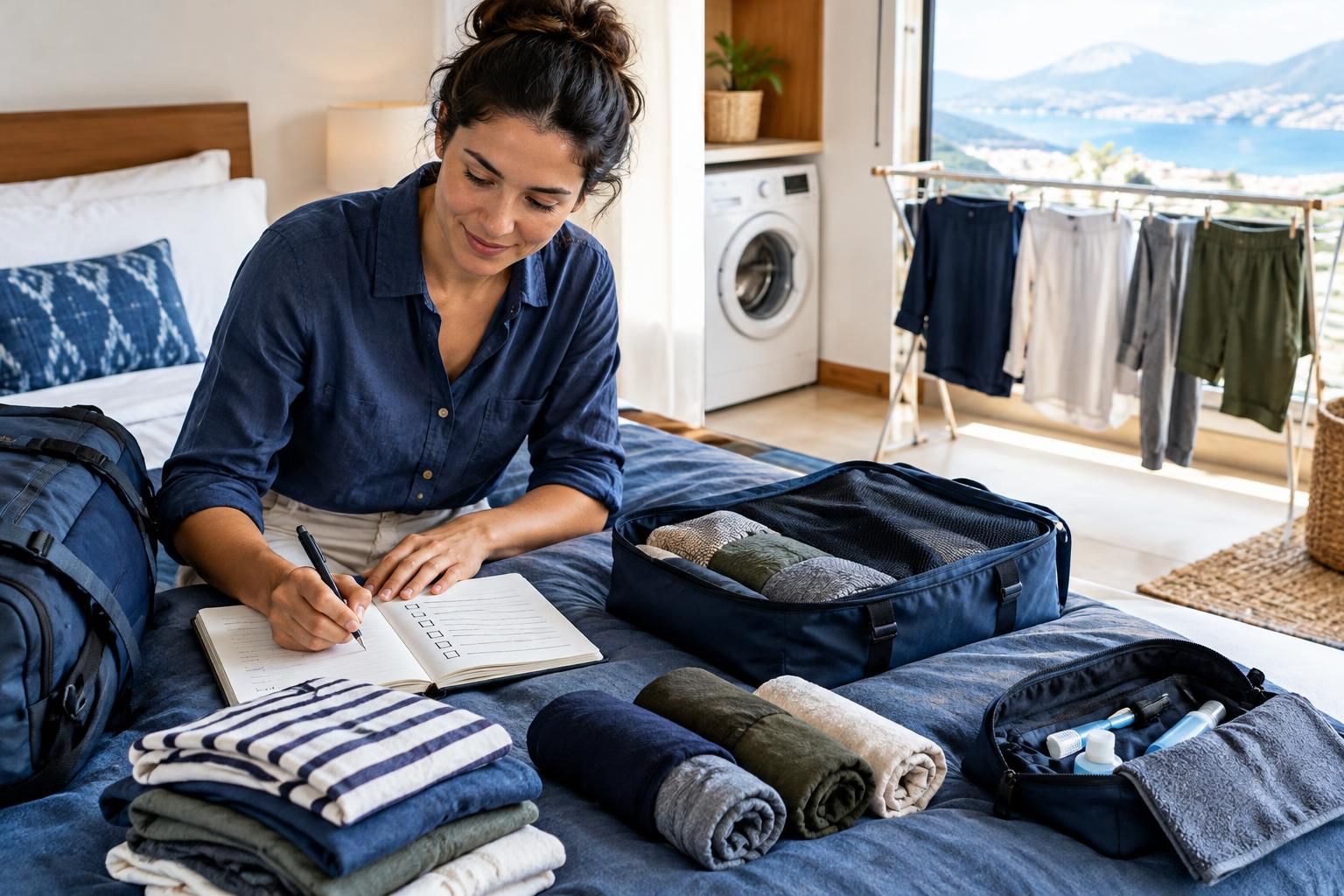
Packing for two or three weeks does not have to mean carrying a different outfit for every day. A small clothing rotation, supported by a realistic laundry plan, can reduce luggage weight and make transfers less cumbersome. The key is not simply packing fewer things: it is knowing when you will wash them, where they will dry and what you will wear in the meantime. Build laundry into your itinerary before departure, and it becomes an ordinary travel task rather than an urgent interruption.
1. Build a clothing rotation around your actual activities
Start with the longest stretch you expect to go without washing, rather than the total trip length. For a mostly urban itinerary with a laundry opportunity midway through each week, a starting point might be five tops, two or three bottoms, enough underwear for that interval and one spare set. Adjust for your preferences, climate and activities rather than treating any packing list as a fixed formula.
Choose pieces that work in several combinations. Two bottoms that both match your tops are more useful than several outfits with no interchangeable parts. Separate genuine needs from hypothetical ones: a planned formal dinner deserves consideration, while an outfit for an unlikely invitation may not. Exercise clothes, swimwear and sleepwear also need a place in the rotation, especially if they are unlikely to double as everyday clothing.
2. Match the washing method to your accommodation
Different stays suit different laundry plans. An apartment with a washing machine can make a longer base especially convenient, but do not assume that a dryer, detergent or drying rack is included. Before choosing accommodation partly for laundry access, check the property description and clarify any details that matter. Shared machines may also require you to remain nearby or work around other guests.
A self-service laundry gives you control over sorting and washing, while a drop-off service may free up sightseeing time. Either option can involve travel, waiting and collection. Handwashing is best treated as a small-load solution for suitable items, not an effortless substitute for washing an entire wardrobe. Choose one main method and a simple backup, such as washing underwear by hand if your planned laundry stop falls through.
3. Put laundry stops where they fit naturally
Mark likely laundry opportunities alongside your overnight stops. A stay of several nights usually offers more flexibility than a sequence of one-night visits. Aim to wash before you reach your final clean outfit, leaving a buffer for a busy day, an occupied machine or unexpectedly slow drying. If your itinerary includes both a city base and a remote stretch, consider doing a larger wash before the latter.
Pair laundry with an undemanding part of the day rather than an important excursion. An evening spent cooking at your accommodation or a quiet afternoon between activities can work well. Avoid making your only washing opportunity the night before an early departure. Even when washing itself is quick, transporting clothes, waiting for a machine and putting everything away can take longer than expected.
4. Treat drying time as part of the plan
Clothing is not ready to repack just because it is clean. Humidity, airflow, fabric thickness and how much space you have for hanging all affect drying. Lightweight garments are often easier to manage than thick cotton pieces, but fabric labels and garment construction matter too. Test your intended handwash items at home to see how they behave under ordinary indoor drying conditions.
Check care labels before using unfamiliar machines or applying heat. For handwashed items, gently press out water and, where suitable, roll them in a towel before hanging. Use only appropriate drying spaces and respect accommodation rules; furniture, heaters and balcony rails are not substitutes for a drying rack. Spread washing across smaller batches if hanging space is limited, and leave enough clean clothing to wear while the rest dries.
5. Pack a small kit, not a portable laundry room
A lightweight bag for dirty clothing is the most useful starting point. Add only what your chosen method requires: perhaps a small amount of suitable detergent, a few clips or a compact travel line if your accommodation permits one. Keep detergent in a secure, clearly labeled container and check relevant transport requirements before packing it. Avoid carrying multiple accessories for washing methods you are unlikely to use.
Keep damp items separate from clean, dry clothing during transfers, but unpack them promptly on arrival rather than leaving them sealed away. If an item is too wet to pack comfortably, prioritize drying it before departure instead of assuming a bag will solve the problem. For clothes needing specialist care, taking them home unwashed may be more practical than trying an unfamiliar cleaning method during the trip.
6. Adjust the system for the kind of trip you are taking
A warm-weather walking holiday may require more frequent changes than a cool-weather museum trip. Family travel can generate small, unpredictable loads, making convenient washing access especially valuable. On a fast-moving itinerary, you may prefer extra underwear and fewer laundry stops. For a slower stay, a smaller wardrobe can work because you have more opportunities to wash and dry it without disrupting the day.
Before closing your luggage, walk through one complete cycle: what you wear, what becomes dirty, when you wash and what remains available afterward. Keep a spare outfit accessible during travel days. If the cycle depends on perfect weather or immediate access to a machine, add a little flexibility. The aim is a manageable bag, not the smallest possible wardrobe at any cost.
A useful laundry plan balances clothing, time and drying space. Choose a rotation that suits your activities, place washing opportunities at sensible points in the itinerary and keep one workable backup. Packing less then becomes a practical choice supported by your travel plans, rather than a challenge you have to solve after running out of clean clothes.
AI-assisted evergreen travel guide. Featured image is an AI-generated illustration, not a specific product or booking.