Cambodia’s southern coast offers a change of rhythm from temple visits and busy city stays. Kampot brings together riverside streets, market browsing and access to agricultural countryside, while Kep draws travelers toward sea views, seafood meals and quieter afternoons. They can fit into the same journey, but moving hotels is not always the best use of a short stay. The more useful question is where you want to spend your unplanned hours. This guide explains how to choose a base, decide whether to split your nights and build a coastal stop with enough room for weather, transport and simple downtime.
Choose Kampot for town life or Kep for a coastal retreat
Kampot is the stronger starting point if you enjoy stepping out for a meal, wandering streets and returning to the river throughout the day. Its appeal is not one essential attraction but the combination of town life and countryside excursions. A central base can suit travelers who prefer independent afternoons and do not want every outing to require arranged transport.
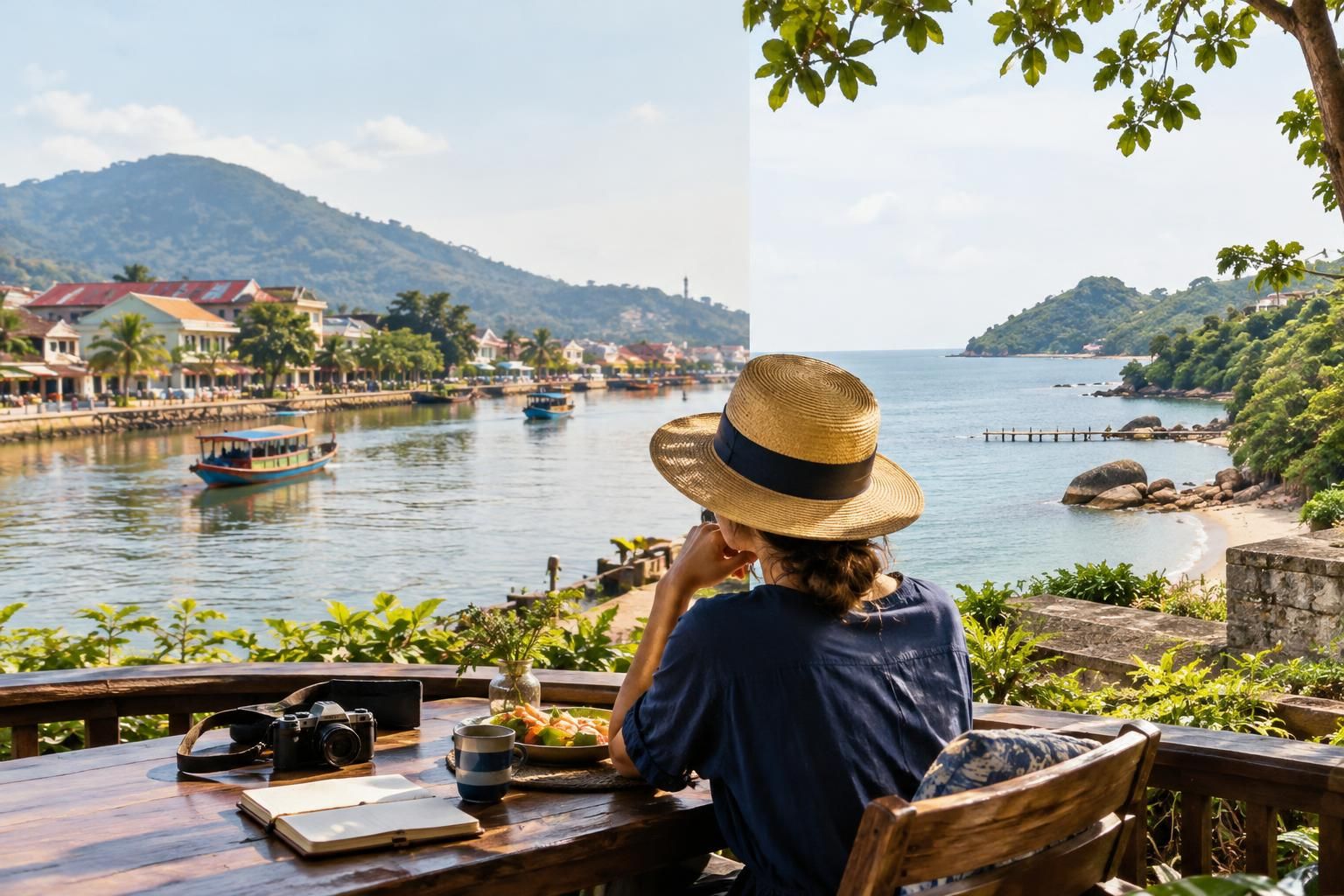
Kep makes more sense when the accommodation itself is part of the holiday. Think sea-facing downtime, a long seafood lunch and time around the wooded hills of Kep National Park. It is less suited to travelers expecting a compact, consistently walkable town center. Choose your exact location carefully: a coastal address does not necessarily put restaurants, walking routes and the beach within an easy stroll.
Decide whether changing hotels is worth it
For three nights, choose one base and treat the other place as an optional outing. Packing, checking out and waiting for a room can consume much of a day even when destinations look close on a map. Four nights can also work well in one hotel, especially if your priorities include reading, leisurely breakfasts or a break from a longer Cambodia itinerary.
With five or six nights, a split stay becomes more appealing. Spend the first part in Kampot for town exploration and countryside visits, then finish in Kep with less scheduled time. Reverse that order if your onward journey makes it more practical. The split should create two different experiences, not simply add another place name to your itinerary.
Look beyond the words riverside and sea view
In Kampot, distinguish between accommodation near the town waterfront and properties farther along the river. An outlying bungalow may offer greenery and space, but casual meals and evening returns can require transport. Before choosing, compare the actual location with the places you expect to visit, and ask how guests normally get into town and back.
In Kep, weigh coastal views against access and terrain. A hillside property may involve slopes or steps, while a secluded setting can limit spontaneous dining choices. Useful questions for either base include whether the room has air-conditioning or a fan, how outdoor areas handle rain, whether there are stairs, and what food options exist nearby. A pool may matter more to your daily comfort than an impressive view.
Build countryside days around one main interest
Around Kampot, pepper cultivation offers a natural focus for an outing. Choose a visit that explains growing, harvesting and processing rather than treating the stop only as a shopping opportunity. Salt-producing landscapes are another possible interest, although activity and appearance depend on weather and production cycles. Avoid building a day around an expectation of seeing workers or a particular harvest scene.
Combine one substantial visit with a meal and perhaps a short scenic stop. Adding farms, caves, viewpoints and Kep into a single circuit can turn a restful day into hours of getting in and out of a vehicle. Ask about driving time, road surfaces, walking requirements and the amount of shade before agreeing to an itinerary. Travelers who prefer not to ride a scooter can arrange a driver rather than plan around independent riding.
Give Kep time beyond a seafood lunch
Kep works best when you allow time to notice its landscape rather than visit only for a meal. A walk in Kep National Park can provide a contrast to the waterfront, but choose a route appropriate to the conditions and your preferred level of effort. Check local access information, carry water and allow for heat, uneven ground and wet weather.
For seafood meals, establish what you are ordering, how it will be prepared and how the total is calculated before committing, particularly when pricing is based on weight. If swimming is important, assess the beach and water conditions locally rather than assuming every coastal stay delivers a classic beach holiday. Offshore excursions add boat travel and weather dependence; keep them optional instead of making them the sole reason for visiting.
Protect the relaxed pace with practical buffers
Treat arrival and departure days as transport days first. Compare the full journey between accommodations, not just the main road segment, and leave room for pickup arrangements and delays. Before booking onward travel, confirm the departure point, luggage arrangements and final drop-off. Avoid attaching a countryside excursion to an arrival unless you would be comfortable missing it.
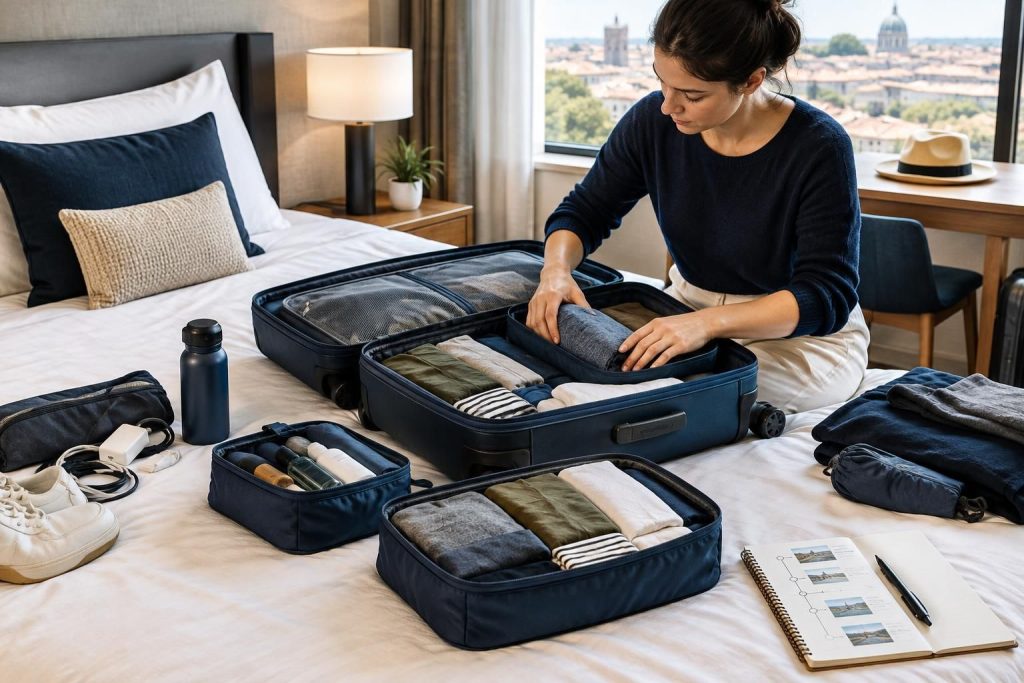
Pack breathable clothing, sun protection, rain protection and shoes with grip for countryside or woodland outings. Keep electronics and spare clothing protected from showers, especially on open-sided transport or boats. Organize mornings around one main activity and leave afternoons flexible. A simple four-night plan might include an arrival evening, a town day, a countryside day and an optional Kep outing, with departure the following morning.
Choose Kampot if accessible town life will improve your everyday stay; choose Kep if quiet coastal time is the main objective. Split your nights only when the change of setting justifies another move. With a well-located room, modest daily plans and realistic transport buffers, this part of Cambodia can provide something valuable on a longer trip: time that does not need filling.
AI-assisted evergreen travel guide. Featured image is an AI-generated illustration, not a specific product or booking.