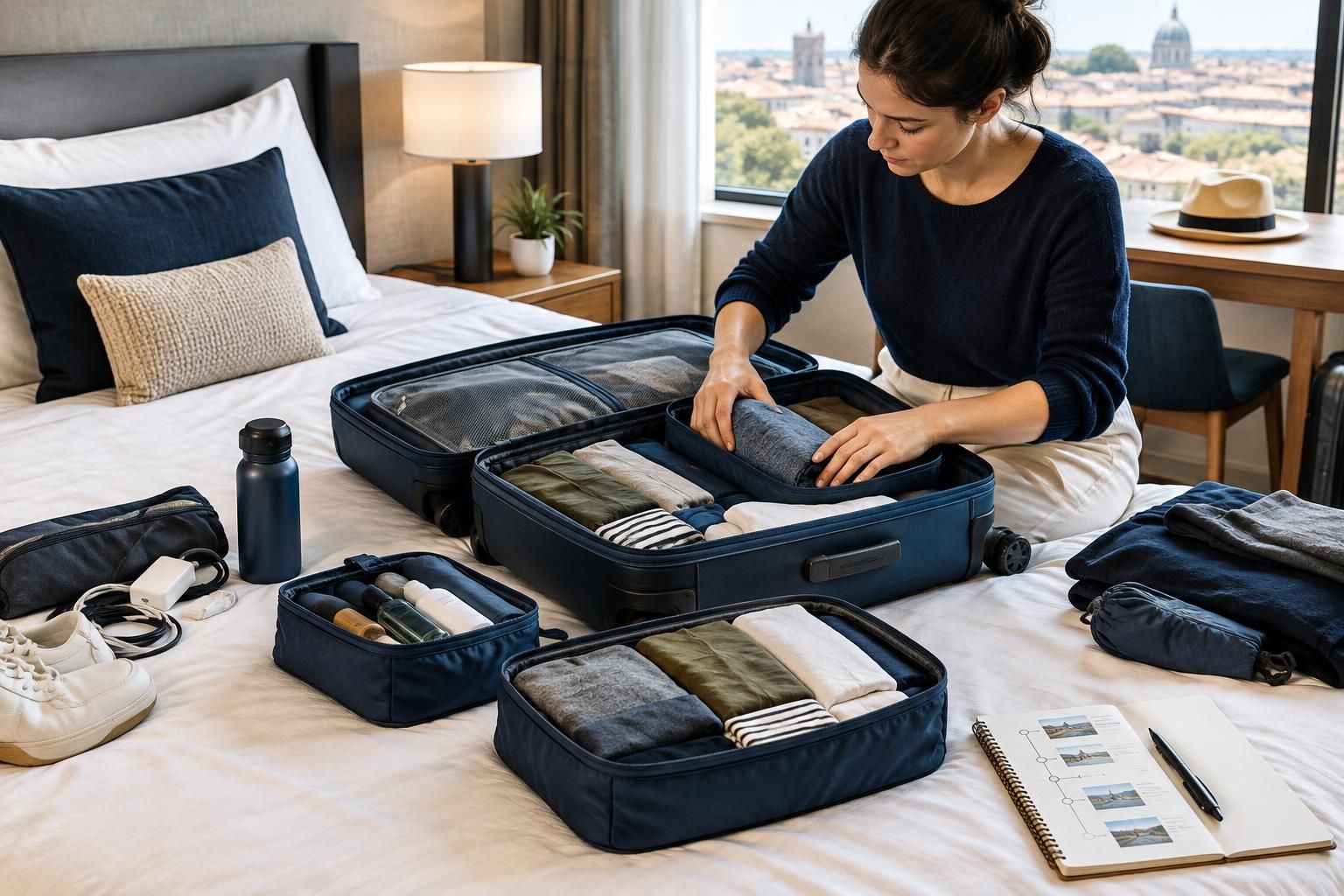
A trip with several overnight stops asks more of your luggage than a week in one place. You might arrive late, leave early or spend just one night somewhere before moving on. Even a modest packing list can become frustrating if the item you need is always beneath everything else. The solution is not simply to pack less. It is to organize your belongings around the rhythm of the trip: what you need while moving, what you use every evening and what can stay packed until a longer stop. A few deliberate choices can make a multi-stop holiday feel considerably less scattered.
1. Map the moving days before choosing your luggage
Look at your itinerary as a sequence of luggage-handling situations. Note the one-night stays, longer bases and journeys involving stairs, walking or several vehicle changes. A bag that works well between a car boot and a hotel room may be awkward on a route with cobbled streets and frequent station transfers. Choose for the most demanding repeated situation, not just the journey from home.
Also consider how you will reach your belongings. A suitcase that opens flat needs somewhere to spread out; a top-loading bag may require digging unless its contents are grouped carefully. Test your preferred bag at home with a realistic load. Carry it, lift it and retrieve a change of clothes without emptying it. If flying, check the baggage requirements for each booked service rather than assuming one standard applies throughout.
2. Pack by access frequency, not just by item type
Dividing everything into shirts, trousers and underwear looks orderly, but it can force you to open several compartments for one short stay. Instead, create three access levels: essentials needed during the journey, items used at every stop and things reserved for particular activities or weather. Keep the first two levels easiest to reach.
For example, your frequent-use group could contain sleepwear, tomorrow's underwear, a simple outfit and your main wash kit. Spare layers or clothing for a single special dinner can sit deeper in the bag. Use small pouches, packing cubes or bags you already own to keep these groups distinct. Leave a little space between them; a tightly compressed puzzle is harder to rebuild each morning.
3. Create a short-stay bundle
For isolated overnight stops, prepare one compact bundle that lets you leave most of your luggage untouched. Include sleepwear, underwear and the clothing you expect to wear next, adjusted for the destination and activities. Keep toiletries separately accessible so you do not need a duplicate set. Move the bundle near the opening before the relevant journey, rather than reorganizing everything after arrival.
Treat this as a rotating system, not an extra outfit added to your packing list. At a longer stay, replenish it from the clean clothes already in your bag. If you have two consecutive short stops, arrange enough clothing for both while keeping worn items separate. The aim is to reduce the number of decisions and compartments involved in getting ready.
4. Keep daily-use items together and limit room sprawl
Small belongings are often what slow a departure: a charging cable behind furniture, toiletries spread across a bathroom or glasses left beside the bed. Give your daily-use items a consistent home. A small electronics pouch and a wash kit that can sit open without being emptied are useful starting points. Return items to those containers after use whenever practical.
In a room you will leave the next morning, establish just a few temporary zones: luggage, washing and bedside essentials. Avoid using every drawer simply because it is available. For a longer stay, unpack more fully if that makes you comfortable, but keep each category together. Before checkout, inspect storage spaces, sockets, bedding and the bathroom rather than relying on a glance across the room.
5. Plan for worn, wet and awkward items
Your packing system needs to work after clothes have been worn, not only when everything is freshly folded. Bring a lightweight bag for laundry and decide where it will sit as it fills. If you expect to rewear some clothing, give those pieces a separate place rather than mixing them with either fresh clothes or items awaiting washing.
Think ahead about swimwear, damp towels, muddy footwear or a wet outer layer. A water-resistant pouch can provide temporary separation during a transfer, but wet items should be removed and dried when circumstances allow. Clean footwear before packing it where practical, and use a simple cover to protect surrounding clothes. Do not build a departure morning around laundry drying perfectly overnight; leave yourself a workable alternative.
6. Use longer stops to reset the bag
Choose a longer stay as your reset point. This is the time to reorganize clothing, deal with laundry, replenish the short-stay bundle and gather anything that has drifted into coat pockets or day bags. You do not need to rebuild your luggage at every destination if you give the system occasional attention.
On the evening before each move, check the next day's conditions and pull out what you will need during the journey. Put away nonessential items, gather chargers you are no longer using and set aside your departure clothes. Keep a short final checklist for the morning: toiletries, charging devices, documents and anything drying. A repeatable routine is more useful than trying to remember every loose object separately.
Packing for frequent accommodation changes is about making your belongings easy to use repeatedly. Choose luggage you can handle comfortably, keep overnight essentials accessible and give worn or wet items somewhere to go. With a short-stay bundle and a consistent departure routine, you can spend less time rebuilding your bag and more time enjoying each new stop.
AI-assisted evergreen travel guide. Featured image is an AI-generated illustration, not a specific product or booking.