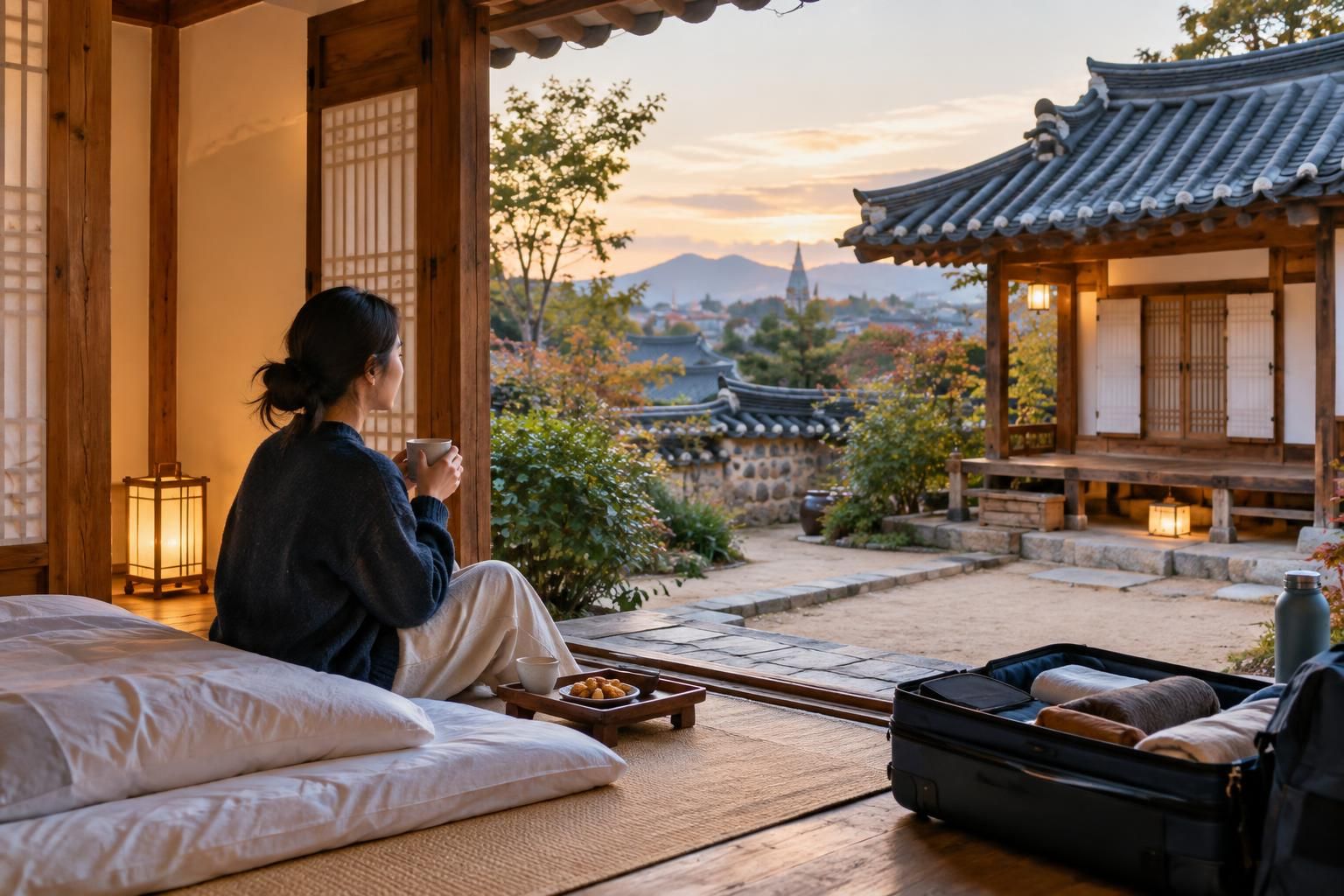
Jeonju suits travelers who want architecture, regional food and time to wander rather than a packed sightseeing checklist. Its hanok village offers a setting of tiled roofs, courtyard entrances and narrow lanes, but the overnight experience depends as much on your room as on the surroundings. A traditional-looking building does not automatically mean traditional bedding, modern soundproofing or an easy arrival with a large suitcase. Plan the accommodation carefully, leave room between meals and activities, and a short stay can become a relaxed counterpoint to South Korea’s larger cities.
Decide whether one night or two fits your route
One night works well if your main aim is to experience a hanok room and explore the historic quarter before and after a day tripper’s usual visiting window. Arrive with enough time to settle in, take an unhurried walk and have dinner. Keep the following morning open rather than booking an early departure that turns the stay into little more than a place to sleep.
Two nights offer more flexibility for a slower meal, a museum or craft activity, and time beyond the most photographed streets. They also make sense if floor sleeping will be unfamiliar: a relaxed first morning is preferable to immediately hauling luggage onward. If Jeonju requires a substantial detour from your wider itinerary, weigh the travel time against what you actually want to do there.
Choose the room for comfort, not just the courtyard photograph
Hanok accommodation varies considerably. Some properties emphasize floor bedding and a simple interior; others combine traditional architecture with raised beds and contemporary bathrooms. Check the room description for your exact room type, not only the property’s general photographs. Useful questions include whether the bathroom is private, how bedding is arranged, and whether there is space to open luggage without covering the sleeping area.
If getting down to or up from floor level is difficult, prioritize a clearly described bed rather than assuming extra bedding will solve the problem. Also ask about entrance steps, bathroom thresholds, heating and cooling. Courtyards and timber details can be appealing, but travelers sensitive to noise should ask how rooms connect to shared spaces and whether the room faces a busy lane.
Balance a central address with an easy arrival
Staying within the hanok village makes spontaneous walks straightforward, while an address near its edge may offer a better balance between atmosphere and vehicle access. Compare the actual entrance location with your arrival point. A short distance on a map can feel longer when it involves luggage, uneven paving or searching for an inconspicuous doorway.
Before traveling, save the property’s name and address in Korean, along with its arrival instructions. Ask where a taxi can most conveniently drop you and whether bags can be stored before check-in or after departure. For a short visit, a small overnight bag is easier to manage than unpacking a full suitcase. If keeping larger luggage elsewhere, confirm storage arrangements rather than assuming they are available.
Build a food plan with gaps between meals
Jeonju is closely associated with bibimbap, making it a natural anchor for one meal. Another meal might focus on kongnamul-gukbap, a bean sprout soup served with rice, or a different regional dish that interests you. Choose a few priorities instead of treating every snack stall as an essential stop. Large meals and continuous grazing can quickly crowd out the pleasure of either.
Keep dietary needs practical and specific. A vegetable-heavy dish may still include meat, seafood or an animal-based broth, so communicate the ingredients you need to avoid rather than relying on appearance. Save a translated explanation if useful. Leave at least one meal undecided so you can respond to your appetite, the weather and how far you feel like walking.
Give the visit a rhythm beyond the busiest lanes
Use the historic quarter as a starting point rather than spending the entire stay retracing the same shopping streets. Gyeonggijeon provides a heritage focus, while Nambu Market offers a different urban setting. Choose one or two places that match your interests, checking their visitor arrangements when planning. A calligraphy, paper craft or other cultural activity can add depth if you prefer making something to collecting photographs.
Keep a flexible block for a quieter walk and a sheltered alternative for wet or uncomfortable weather. Courtyards and lanes may be shared with residents, guests and businesses, so avoid blocking entrances or treating private spaces as photo sets. If renting hanbok appeals, consider how it fits your walking plans and the conditions rather than making it another compulsory task.
Pack for the room and protect the evening
Bring comfortable walking shoes that are easy to remove, since some accommodation and cultural spaces require shoes to be left at the entrance. Keep essentials together in a compact pouch so you do not need to spread belongings across the floor. Light layers, sleepwear suited to the room conditions and a small bag for the next morning’s outing are more useful than multiple outfit changes.
Leave part of the evening free to enjoy the accommodation itself. A hanok stay loses much of its purpose if you return only to pack and sleep. Follow the property’s guidance on quiet hours, shared courtyards and bedding, and organize your departure before settling down. That simple preparation makes the following morning feel like part of the visit rather than a transfer exercise.
A satisfying Jeonju overnight stay rests on a few concrete choices: a room that suits your sleeping needs, manageable luggage, an uncomplicated arrival and enough unscheduled time to enjoy the setting. Choose one or two food and cultural priorities, then let the rest of the visit unfold at walking pace.
AI-assisted evergreen travel guide. Featured image is an AI-generated illustration, not a specific product or booking.