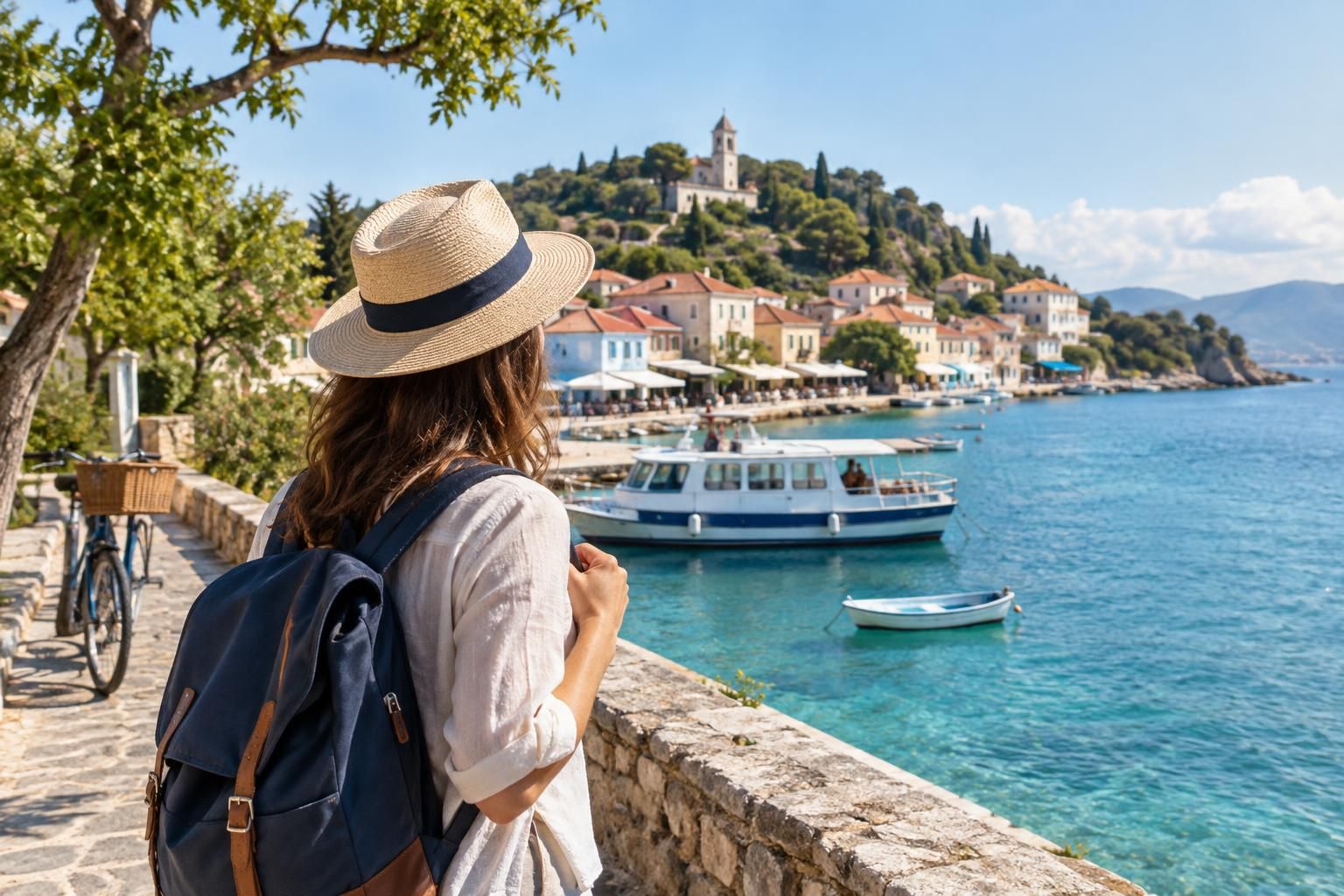
A car-free island holiday can mean slow mornings by the waterfront, walks between villages and fewer decisions about driving and parking. But an island that looks compact on a map is not necessarily easy to explore without a vehicle. Steep roads, scattered accommodation and transport routes focused on a single port can make short distances surprisingly awkward. The key is to choose an island and a base that support the holiday you actually want, rather than trying to recreate a driving itinerary using buses and taxis.
1. Choose the island by its connections, not just its size
Start with three or four experiences you would most like to have: swimming from a sandy beach, wandering a historic town, walking coastal paths or taking a boat excursion. Then consider how you could reach each one without driving. A larger island with connected towns may suit you better than a smaller island where accommodation and attractions are spread along isolated roads.
Look at the shape of the transport network. Routes that radiate from one main town can make that town a practical base, while a coastal corridor may offer several useful places to stay. Check connections for your intended travel dates before committing, including whether return journeys suit a full day out. Do not assume that a line on a map represents a frequent or year-round service.
2. Pick a base that works even when you stay nearby
Your accommodation should offer more than an attractive view. Aim for a location where you can reach everyday essentials and at least one enjoyable activity on foot. Depending on your priorities, that might mean a beach, a harbor promenade, several places to eat or the start of a walking route. A good base makes an unplanned day feel like part of the holiday rather than a compromise.
Examine the actual walking route between the property and local facilities. Hills, steps, road crossings and the location of the entrance matter more than straight-line distance. If mobility or luggage handling is a concern, ask specific questions about gradients and access. Compare a central room with a more spacious outlying property by including the time and expense of repeated transfers.
3. Treat arrival and departure as separate planning tasks
An island journey may involve a flight or train, an onward ferry and a final transfer to your accommodation. Plan each handover rather than treating arrival at the mainland airport as the end of the journey. Identify where terminals are located, how you would move between them and what you would do if an earlier leg ran late.
For the final island transfer, establish a primary option and a workable alternative. This could mean a bus followed by a short walk, with a prearranged transfer as the fallback. Confirm arrangements directly where needed, especially for an outlying property. If a connection would make the whole journey fragile, consider an overnight stop near the departure port instead of building the trip around a tight sequence.
4. Match each outing to a sensible way of getting there
You do not need one transport method for the entire holiday. Walking may work for local exploration, public transport for another town and an organized excursion for a remote landscape. A taxi can be a deliberate part of a car-free budget rather than evidence that the plan has failed. Reserve that spending for journeys where it adds the most value.
Be cautious about assuming bicycles solve every transport gap. Gradients, road conditions, heat, storage and your own confidence all affect whether cycling is enjoyable. Likewise, a coastal path may be a rewarding outing without being a practical route home after dinner. Plan the return journey alongside the outward one, particularly when visiting somewhere with few alternatives.
5. Build days around areas rather than scattered highlights
Group activities that share the same transport corridor. A village visit, a nearby beach and lunch in the same area can make a satisfying day without repeated cross-island journeys. One main destination per outing is often enough; anything extra should fit naturally rather than require another complicated connection.
Keep some days close to your base, especially between longer excursions. For a six-night stay, you might plan two substantial outings, one optional boat trip and several flexible local days. That structure leaves room to respond to conditions and your energy levels. If a boat excursion is the main reason for choosing the island, avoid leaving your only opportunity until the final day.
6. Pack and budget for the journeys you will actually make
Choose luggage you can comfortably manage across the transfers in your itinerary. A wheeled case may suit paved routes, while frequent stairs or uneven surfaces call for closer thought about carrying weight. Keep arrival essentials accessible so you do not need to unpack at a terminal or roadside stop. Ask about luggage storage if your transport and accommodation timings leave a gap.
Build a transport allowance that includes arrival transfers, planned outings and a contingency journey. Then compare the whole holiday cost, not just the absence of a rental car bill. Before a remote outing, think through food, drinking water and anything you would otherwise expect to buy on arrival. Simple preparation helps you enjoy less-connected places without turning every day into a logistics exercise.
The best car-free island holiday is not the one that covers the most ground. It is the one where your base, transport options and chosen experiences fit together. Prioritize a place you will enjoy on foot, plan the essential connections carefully and spend selectively on harder-to-reach outings. You can explore without needing to reach every corner of the island.
AI-assisted evergreen travel guide. Featured image is an AI-generated illustration, not a specific product or booking.