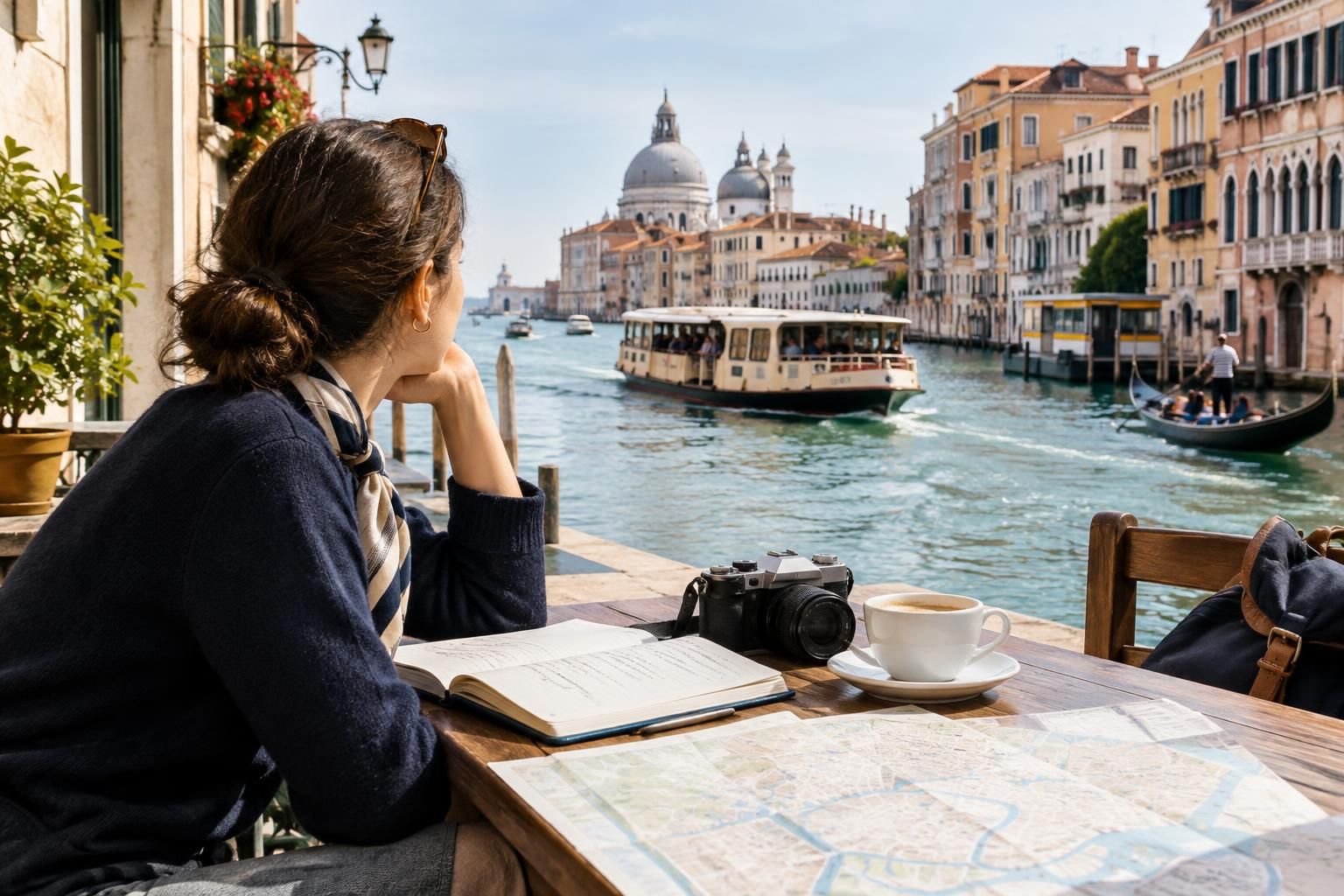
Venice rewards staying long enough to stop treating every lane as a route to a landmark. Four nights gives you time for the great buildings around San Marco, but also for residential squares, waterfront walks and a day shaped by the lagoon. The planning challenge is less about covering distance than managing bridges, luggage, crowds and the temptation to cross the city repeatedly. Choose a base that suits your arrival, group nearby sights together and leave some hours unassigned.
Choose your neighborhood around the journey to your door
Cannaregio can suit travelers who want neighborhood wandering alongside access to the railway station side of the city. Dorsoduro works well for an art-focused stay and walks along broad waterfronts. Castello offers a different balance: its western streets sit near major sights, while its eastern reaches encourage longer, less landmark-driven walks. These are starting points rather than guarantees of quiet; the exact street matters.
Before choosing accommodation, trace the complete arrival route from your station, airport connection or parking point. Count bridges, identify the nearest useful boat stop and ask about entrance steps, lifts and stairs inside the building. A room that looks close on a map can involve several awkward crossings with luggage. For a short stay, straightforward access may be worth more than a famous canal view.
Give each full day one geographic focus
For your first full day, concentrate on San Marco and its surroundings. Choose one substantial interior visit, such as the Doge’s Palace or St Mark’s Basilica, rather than assuming both must fit into the same morning. Keep the afternoon flexible for a waterfront walk or a gradual return through smaller streets. Check reservation arrangements and entry conditions before building the day around a particular visit.
Use another day for Dorsoduro, pairing an art collection with time around the Zattere waterfront and nearby squares. A third day can focus on Cannaregio and Castello, or become a lagoon excursion. Resist adding every celebrated sight to these outlines. Venice’s indirect routes and frequent pauses make a lightly planned day feel surprisingly full.
Use water transport strategically, not automatically
Walking and public water transport solve different problems. Walking is often the most satisfying way to explore adjoining neighborhoods; a boat can be useful for a longer cross-city journey, a waterside perspective or an island visit. Do not assume a short distance on the map means a quick boat ride. Reaching the stop, waiting and following the route all add time.
Compare individual fares with any available pass only after sketching your likely journeys. Check which services and destinations a ticket includes, along with its validation requirements. Keep airport transfers separate in your calculations unless coverage is explicitly confirmed. For any important departure, plan around the actual service information rather than relying on a memorable journey time from someone else’s trip.
Decide whether an island day improves the trip
A lagoon excursion changes the rhythm of a Venice stay, but it also uses a meaningful share of your available time. Murano may appeal if glassmaking is a particular interest; Burano offers a compact setting for wandering among brightly colored houses. Choose an island for what you want to do there, not simply because several names appear together on a suggested itinerary.
For four nights, one island can be enough. Adding more creates extra boarding, waiting and route decisions, especially if you also want a relaxed lunch. Check return options before setting out, and retain a city-based alternative if weather makes an exposed boat journey unappealing. You do not need an island excursion to make a Venice visit feel complete.
Plan for bridges, changing weather and lighter luggage
Pack for carrying rather than rolling uninterrupted from arrival point to room. A manageable bag, comfortable shoes with grip and a small day bag are more useful than multiple outfit options. Travelers with limited mobility should assess routes in detail: bridges, stepped entrances and boarding arrangements can matter more than the distance between sights.
Build weather flexibility into the itinerary. An indoor collection can replace a long waterfront walk, while a clear afternoon may be better spent outside than following the original museum plan. During periods when high water is a concern, consult local forecasts and accommodation guidance. Do not assume every route will remain equally convenient, and keep essential belongings protected from rain and splashes.
Leave space for meals and ordinary neighborhood time
Choose some meals close to where you will already be, rather than crossing the city for every recommendation. Compare displayed menus and prices, and clarify any charges you do not understand before ordering. If you want to try cicchetti, the small savory bites associated with Venetian bars, treat them as a flexible snack or light meal rather than another tightly scheduled attraction.
Protect an hour each day without a destination. Sit in a square, follow a canal for a while or return to a neighborhood you liked. Keep bridges and narrow lanes clear when stopping, respect residential doorways and ask before photographing people closely. This slower approach is considerate, but it also makes the trip more memorable than an uninterrupted sequence of queues.
A rewarding four-night Venice stay depends on a few practical choices: accommodation you can reach comfortably, days grouped by neighborhood and water journeys chosen for a purpose. Book the experiences that matter most, then leave room around them. The city becomes easier to enjoy when getting lost is an option rather than the consequence of an overloaded itinerary.
AI-assisted evergreen travel guide. Featured image is an AI-generated illustration, not a specific product or booking.