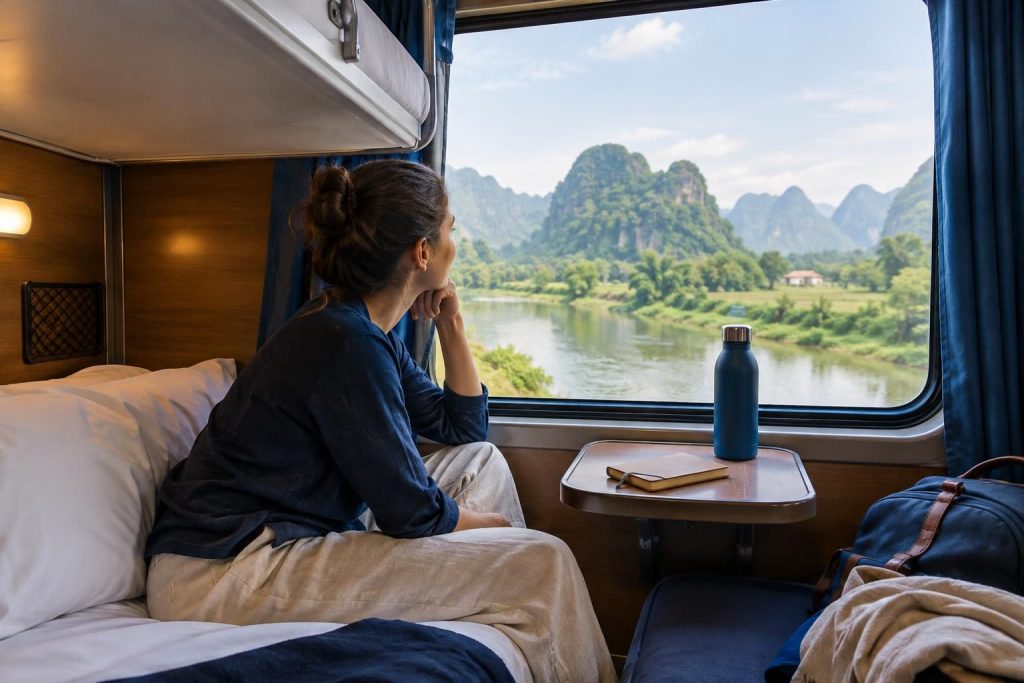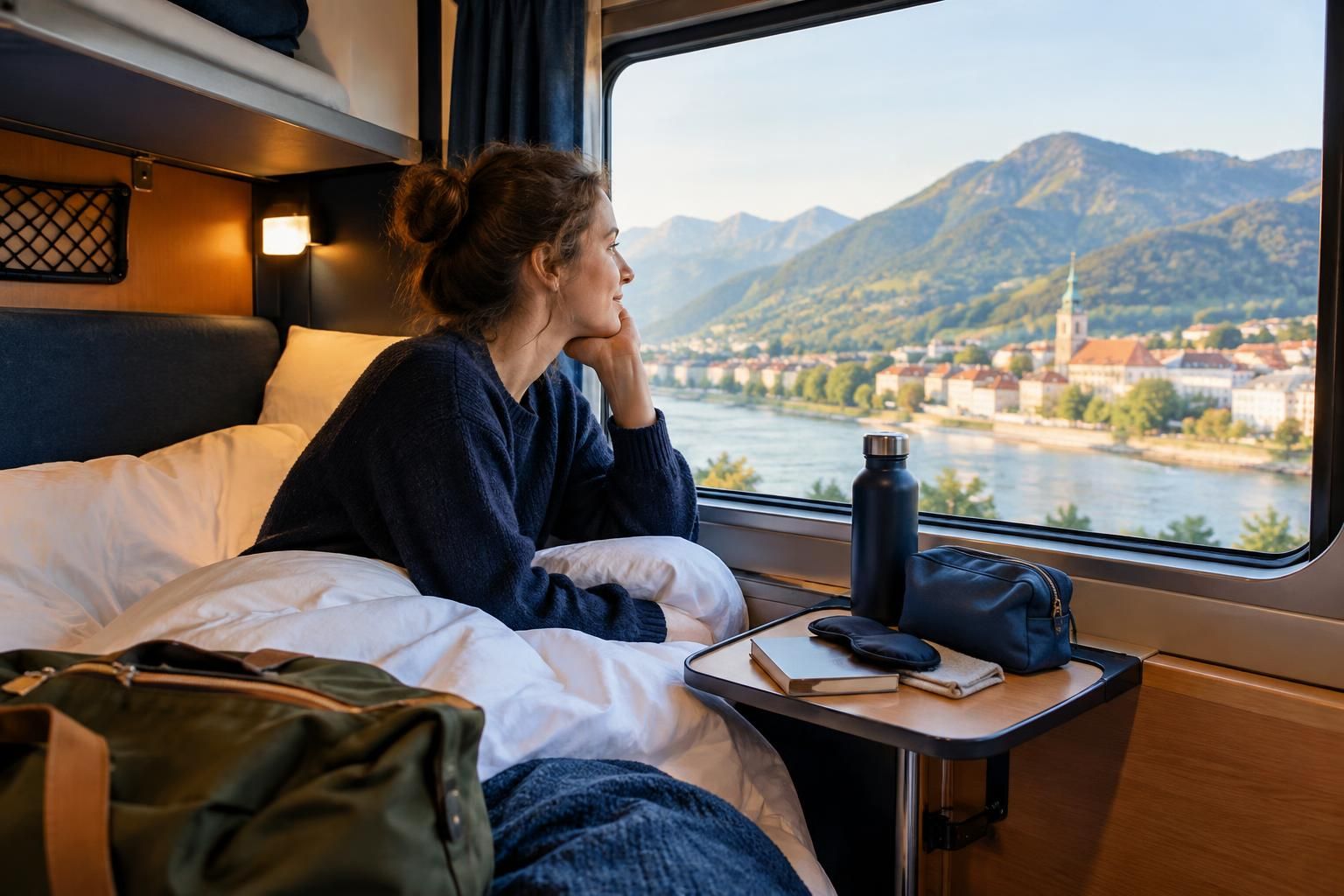
A sleeper train offers a different way to move between European destinations: leave one city in the evening, settle into a berth and wake up somewhere new. The journey can become a memorable part of the trip rather than simply a transfer. But a good overnight rail experience depends less on romantic expectations than on choosing the right accommodation and protecting the days around it. For a first attempt, build one overnight journey into a straightforward itinerary instead of linking several together. That gives you the pleasure of trying rail travel after dark without making the whole holiday depend on how well you sleep.
Choose the journey around your holiday, not the other way round
Start with two places you genuinely want to visit, then investigate whether an overnight service fits between them. Sleeper networks do not mirror daytime rail networks, and an appealing line on a map does not necessarily mean a convenient direct train. Check the intended travel date, stations and accommodation offered before committing to hotels at either end.
A useful first itinerary is three nights in one city, an overnight train and three nights in another. Avoid putting the sleeper immediately after a long flight or before an essential event. If overnight options prove awkward, a daytime train with a stop along the way may make a better holiday than a complicated night journey.
Understand what you are actually booking
An overnight train ticket does not automatically include a bed. Depending on the service, accommodation may range from ordinary seats to shared couchettes and sleeper compartments. Couchettes generally offer simpler bunks, while sleepers may provide more bedding, fewer occupants or additional facilities. Terminology varies, so compare the actual layout rather than relying on the name.
Look for the number of berths, whether the compartment is shared or private, and the location of toilets and washing facilities. A private compartment does not necessarily have a private bathroom. If ladders, narrow beds or limited standing space would be difficult, investigate lower-berth options and the operator’s accessibility information before booking. For families, check the exact sleeping arrangements rather than assuming children can share.
Compare the whole journey cost
Compare the overnight option with a daytime train plus accommodation, but keep the calculation realistic. A sleeper can replace a hotel night, yet it may also involve separate berth charges, reservation fees or connecting transport. Rail passes do not necessarily cover every element of an overnight booking; check what is included and what must be reserved separately.
Privacy is often the most meaningful upgrade to consider. Sharing can suit a solo traveler who is comfortable sleeping near strangers, while a private compartment may be worth prioritizing for a couple or family. Decide whether the purpose is economical transport, a special experience or both. That makes it easier to judge the value of different arrangements without expecting hotel-style comfort.
Give connections and stations enough attention
Check the precise departure and arrival stations. Large European cities can have several major terminals, and a station with the city’s name may still leave a substantial onward transfer. Plan how you will reach your evening departure point with luggage, including where you will eat beforehand.
If another train brings you to the sleeper, choose a generous buffer rather than the shortest possible connection. Separate tickets can involve different conditions if disruption causes a missed departure. Read the relevant terms and keep the itinerary simple. For a first overnight journey, spending the departure day in the same city is often more relaxing than arriving through a chain of connections.
Pack a small overnight kit inside your main luggage
Compartments reward compact packing. Put sleepwear, toiletries, any personal essentials and a fresh top in a small pouch near the top of your bag. Add earplugs, an eye mask and a light layer, since corridor light, temperature and passenger movement may interrupt sleep. Keep travel documents and valuables together in a secure place you can reach from your berth.
Bring water and a modest meal or snack unless you have confirmed suitable onboard catering. Choose food that is easy to eat without spreading across a shared compartment. Do not assume there will be a shower, generous charging space or room to open a large suitcase fully. A power bank and a bag that you can lift and manage yourself reduce unnecessary friction.
Treat sleep as a possibility, not a promise
Some travelers enjoy the movement of a train; others notice every stop. Boarding activity, braking, announcements and fellow passengers can fragment the night. Avoid planning as though eight hours in a berth will produce eight hours of sleep.
In shared accommodation, prepare for bed with minimal unpacking and agree courteously on lights where needed. Use headphones rather than speakers and keep early-morning packing quiet. Before settling down, understand any instructions provided for doors, wake-up arrangements or ticket checks. Simple preparation helps you feel less unsettled by unfamiliar routines.
Make arrival day deliberately easy
An early arrival can leave several hours before accommodation is ready. Check whether your lodging can store bags, or investigate station storage and its conditions. Choose a first activity that works even if you are tired: breakfast, a short neighborhood walk or time in a park rather than a prepaid excursion.
Keep the first evening flexible too. Stay near your accommodation, have a straightforward dinner and leave ambitious sightseeing until the following day. If the train journey itself is a highlight, give it space in the itinerary instead of expecting it to deliver both transport and perfect rest.
A successful first sleeper-train trip starts with modest expectations and careful choices: a useful route, a suitable berth, manageable luggage and an unhurried arrival. Build the journey between two worthwhile stays, and let the overnight crossing be an experience in its own right—not a test of how much sightseeing you can squeeze into a holiday.
AI-assisted evergreen travel guide. Featured image is an AI-generated illustration, not a specific product or booking.