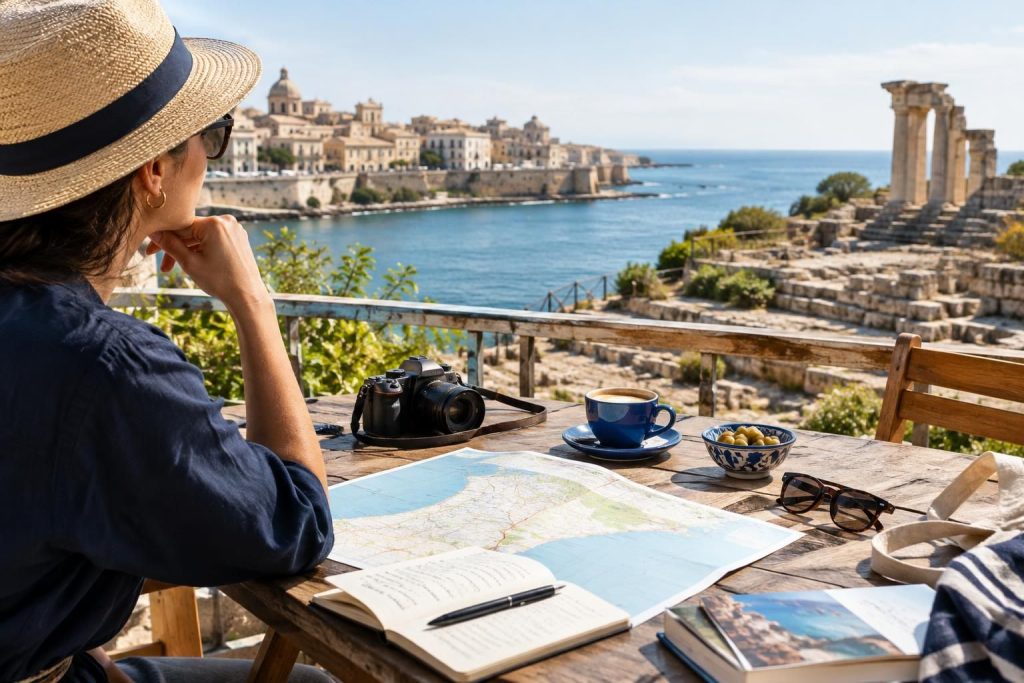
Trip planning often begins with collecting: a restaurant mentioned by a friend, a striking coastal photograph, a neighborhood walk and a growing folder of places to stay. Eventually, the collection becomes harder to use than a blank page. Everything looks appealing, but little explains what belongs together or deserves your limited time. The solution is not to organize every saved item perfectly. It is to turn a large collection into a small set of decisions. This approach helps you keep the inspiration while building an itinerary that reflects how you actually want to travel.
1. Define the trip before sorting the ideas
Write a short description of the trip you want, using experiences rather than attractions. For example: five nights in one base, slow mornings, plenty of walking and two memorable meals. Alternatively, your brief might prioritize architecture, an easy countryside excursion and evenings free for spontaneous plans. This becomes a filter for everything you have saved.
Add the constraints you already know: approximate dates, spending comfort, travel companions and willingness to change accommodation. Keep unresolved choices visible rather than quietly treating them as settled. A remote beach may be appealing, but it belongs in a different planning category if reaching it depends on renting a car you have not decided to book.
2. Gather everything into one simple list
Move your useful ideas into a single working document, spreadsheet or notes app. You do not need to copy whole articles or preserve every photograph. Record the place name, its general location, what attracted you and where the original information came from. A short note such as courtyard setting, ceramics workshop or good starting point for a harbor walk preserves the reason behind the save.
Merge duplicates and separate actual places from broad inspiration. A photograph of a mountain village might represent a desire for rural scenery rather than a commitment to that exact village. Label it accordingly. If you cannot remember why something appealed to you, place it in an archive instead of spending time trying to justify keeping it.
3. Sort by commitment, not by popularity
Give each idea one of three labels: anchor, optional or alternative. An anchor is something important enough to shape part of the trip around. An optional stop would be enjoyable if it fits naturally. An alternative serves a similar purpose to another idea, such as a second viewpoint or another food market.
Keep the anchor list deliberately short. For a four-day city stay, you might choose a particular museum, a neighborhood exploration and one special meal. Everything else should support those choices rather than compete with them. If you are traveling with others, ask each person to identify one or two priorities before filling the remaining space. This makes personal preferences easier to see than an undifferentiated shared wishlist.
4. Map clusters rather than drawing a complete route
Plot your anchors and strongest optional ideas on a map, then look for natural groups. A cluster might combine a gallery, nearby streets worth exploring and several possible lunch stops. Another could center on a waterfront or a village outside the main destination. Keep isolated ideas separate until you understand what reaching them would involve.
Treat proximity as a starting point, not proof that places fit comfortably together. Hills, waterways, large stations and awkward connections can complicate a route that looks compact. Check the practical connection before assigning a cluster to a day. If your ideas are widely scattered, consider dropping the weakest outlier rather than designing the entire itinerary around collecting it.
5. Separate decisions from details that need checking
Create a short verification list for anything that could affect your plans: whether a reservation is needed, the applicable visiting arrangements, the location of an entrance or the transport connection. Saved recommendations are leads, not permanent facts. Check essential details through the relevant operator or venue before making dependent commitments.
Do not give every optional café the same attention as your main excursion. Prioritize checks that could change where you stay, how you travel or which day you allocate to an experience. Mark unresolved items clearly with a next action, such as confirm meeting point before choosing transport. This is more useful than a vague note saying check later.
6. Build a light daily plan with a nearby shortlist
Turn each promising cluster into a loose day outline: one main purpose, a practical starting area and a few nearby options. For example, a day might center on a design museum, with a park and two food stops available afterward. Avoid assigning every saved place a time slot simply because your planning tool allows it.
Keep alternatives attached to the relevant day or area rather than in a separate, sprawling master list. If you finish early, you can choose something nearby without reopening the whole planning process. Save only the essential details for use on the move, including booking information, addresses and transport notes. Your travel-day version should be much shorter than your planning file.
7. Give unused ideas somewhere to go
Create a clearly labeled not-this-time list. It can hold appealing places that require another base, suit a different season or simply fall below your current priorities. Removing them from the active itinerary does not mean deciding they are unworthy.
Before finishing, read each day as a traveler rather than a collector. Can you understand its main purpose at a glance? Are optional stops genuinely optional? Is there room to linger somewhere unexpectedly enjoyable? If the plan feels like an attempt to justify everything you saved, remove a few items and keep the strongest experiences.
A useful itinerary is an edited selection, not a complete inventory of everything worth doing. Preserve why an idea interests you, choose a few anchors and organize the rest around geography and genuine flexibility. You can arrive with clear priorities and enough practical detail to act on them, while leaving plenty of the destination undiscovered until you get there.
AI-assisted evergreen travel guide. Featured image is an AI-generated illustration, not a specific product or booking.