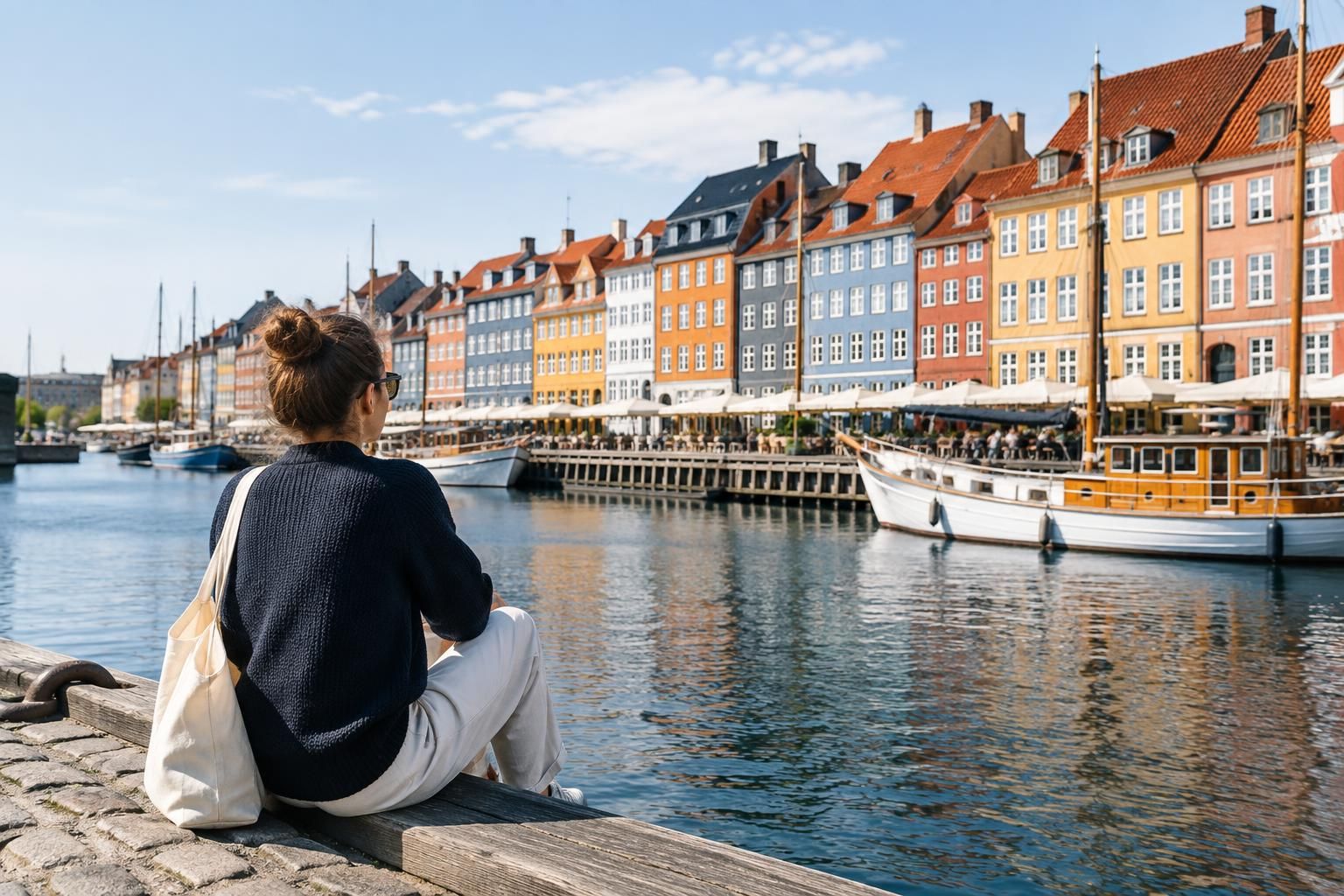
Copenhagen rewards travelers who notice the details: a well-proportioned chair, a sheltered courtyard, the space given to bicycles, or the way a waterfront becomes somewhere to linger. A design-focused break need not mean moving between expensive shops and specialist museums. Much of the interest lies in ordinary streets and public spaces. Four nights provide room for two substantial cultural visits, several contrasting neighborhoods and an unhurried look at the harbor. The key is to group experiences geographically and leave enough space to see how the city works between its landmarks.
Choose a base that supports the trip you actually want
For a first visit, compare accommodation in the historic center, Vesterbro and Christianshavn. The center suits travelers who value walking access to major sights. Vesterbro offers a useful mix of residential streets, places to eat and proximity to Copenhagen Central Station. Christianshavn brings canals and waterfront walks into the daily routine, though the exact location matters more than the neighborhood label.
Nørrebro can suit visitors who prefer neighborhood life to a landmark-heavy itinerary. Before booking anywhere, map the property against the places you expect to visit and check the walk from the nearest useful transport stop. An attractive room becomes less appealing if every outing begins with an awkward journey. Look beyond design-led photographs to practical details: room size, street noise, curtains, luggage storage and whether breakfast or a kitchenette fits your habits.
Build the break around two complementary cultural visits
Designmuseum Danmark and the Danish Architecture Center offer two different starting points. The former suits an interest in objects, furniture and design history; the latter provides an architectural lens on buildings and urban life. Check their exhibition programs before deciding how much time to allocate, since the subjects on display can shape which visit matters most to you.
Place these visits on separate days rather than creating a single museum marathon. After a design collection, spend the afternoon noticing seating, lighting and shop interiors. After an architecture exhibition, walk along the harbor and consider how buildings meet public space. This simple pairing turns the city into a continuation of the visit without requiring another ticket. Keep arrival day lighter, with a neighborhood walk rather than a major indoor commitment.
Use neighborhood walks to connect objects with everyday life
Give each walk a small theme instead of a long checklist. In the historic center, look at the relationship between narrow streets, courtyards and public squares. Around Christianshavn, focus on canals, bridges and changes along the waterfront. In Nørrebro, compare the atmosphere of busy shopping streets with quieter residential blocks and shared outdoor spaces.
Superkilen offers a contrasting perspective on public-space design, while the harbor around BLOX provides another setting for considering contemporary architecture. You do not need specialist vocabulary to make these stops rewarding. Ask straightforward questions: Where do people sit? Is there shelter from wind or rain? Does a space invite a pause or encourage movement? Keep photographs selective and allow time simply to observe. Respect residential courtyards and entrances rather than assuming every attractive space is public.
Choose transport for comfort, not for an idealized Copenhagen experience
Walking combined with public transport is a sensible default for a short stay. Group nearby stops, then use the metro, trains or buses when crossing the city would otherwise consume your energy. Harbor transport can add a different view of waterfront buildings, but check routes, tickets and service information rather than treating a boat journey as interchangeable with a sightseeing cruise.
Cycling is optional, not a requirement for enjoying Copenhagen. Confident urban riders may appreciate it, while occasional cyclists may find that navigation and unfamiliar traffic patterns distract from the architecture. If you hire a bicycle, first understand local cycling conventions, the rental terms and where it can be parked. Avoid making your first ride a tightly scheduled cross-city journey. For any transport pass, compare the journeys you genuinely expect to make rather than buying one solely for convenience.
Plan four nights with room for weather and changing interests
A balanced outline starts with arrival and a local walk. Use the first full day for Designmuseum Danmark and the historic center, the second for the Danish Architecture Center and the harbor, and the third for a longer neighborhood exploration. Departure morning can accommodate breakfast and one nearby stop, but avoid making it the only opportunity for something important.
Keep one indoor alternative and one outdoor alternative available each day. Rain might shift attention toward a museum or a longer café break; clearer weather might favor canals and waterfront spaces. Travelers especially interested in art and architecture could replace the third day's city walk with Louisiana Museum of Modern Art in Humlebæk. Treat that as a separate excursion, checking the journey and admission arrangements, rather than squeezing it between Copenhagen commitments.
Budget for experiences and pack for close observation
Separate the budget into accommodation, transport, admissions, food and optional shopping. A design interest can make small purchases accumulate quickly, so decide whether you want one considered object or simply the pleasure of browsing. If buying ceramics, glass or larger items, consider weight, fragility and packing space before paying. Photographs or a few notes can preserve an idea without adding luggage.
Comfortable walking shoes, adaptable layers and rain protection matter more than a polished wardrobe. A compact day bag keeps museum visits and transport easier, while a notebook can hold sketches, exhibition details and questions to explore later. Give meals their own place in the itinerary rather than treating every café as another design attraction. Some of the most useful pauses are ordinary ones that let you sit comfortably and decide what deserves more time.
A rewarding Copenhagen design break combines a little structure with plenty of attention. Choose a practical base, anchor two days with complementary cultural visits and let neighborhood walks supply the connections. The aim is not to collect every celebrated building or chair, but to return with a clearer sense of how design shapes everyday life.
AI-assisted evergreen travel guide. Featured image is an AI-generated illustration, not a specific product or booking.