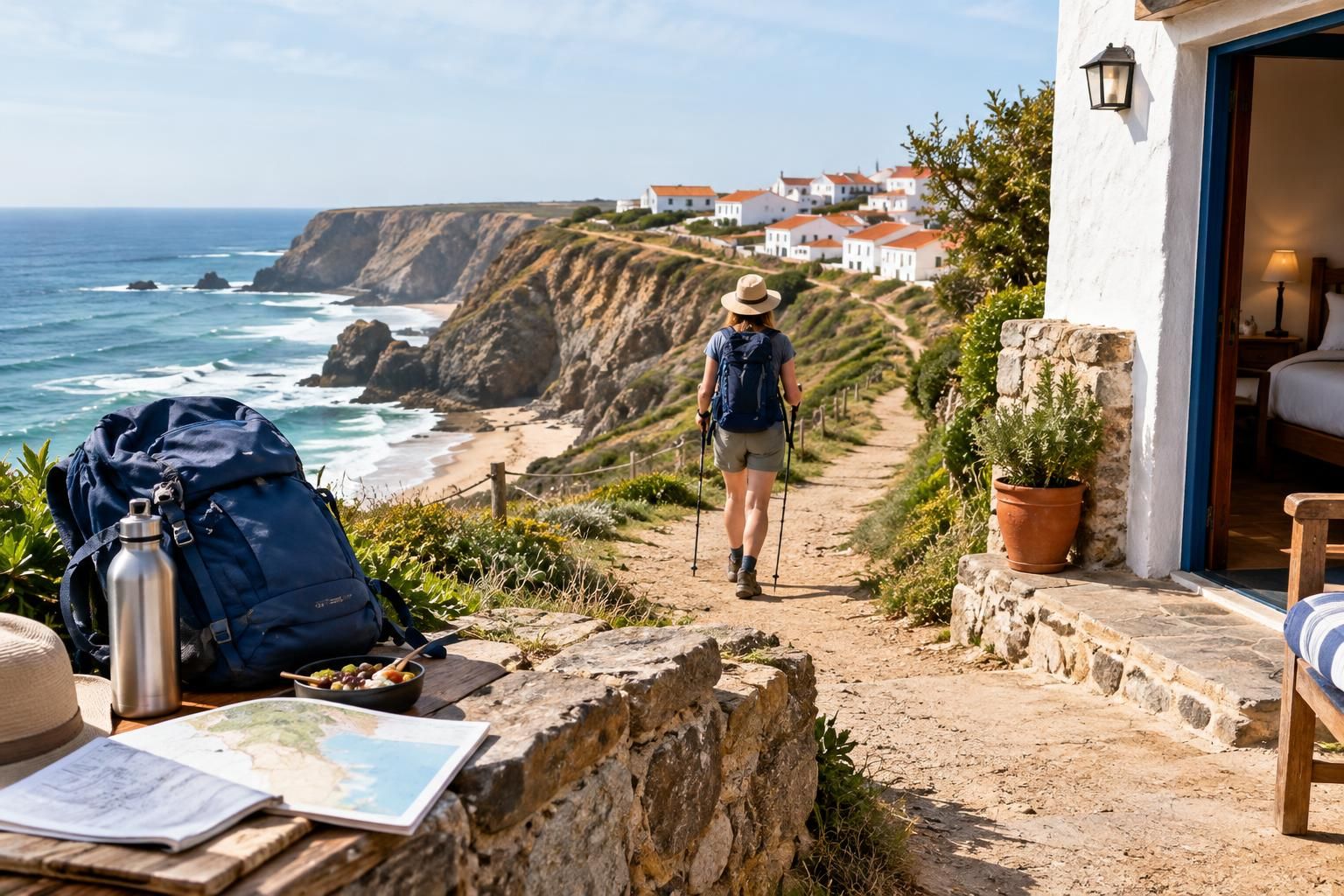
Portugal’s Alentejo coast offers a different kind of European seaside holiday: sandy paths, Atlantic views and evenings in small towns rather than a single beach resort. Walking between overnight stops makes the landscape the main event, but it also turns distance, luggage and accommodation into decisions worth making carefully. The coastal settlements associated with the Rota Vicentina, including Porto Covo, Vila Nova de Milfontes, Almograve and Zambujeira do Mar, provide a useful starting point. For a first inn-to-inn trip, aim for a few selected walking days rather than the longest route your calendar can hold.
Choose the walking experience before choosing the stages
Start by deciding whether you want a continuous journey or a coastal holiday with some walking. On a continuous trip, you move to a new overnight stop after each stage, carrying your belongings or arranging luggage transport. A more flexible version uses two bases and transfers to selected walks. The first brings a satisfying sense of progress; the second makes it easier to shorten days or avoid a demanding section.
Porto Covo, Vila Nova de Milfontes, Almograve and Zambujeira do Mar form a recognizable north-to-south planning framework, but they should not automatically become your daily itinerary. Measure the actual walking route between your chosen accommodations, not the road distance between towns. Sandy surfaces, repeated small climbs and exposed stretches can make an apparently modest distance feel substantial.
Build a four- or five-night plan with room to adjust
For a compact trip, allow an arrival night, two or three walking days and a final night before onward travel. A four-night framework could begin in Porto Covo and finish around Zambujeira do Mar, using intermediate settlements as potential overnight stops. Treat this as a route to assess, not a promise that every connecting stage will suit your group. Replace an overlong section with a transfer and a shorter walk.
A fifth night is often more useful as a pause than as another destination. Vila Nova de Milfontes, near the Mira estuary, is a natural place to consider a two-night stay. An unpacked day can hold a short outing, a leisurely meal or no walking at all. Avoid making your longest stage the day before a tightly timed onward connection.
Judge difficulty by sand and exposure, not just distance
Coastal walking here is not simply a succession of firm seafront promenades. Expect stretches where sand slows your pace and makes each step more tiring. Assess your daily distance against terrain you already know, and leave space for breaks, navigation and photographs. If your group has different walking speeds, choose stages around the person who wants the shortest day.
Season also changes the experience. Consider daylight, likely temperatures, wind and rain together rather than choosing dates solely for beach weather. Hot conditions can make exposed walking uncomfortable, while wet or windy weather can change which outing feels sensible. Before each stage, check the forecast and route information, respect closures and barriers, and be prepared to use a transfer instead of completing the planned distance.
Book accommodation around the route and the evening
A room described as being near a village may still add an unwelcome walk at the end of the day. Compare its position with the trail approach, eating options and your next morning’s departure. Central guesthouses and small hotels can simplify evenings, while rural properties may offer more quiet at the cost of extra transport. Ask about check-in arrangements if your arrival time will depend on walking conditions.
For a moving-on itinerary, prioritize practical details over facilities you may barely use: somewhere to dry damp clothing, breakfast arrangements and space to organize your bag. If anyone needs step-free access, check the property’s actual approach and interior layout. Keep the booking sequence consistent so that an unavailable middle night does not force an unrealistic stage between two confirmed stays.
Decide how your bags and transfers will work
Carrying everything gives you independence, but every unnecessary item travels through the sand with you. A compact wardrobe, limited toiletries and a small charging kit can make a noticeable difference. If you prefer luggage transfers, confirm that the service covers your exact accommodations and dates, and understand collection, delivery and bag requirements before relying on it.
Plan access to the first overnight stop and departure from the last separately from the walking route. Do not assume a convenient public transport connection exists simply because two places look close on a map. Where a taxi or prearranged transfer is part of the plan, clarify the pickup point and arrangements. Keep essentials, water, food, weather layers and anything needed during the day with you, even when your main bag travels ahead.
Make food, navigation and rest part of each day
Check where you can obtain breakfast, a packed lunch and drinking water rather than expecting refreshments along every stretch. Buy the next day’s supplies while you still have options in your overnight town. Evenings can then stay simple: a meal, a look at tomorrow’s route and an early night if you want one. Local fish dishes, soups and bakery stops can give the trip a strong sense of place without elaborate dining plans.
Carry an offline route map and a charged phone, while recognizing that a digital line does not override signs or conditions on the ground. Keep beach visits separate from assumptions about swimming: an attractive cove is not automatically a suitable swimming stop. Most importantly, leave time to notice the coast. A shorter day with unhurried breaks often delivers more than a longer stage completed against the clock.
A rewarding Alentejo walking trip depends less on covering every coastal stage than on matching the route to your pace. Choose realistic distances, place accommodation carefully and settle luggage and transport arrangements before departure. With a little flexibility, a few days between villages can feel like a complete journey rather than a shortened version of a longer trail.
AI-assisted evergreen travel guide. Featured image is an AI-generated illustration, not a specific product or booking.