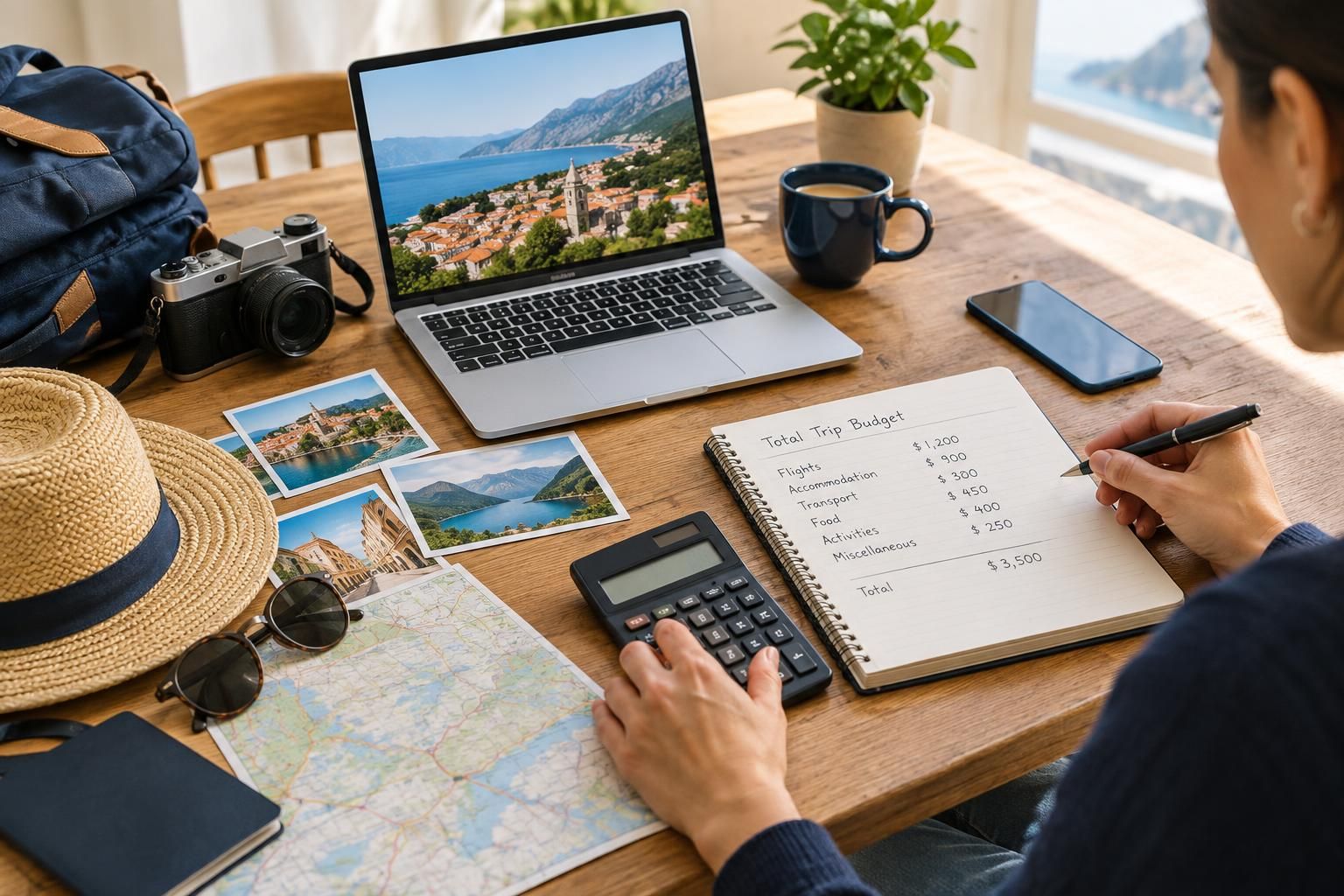
Travel budgets often begin with the most visible expenses: getting there and finding somewhere to sleep. Yet smaller decisions, from airport transfers to lunch between activities, can change the total considerably. A useful budget follows the whole journey rather than treating the headline fare as the deciding factor. Whether you are planning a city break, a beach holiday or a longer route, the aim is to identify the full cost, choose your priorities and leave enough room for ordinary surprises.
1. Set a whole-trip limit before shopping for individual bookings
Start with the total amount you are comfortable spending, not the cheapest flight or most appealing hotel. Decide whether that limit covers only money spent during the trip or also preparation costs, such as luggage, replacement clothing and care for pets at home. Agree on the boundaries before comparing options, especially if you are traveling with someone whose idea of an affordable holiday differs from yours.
Next, identify two or three priorities worth protecting. These might be a private room, a particular cultural experience or convenient transport after a long journey. Name the things you are happy to simplify as well. You might prefer basic accommodation with a good location over a larger room that requires frequent paid journeys. These trade-offs give the budget a purpose beyond simply spending less.
2. Trace the journey from your front door to your destination
Treat the main ticket as one part of a transport chain. List how you will reach the departure point, travel onward after arrival and move between any overnight stops. Include relevant extras that may need checking, such as baggage, seat selection, parking, tolls or a transfer at an inconvenient time. Not every item will apply, but writing the chain down helps reveal gaps.
Compare routes using both money and effort. A distant arrival airport or an additional connection can create costs for meals, onward travel or another night's accommodation. A slower train may be a reasonable choice if it connects useful city centers; a lengthy detour may not suit a short break. Keep uncertain charges marked as estimates rather than assuming they will be negligible.
3. Compare accommodation by its effect on the rest of the day
The room rate is only the starting point. Consider the property's location relative to the places you actually want to visit, not just its distance from a landmark. A quieter neighborhood with straightforward transport might suit a week-long stay, while a central location could reduce travel friction on a short visit. Compare similar room arrangements, privacy levels and booking conditions so that the apparent saving is meaningful.
Think through an ordinary morning and evening at each option. Will you buy breakfast, prepare it yourself or have it included? Is there somewhere practical to eat nearby? Would laundry facilities help on a longer trip? Check the full booking total for any applicable charges, and distinguish useful features from amenities you are unlikely to use. A kitchen offers little budget value if you do not intend to cook.
4. Estimate daily spending with realistic day types
Instead of assigning every day the same allowance immediately, sketch a few representative days. A museum-focused city day might include entry fees, local transport and meals out. A beach day could involve groceries and a simple journey. A transfer day might require food away from your accommodation and luggage storage. Use these patterns to build an estimate that reflects your actual plans.
Separate essential spending from optional choices. Meals and necessary transport belong in the first group; additional attractions, shopping and spontaneous outings belong in the second. For food, budget around your likely habits rather than an idealized version of them. If browsing markets and eating in restaurants are central pleasures, allow for them openly instead of assuming every meal will come from a supermarket.
5. Keep uncertainty separate from your activity money
Create a reserve for costs you cannot confidently estimate yet. The appropriate size depends on the trip: several transfers, unfamiliar payment arrangements or a long itinerary introduce more uncertainty than a simple stay in one place. Keep this reserve distinct from the amount set aside for optional experiences. Otherwise, money intended to handle disruption can quietly become part of the sightseeing budget.
Consider currency conversion, possible payment charges and the timing of deposits when relevant. Record which amounts are already paid, which remain due and which are only provisional. For shared travel, note who pays each expense and how it will be divided. A manageable total can still cause confusion if one traveler is expected to cover most bookings before everyone else contributes.
6. Test the total, then adjust the biggest decisions
Add preparation, transport, accommodation, daily spending and the reserve into one total. If you are comparing destinations, use the same trip length and comfort expectations for each. If you are comparing trip lengths, include the extra meals and nights rather than looking only at the main ticket. This makes it easier to distinguish a genuinely suitable option from one with an attractive headline cost.
If the total exceeds your limit, revisit the large choices first. Fewer overnight bases, a shorter stay or a different accommodation setup may help more than trimming every snack. Once the plan fits, keep a simple record of actual spending by category. Review it occasionally during the trip so you can adjust optional choices without turning every purchase into a budgeting exercise.
A useful travel budget makes your choices clearer before money is committed. Follow the full journey, account for everyday habits and protect the experiences you most want to enjoy. When the total feels too high, change the structure of the trip before cutting every small pleasure. The goal is a plan you can afford and still look forward to.
AI-assisted evergreen travel guide. Featured image is an AI-generated illustration, not a specific product or booking.