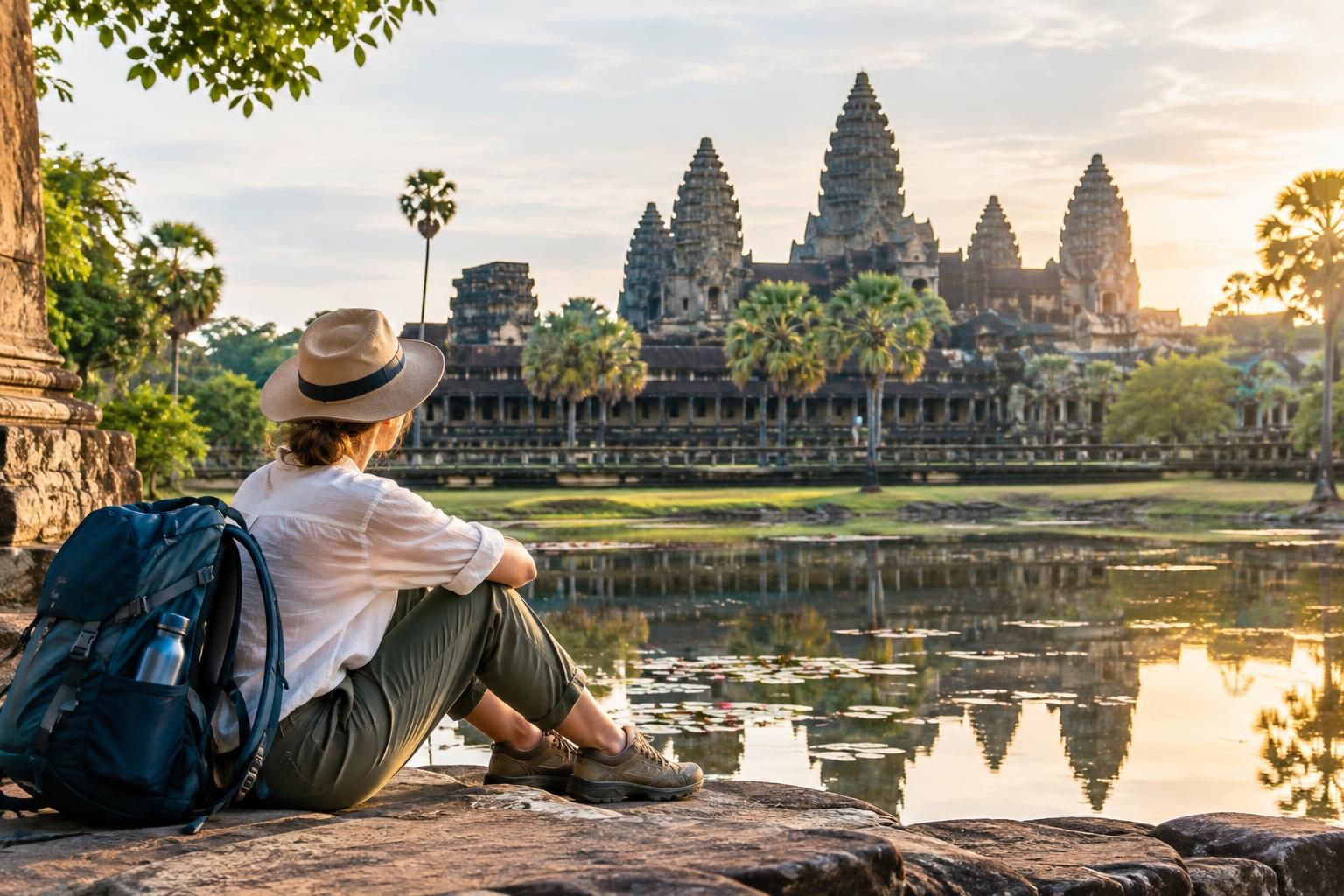
Angkor rewards attention more than endurance. Around Siem Reap in Cambodia, monumental gateways, carved galleries and tree-entwined ruins offer very different experiences, but they can blur together when an itinerary becomes a checklist. A better plan gives each outing a clear purpose, leaves room for the journey between sites and treats rest as part of the trip. Whether you have one temple day or several, the goal is not to see every named stop. It is to leave with a sense of the place rather than a collection of hurried photographs.
1. Build your visit around contrasting experiences
Start with the kinds of places you want to experience, not the longest possible temple list. Angkor Wat offers monumental scale and extensive carved galleries. Bayon, within Angkor Thom, is associated with its distinctive face towers. Ta Prohm is known for the relationship between stone structures and large trees. These contrasts can give a short visit variety without requiring a dozen stops.
For one temple day, choose two principal sites and keep any additional stop optional. With two or three days, spread the major experiences across separate outings and add smaller sites according to your interests. Architecture enthusiasts might want more time examining layouts and carvings; photographers may prefer fewer locations with longer pauses. Do not assume that a small temple deserves only a few minutes.
2. Give each day a realistic shape
Think in terms of an outing rather than a continuous dawn-to-dusk expedition. One useful pattern is a substantial morning visit, a proper break and an optional later excursion. Another is a single shorter temple session followed by an unhurried afternoon in Siem Reap. Distances, uneven surfaces and time spent studying details all make a temple day more demanding than the number of stops suggests.
Sunrise is a choice, not a requirement for a successful trip. Consider whether the early start suits your sleep, companions and interest in photography. If you include it, reduce the rest of that day rather than simply adding more hours. Check current access arrangements before committing to any particular sunrise or sunset location, and leave your arrival day flexible if it follows a tiring journey.
3. Choose a Siem Reap base that supports downtime
Accommodation matters because the time between temple outings shapes the whole visit. Decide whether you prefer walking to meals and everyday services or staying somewhere quieter where more journeys require transport. Look at the property's surroundings as well as its distance from central landmarks. A room that appears conveniently located on a map may face a busy street or involve awkward walking routes.
Prioritize features you will actually use: effective room cooling, comfortable seating, somewhere to dry clothing and breakfast arrangements that fit your plans. If you expect to return between outings, check how that affects the transport agreement. Travelers with limited mobility should ask specific questions about steps, bathrooms and vehicle access rather than relying on a general accessibility label.
4. Match transport and guiding to your priorities
A hired vehicle with a driver can simplify moving between dispersed sites. Compare options by comfort, exposure to weather, ease of getting in and out, and space for your group. Before agreeing to an outing, clarify the intended route, waiting arrangements, return journeys and whether changes are possible. More distant temples can substantially alter the shape of the day, so discuss them separately.
A driver and a guide serve different purposes; do not assume that one arrangement includes both. A guide can help connect architectural details, religious imagery and historical periods that might otherwise feel disconnected. Explain whether you want a broad introduction, close attention to carvings or a pace suited to children. If you prefer independent exploration, prepare a short reading list rather than trying to absorb the entire history beforehand.
5. Prepare for the actual walking experience
Temple visits involve more than moving across level courtyards. Expect a mix of exposed paths, irregular stone surfaces, steps and places where progress is slow. Wear familiar footwear with dependable grip and carry a manageable day bag. Useful basics include drinking water, sun protection, a light rain layer and a secure place for your phone and admission documents. Keep the load small enough that you can comfortably carry it throughout the outing.
Choose clothing suitable for sacred settings, and check current dress and access requirements before visiting. Follow posted instructions about climbing, restricted spaces and photography. Avoid treating carvings, doorways or tree roots as climbing equipment or photo props. If your group includes different walking abilities, agree beforehand that some people can pause or skip a section without everyone feeling that the visit has failed.
6. Leave room for Cambodia beyond the temple circuit
A trip feels more balanced when every free hour does not become another excursion. Reserve time in Siem Reap for a leisurely meal, a market browse or simply watching everyday street activity from a café. A cooking activity or an arts-focused visit can provide a change of pace if it matches your interests. Choose one complementary experience rather than filling every gap.
Before booking, check current ticket options, site access, transport terms and cancellation conditions. Compare the total cost of your intended plan, including guiding and longer drives, rather than focusing only on admission. Keep one optional stop that can be dropped without disappointment. That small amount of flexibility is especially useful when weather, tiredness or an unexpectedly absorbing temple changes the day's rhythm.
The most satisfying Angkor itinerary has a clear focus and enough space to change pace. Choose a few contrasting sites, arrange transport around realistic outings and stay somewhere that makes downtime easy. You do not need to cover the whole archaeological landscape to appreciate it. Time spent looking closely at one gallery or courtyard can be more memorable than another rushed stop.
AI-assisted evergreen travel guide. Featured image is an AI-generated illustration, not a specific product or booking.