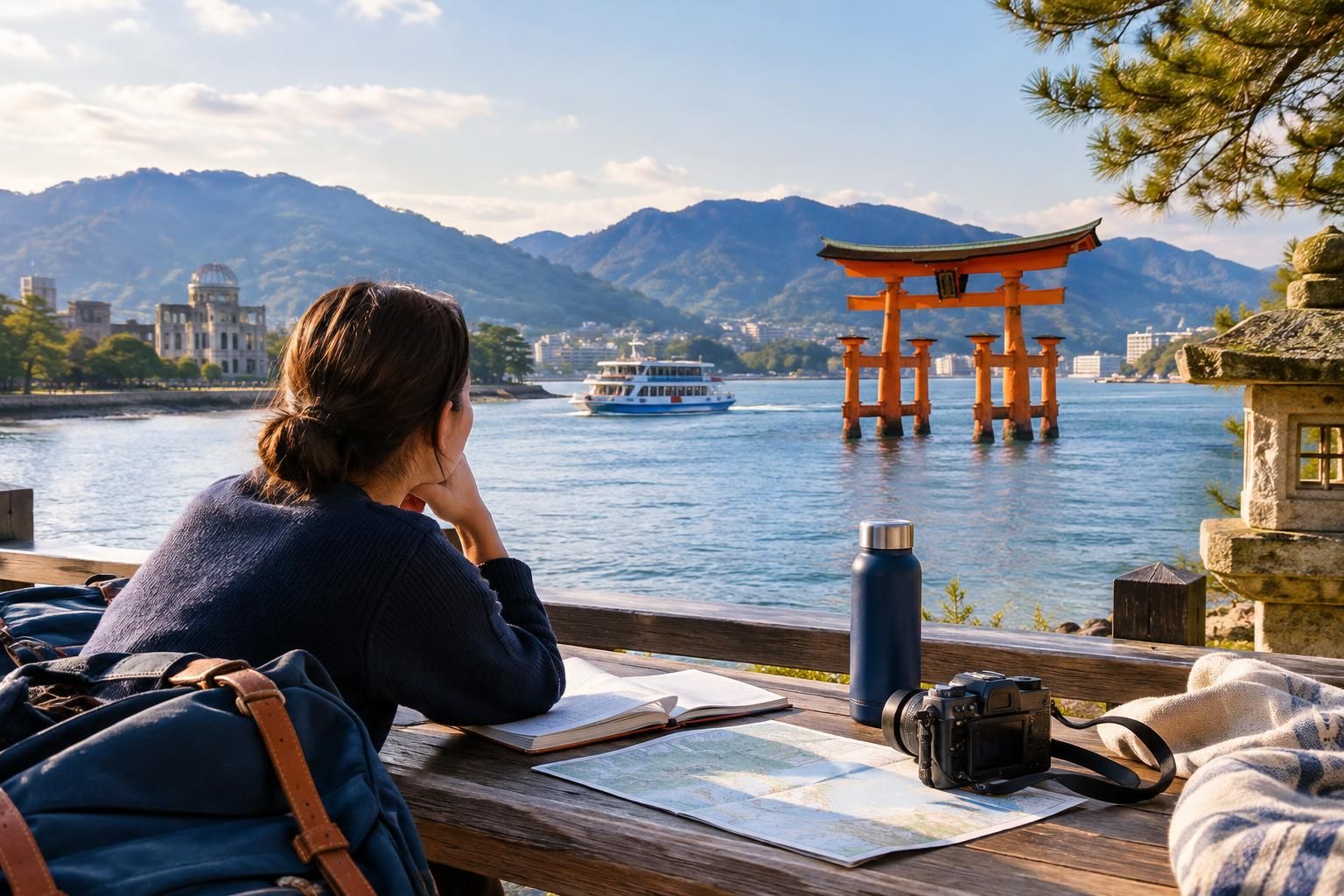
Hiroshima and Miyajima make a rewarding pairing, but they offer very different experiences. Hiroshima suits neighborhood wandering, thoughtful museum visits and relaxed meals. Miyajima brings wooded slopes, waterfront views and a compact settlement where the rhythm changes as day visitors arrive and leave. The main planning decision is not how many sights to fit in, but whether to keep one city base or give the island a night of its own. With three or four nights available, either approach can work. Choose according to your luggage, interest in walking and appetite for changing accommodation.
Choose between one convenient base and two contrasting stays
Staying entirely in Hiroshima is the simpler option. You unpack once, retain a wider choice of places to eat and can select your Miyajima day around the weather forecast. This works particularly well if you prefer a city hotel, have substantial luggage or want the freedom to shorten an island outing without rearranging accommodation.
An island overnight offers something different rather than simply more sightseeing time. You can walk along the waterfront after the main daytime crowds thin, enjoy dinner without immediately watching the clock and start the following morning already on Miyajima. For a four-night trip, three nights in Hiroshima and one on the island is a useful starting point. With only two nights altogether, one base usually makes better use of your time.
Give Hiroshima its own day, not just the hours around a ferry
Reserve an unhurried block for Peace Memorial Park and the Hiroshima Peace Memorial Museum. The subject matter can be emotionally demanding, so avoid placing a tightly timed transfer or an ambitious sightseeing sequence immediately afterward. A quiet lunch, a riverside walk or time back at your accommodation creates room to absorb the visit.
On another part of your stay, explore Hiroshima through a less structured neighborhood outing. Shukkeien garden, shopping streets and an okonomiyaki meal offer contrasting ways to spend time in the city. Pick one principal activity and build the rest around how you feel. Treat memorial spaces respectfully, especially when taking photographs, and avoid approaching them as quick stops between other attractions.
Make the island transfer a small travel day
A Miyajima journey usually combines travel toward a ferry terminal, a crossing and a walk or onward transfer to your accommodation. The individual stages may look straightforward, but station navigation, waiting and bags add friction. Compare the full route from your Hiroshima hotel rather than choosing transport solely by the crossing itself. Check departure points, operating details and ticket conditions when arranging the trip.
For one island night, take a small overnight bag if your Hiroshima accommodation agrees to store your main luggage. This is especially convenient when you return to the same hotel. If you are continuing elsewhere afterward, decide where the larger bags will go before booking the island stay. Keep essential medication, travel documents and the next day's clothing with you rather than relying on access to stored luggage.
Plan Miyajima around the shoreline and tides
Itsukushima Shrine and its offshore torii gate are central to many first visits, but the waterfront looks different as the tide changes. Higher water emphasizes the relationship between the shrine buildings and the sea; lower water reveals more of the tidal landscape. Consult a date-specific tide prediction if seeing a particular scene matters to you, while keeping your wider day flexible.
Do not build the entire visit around one photograph. Combine the shrine area with quieter lanes, temple grounds or a gentle shoreline walk. An overnight gives you two opportunities to explore in different light and conditions. Follow posted access restrictions around the foreshore, and give the island's deer space. Keep food and loose belongings secured rather than encouraging animals to approach.
Choose walks that leave energy for the rest of the trip
Miyajima can be a relaxed waterfront visit or a more demanding walking day. Mount Misen adds forest paths, elevation and broader views, but it should be a deliberate choice rather than an automatic addition after the main sights. Consider terrain, daylight, weather and your group's fitness. Where a ropeway forms part of the plan, verify its operation and remember that it does not remove all uphill walking.
A lower-level alternative is to focus on the settlement, Daisho-in temple and nearby wooded paths, adjusting the distance as you go. Steps and slopes still matter, so travelers with mobility needs should check individual approaches rather than assuming the compact map means easy access. Wear shoes with grip and carry water, a light layer and rain protection appropriate to the season.
Let accommodation and meals shape the overnight
For Hiroshima, choose between straightforward access to your arrival station and a more central base for dining and evening walks. Compare the actual journey to your likely activities, including any changes of transport. For Miyajima, look closely at the walk from the ferry, steps at the property and whether luggage assistance is available if you need it.
An island inn with dinner included can make the overnight feel pleasantly self-contained. Before booking, clarify meal arrangements, dietary requirements, sleeping setup and any expected arrival time. If you prefer independent dining, check what your accommodation recommends for your dates rather than assuming daytime choices continue into the evening. Leaving the following morning lightly scheduled protects the main benefit of staying: time to enjoy the island without hurrying away.
Choose a Hiroshima-only base for simplicity and weather flexibility; add a Miyajima overnight for a quieter evening and a slower start beside the water. Either way, protect a full, thoughtful city day and resist turning the island into a race between the shrine, summit and ferry. The strongest itinerary leaves room for both places to feel distinct.
AI-assisted evergreen travel guide. Featured image is an AI-generated illustration, not a specific product or booking.