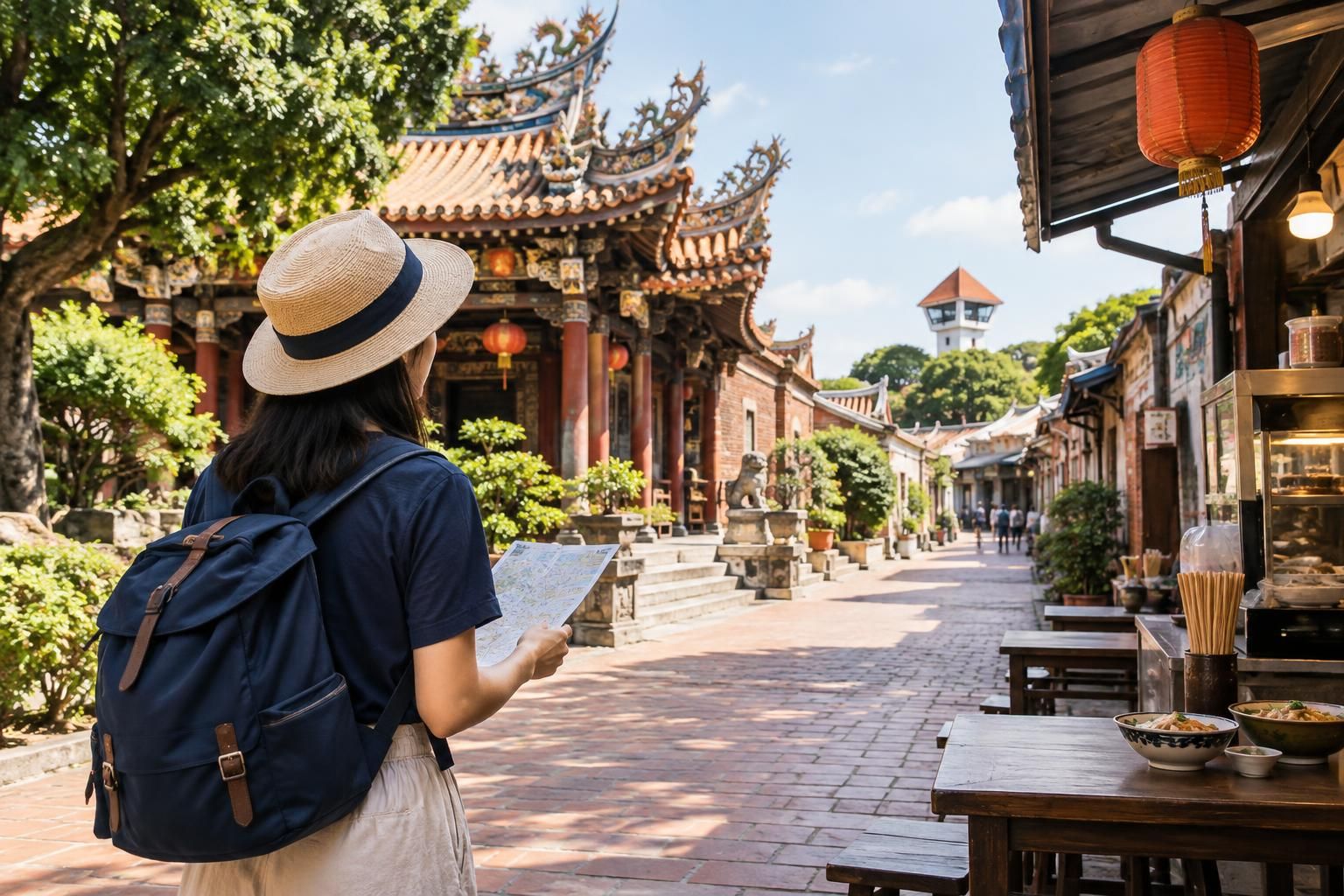
Tainan rewards travelers who enjoy discovering a city in small pieces: a temple courtyard, a breakfast stall, a narrow lane and a long pause over something cold. Taiwan’s former capital has substantial historic sights, but its appeal is as much about everyday streets and regional food as individual monuments. Three nights gives you room for two full days without turning every meal into a deadline. The most useful planning decision is to group nearby places together, leaving space for heat, rain and the occasional dish that deserves a second visit.
Choose a central base for the way you actually travel
For a first visit without a car, look around the West Central District, especially within reasonable walking distance of the lanes and food streets you most want to explore. The area around Chihkan Tower suits a history-focused stay, while the broader Confucius Temple area works well for combining cultural stops with cafés and smaller streets. Neither requires filling every hour with attractions.
Check the final approach to your accommodation rather than judging by a map pin alone. A characterful lane house may involve stairs, uneven paving or a short walk from vehicle access. If you have bulky luggage, limited mobility or a late arrival, prioritize clear arrival instructions, a lift where needed and straightforward taxi access over decorative charm.
Understand which Tainan station your journey uses
Tainan’s high-speed rail station sits outside the central city, while the conventional railway station is much closer to the historic core. This distinction matters when comparing accommodation locations and estimating door-to-door travel. A faster intercity train does not automatically mean a faster arrival at your hotel once the onward connection is included.
When planning a journey from Taipei, Taichung or Kaohsiung, compare the whole trip: departure station, train journey, transfer and final approach. For high-speed rail arrivals, consider the connecting rail option toward central Tainan or a road transfer. Keep arrival evening flexible rather than attaching a prepaid activity to an unfamiliar connection.
Organize the historic center into small walking clusters
Use one full day for the central city, but divide it into separate outings. One cluster might pair the Confucius Temple area with nearby lanes and a museum or gallery. Another could focus on Chihkan Tower and surrounding streets. Treat these as neighborhood anchors, not a requirement to enter every historic building.
Tainan is better approached through short walks than one continuous march. Distances that look modest on a screen can feel longer in humid weather, and uninterrupted pavement is not something to assume. Use a taxi or another suitable local transport option to bridge an awkward gap, then resume exploring on foot. Keep entrances and narrow passages clear when stopping for photographs.
Give Anping its own outing rather than squeezing it in
Anping offers a different side of Tainan, combining old streets, maritime history and sights such as Anping Fort and the Anping Tree House. It works best as a dedicated half-day or longer, depending on your interest in historical interpretation, browsing and waterside wandering. Choose two main interests instead of treating the district as a checklist.
Plan transport to and from Anping separately from your central walking route. A bus may suit travelers with flexible timing; a taxi can simplify the outing when energy is low or several people are sharing the journey. If you want to stay toward evening, leave room for the return trip rather than assuming the waterfront and your hotel are conveniently connected.
Plan food around appetite, not a long must-eat list
Tainan is associated with foods such as milkfish dishes, danzai noodles, beef soup and savory rice cakes known as wa gui. Use these as starting points rather than compulsory orders. Pick one or two dishes for each outing, share portions where practical and leave room to follow your curiosity. Small eating stops can replace a conventional restaurant lunch.
Do not build an entire day around one stall. Individual businesses may have limited service periods or close unexpectedly, so keep alternatives nearby. Travelers with dietary restrictions should carry a clear written explanation in Traditional Chinese and ask about broths, sauces and garnishes as well as the main ingredient. Vegetarian-looking dishes are not necessarily prepared without animal ingredients.
Build a weather-flexible three-night rhythm
On arrival, settle in and explore only the streets near your accommodation. Spend the first full day on central historic neighborhoods, with an indoor break during the hottest or wettest stretch. Use the second full day for Anping, keeping either the morning or evening free for another central neighborhood. Departure morning is useful for a relaxed breakfast, not a distant excursion.
Pack breathable clothing, comfortable shoes with grip, sun protection and compact rain cover. A refillable bottle and a small day bag make frequent stops easier. For temple visits, choose clothing that feels respectful and follow posted guidance about photography and access. If prolonged rain changes your plans, reduce the walking radius and substitute an indoor cultural stop rather than crossing the city repeatedly.
A satisfying Tainan stay needs a convenient base, a clear understanding of arrival transport and fewer commitments than you might initially expect. Give the historic center and Anping separate time, let meals shape the gaps between sights and preserve a daily rest window. Three nights can then feel like a proper introduction to the city rather than a race through its best-known addresses.
AI-assisted evergreen travel guide. Featured image is an AI-generated illustration, not a specific product or booking.