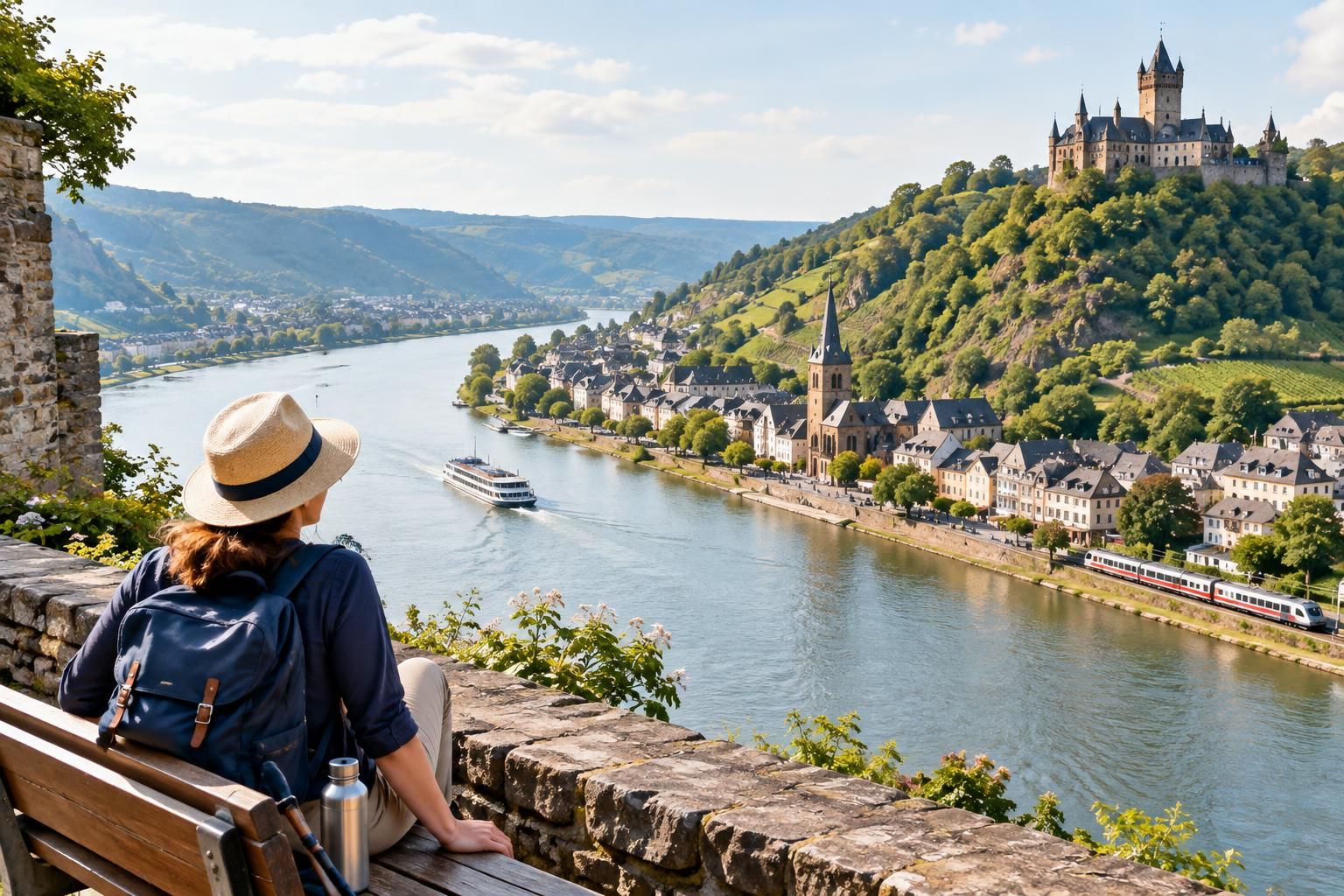
Germany’s Upper Middle Rhine Valley suits a holiday built around small distances rather than a long checklist. Between Bingen and Koblenz, the river passes vineyard slopes, castle-topped ridges and compact towns where an unhurried afternoon can be as rewarding as a major sight. A car-free week works best when trains form the backbone of the trip, boats are optional experiences and hillside excursions are chosen with care. The main planning challenge is not finding enough to do: it is avoiding repeated transfers, steep climbs and an itinerary that treats every town as an essential stop.
Choose a base for everyday convenience, not just the prettiest view
Start by comparing Boppard, St Goar and Bacharach on the western bank. Boppard makes sense if you want a town with several ways to fill a low-key day. St Goar puts castle scenery at the center of the stay, while Bacharach appeals to travelers seeking historic streets and a smaller-town atmosphere. These are useful starting points, not a ranking: the right choice depends on how much walking and transferring you want to do.
For a week, one base is usually enough. Before choosing accommodation, map the actual walk from the station with luggage, including slopes, steps and uneven paving. A room above the waterfront may offer a lovely outlook but add a climb every evening. If your arrival journey is complicated, consider an initial night in a larger gateway such as Mainz or Koblenz rather than forcing another connection.
Understand the two riverbanks before building day trips
The Rhine looks narrow on a map, but opposite-bank destinations are not automatically convenient neighbors. Railways follow both banks, while crossings depend on the location and operation of bridges or ferries. Bacharach and Rüdesheim, for example, should not be treated as interchangeable bases simply because they belong to the same wider river landscape. Group most outings along your own bank and make a crossing a deliberate part of one day.
Use trains for practical movement and treat a riverboat journey as sightseeing rather than an indispensable connection. Boat services and ferry arrangements can vary with season, conditions and operator. Check the relevant journey details when booking, and retain a rail-based alternative. For a boat excursion, select a stretch you especially want to see, then decide whether a train return would make the day simpler.
Balance castle interiors with views from below
A week does not need a different castle every day. Choose one substantial castle visit, such as Rheinfels above St Goar or Marksburg above Braubach, according to your interest in ruins, architecture and interior spaces. Then enjoy other castles as part of the landscape. Seeing a fortress across the river or framed by vineyard slopes can be satisfying without another admission, climb or scheduled visit.
Investigate access separately from the attraction itself. A castle may involve a steep approach, uneven surfaces, stairs or a guided format that leaves less freedom to move at your own pace. Check the visitor arrangements for your dates rather than assuming every site allows independent exploration. Pair a demanding castle outing with an easy lunch and a riverside afternoon, not another uphill destination.
Build a week around contrasting days
A balanced seven-night stay might begin with an arrival afternoon and a full day exploring your base. Follow that with a castle day, a neighboring-town outing and a flexible day for weather or rest. Add one riverboat excursion and one short landscape walk before departure. This gives each day a distinct purpose without requiring seven separate destinations.
Keep town visits selective. In Bacharach, you might focus on lanes, architectural details and a long café stop; in Boppard, allow time for the riverfront and the town itself. Koblenz offers a larger urban contrast if small-town sightseeing begins to feel repetitive. Avoid squeezing several places into one day simply because their train journeys appear short: station walks, waiting and finding lunch also occupy time.
Choose short walks by terrain, not distance alone
The valley’s scenic slopes make walking attractive, but a short route on a map can still involve a sustained climb. Distinguish between a mostly level riverside stroll, a vineyard path and a ridge walk. Long-distance trails such as the Rheinsteig and RheinBurgenWeg can inspire an outing, but their names alone tell you little about whether a particular section fits your ability or available daylight.
For a first walking day, choose a clearly described loop or an out-and-back route with a modest ascent. Check surface, elevation change, wayfinding and return transport before setting off. Carry water, a weather layer and footwear suited to uneven ground. In wet weather, swap a hillside plan for town exploration rather than feeling obliged to complete the original route.
Book for comfort and leave seasonal flexibility
The valley contains working transport corridors, not just picturesque scenery. Railway lines and roads can run close to accommodation, so consider room orientation, window insulation and whether a terrace faces a busy route. If quiet sleep matters more than a river view, prioritize that explicitly. For an apartment, check grocery access and kitchen equipment; for a guesthouse, consider whether breakfast simplifies mornings.
Season affects the character of the stay. Longer days give more room for walks and outdoor meals, while cooler periods favor shorter outings and additional indoor time. Some visitor services may operate seasonally, so keep at least one day free of dependent connections or tightly timed entries. Pack manageable luggage for station transfers, a compact rain layer and comfortable shoes that work equally well on platforms, cobbles and gentle paths.
The most satisfying car-free Rhine holiday uses the river as a setting, not a checklist. Choose a convenient base, keep most travel on one bank and spend your energy on a few contrasting experiences: a castle, a boat journey, a hillside view and time in the towns between them. With a flexible day and realistic walking plans, a week can feel varied without becoming a succession of departures.
AI-assisted evergreen travel guide. Featured image is an AI-generated illustration, not a specific product or booking.