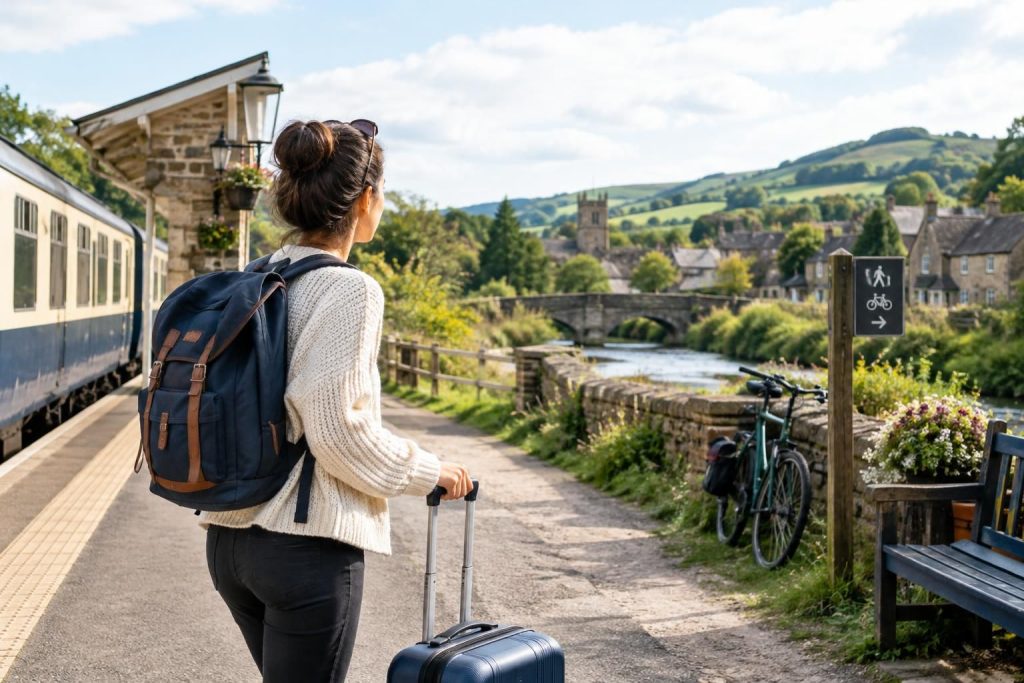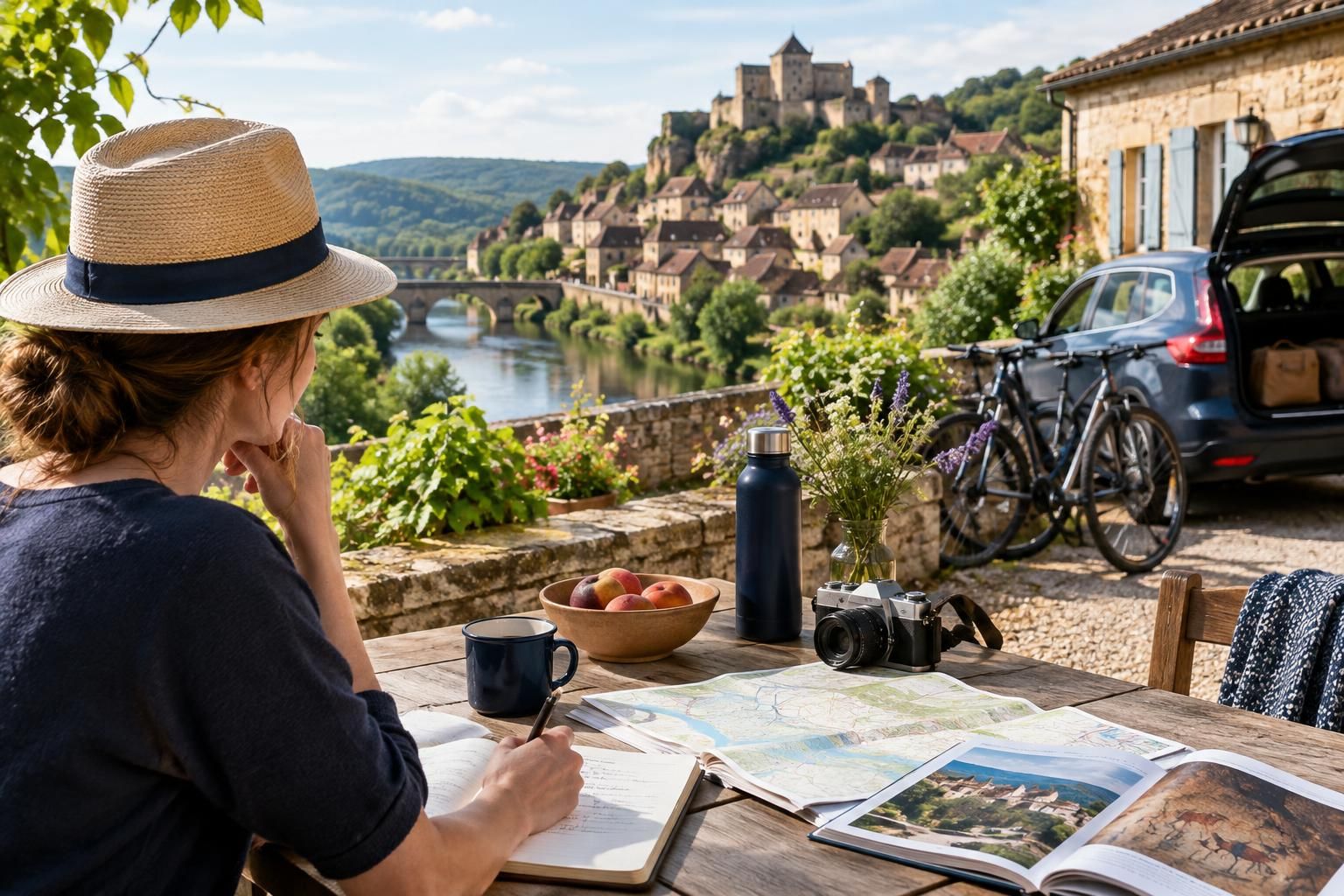
The Dordogne rewards travelers who resist turning every day into a sightseeing circuit. A market morning, a limestone village and a long lunch can fill a day more comfortably than a checklist of castles. For a first visit, the area around Sarlat-la-Canéda and the Dordogne and Vézère valleys offers a useful focus: enough variety for a week without trying to cover the whole department. The main planning decision is not which landmark comes first, but where to sleep and how much driving you want between meals, walks and visits.
1. Define a smaller area before choosing accommodation
The Dordogne is both a river and a large French department, so accommodation described simply as being in the Dordogne can sit well outside your intended sightseeing area. Start by marking Sarlat-la-Canéda, Beynac-et-Cazenac, La Roque-Gageac and Les Eyzies on a map. These give a first-time visitor a practical cluster of medieval streets, river landscapes and prehistoric heritage.
For a seven-night stay, one base usually works better than several short hotel stops. Choose two or three places you particularly want to see, then look for accommodation positioned around them. Judge distances by the actual roads rather than straight lines: winding valley routes, village approaches and parking can make an apparently short outing occupy much of a morning.
2. Match your base to the evenings you want
Sarlat suits travelers who value being able to walk out for dinner and spend spare time exploring old streets. A central stay can reduce evening driving, but check how luggage reaches the property and where a car would be parked. Accommodation on the edge of town may offer a different balance of walking access, space and parking.
Beynac-et-Cazenac or La Roque-Gageac puts river scenery at the center of the trip. These are appealing choices if you enjoy quiet time around your accommodation as much as excursions. Look carefully at the route between parking, your room and places to eat; a picturesque address may involve slopes or steps. Domme offers another hilltop option, with the same need to understand access before booking.
A rural cottage works well if cooking, outdoor space and unstructured afternoons are priorities. The trade-off is that even a bakery visit may become a drive. Before choosing an isolated property, imagine an ordinary evening there rather than only the view in the listing.
3. Decide how you will handle transport
A car offers flexibility for a village-based week, especially when combining rural accommodation with small settlements and countryside stops. Compare arrival options using the complete journey: the onward transfer, car collection, luggage handling and final drive all matter. A cheaper arrival point is not automatically the simplest choice.
If you prefer not to drive, build the holiday around a town rather than a remote cottage. Confirm the transport available for your intended dates and consider selected organized excursions instead of assuming every village can be reached conveniently. For either approach, leave the arrival afternoon largely empty and avoid a complicated sightseeing stop with luggage in the vehicle.
4. Give each day one main purpose
An effective week might include an arrival day, a Sarlat day, a river-village day, a castle-focused outing, a Vézère valley day, an unplanned local day and a final flexible day. Treat this as a set of interchangeable blocks rather than a fixed timetable. Weather, reservations and your appetite for walking can determine their order.
Pair places geographically instead of collecting famous names. Beynac-et-Cazenac and La Roque-Gageac make a coherent river-valley outing, while Les Eyzies provides a focus for prehistoric interests. Give a substantial castle or cave visit its own generous block of time, then add a nearby stroll only if you still feel like exploring.
Keep at least one afternoon free from driving. Buy picnic ingredients, read outside or revisit a favorite street when you are not trying to move on. That breathing room is especially valuable on a week-long stay, when repeated packing and full-day excursions can otherwise make a small area feel surprisingly tiring.
5. Choose experiences with different kinds of effort
Balance stone villages and castles with activities that change the pace. A garden visit, riverside walk or food-focused morning can provide contrast to interiors and historical interpretation. For prehistoric attractions, distinguish between original sites, reproductions and museums before choosing; they offer different experiences, and more than one similar visit may be unnecessary for a general-interest trip.
Check reservation arrangements, visit duration, language options and access details directly before committing. Cave visits may involve steps or enclosed spaces, while hilltop settlements can demand more walking than their size suggests. If considering a canoe outing, check the operator’s participation requirements and conditions, and keep another plan available rather than making it essential to the week.
6. Plan for meals, weather and everyday logistics
Self-catering can make the week more flexible, but inspect the practical details: a usable kitchen, food storage and somewhere comfortable to eat matter more than decorative touches. For market visits, confirm the day and location for your stay. Carry a shopping bag and buy only what you can transport and store appropriately.
Pack comfortable walking shoes, a light waterproof layer and clothing that can be combined as temperatures change. Keep a museum or other indoor visit in reserve, but do not assume rain requires abandoning every outdoor plan. Before departure, save accommodation access instructions and a short list of preferred outings so that each morning needs a decision, not a fresh planning session.
A satisfying Dordogne week depends on a well-matched base and modest daily ambitions. Choose accommodation for the evenings as carefully as for the sightseeing, group outings by valley and leave room for ordinary pleasures between major visits. You do not need to cover the whole region to come home with a strong sense of it.
AI-assisted evergreen travel guide. Featured image is an AI-generated illustration, not a specific product or booking.