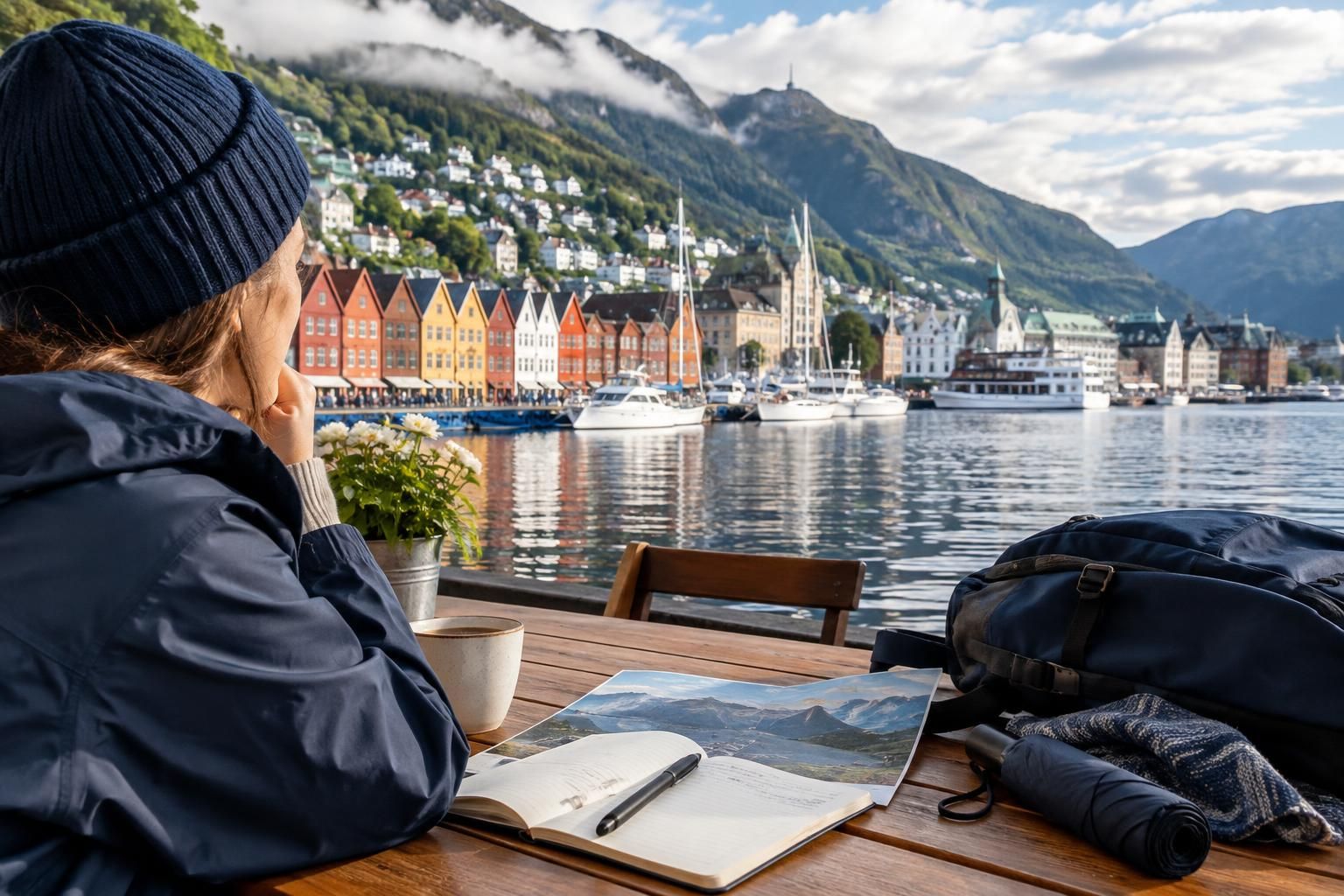
Bergen makes a useful starting point for a Norwegian trip that combines city life with dramatic landscapes without requiring a rental car. Its harbor, historic wooden buildings and surrounding slopes give even an unhurried day a strong sense of place. The planning challenge is deciding how far beyond the city to venture: a fjord excursion can occupy most of a day, while low cloud can change the appeal of a mountain outing. With five nights, you can give Bergen proper attention, reserve one day for a longer journey and keep enough flexibility to respond to the weather.
Choose a city break with a fjord day, not a whole-region checklist
Start by deciding what you want your landscape day to deliver. A boat journey emphasizes steep shores and the changing perspective from the water. A rail-centered excursion offers valleys, mountain scenery and the pleasure of the journey itself. Combining several transport modes can be memorable, but it also creates more connections and less time to linger.
For five nights, choose one substantial excursion rather than trying to collect several famous fjords. Keep another day loosely planned for a viewpoint or short outing near Bergen. Travelers who want quiet evenings beside the water may prefer an overnight outside the city, but that becomes a two-base trip with luggage transfers rather than a straightforward Bergen stay.
Pick accommodation for the walk home
A central base near the harbor, city center or railway station simplifies a car-free visit. The right location depends on your priorities: harbor access suits boat-focused plans, while proximity to the station helps with a rail excursion or an early departure. Compare actual walking routes, not just map distances. Bergen’s slopes can make a short-looking journey less convenient with luggage.
Check whether the property has steps, a lift and somewhere suitable for wet outerwear. An apartment or room with simple food-preparation facilities can make breakfasts and occasional dinners easier to manage. If quiet matters, ask about street-facing rooms and nearby evening activity rather than assuming every waterfront address feels peaceful.
Use the first full day to understand Bergen
Begin with the harbor and Bryggen, the historic wooden waterfront district. Leave time to explore beyond its recognizable frontage, then continue into nearby streets instead of treating the area as a quick photograph stop. For longer walks, look toward Nordnes or the hillside lanes of Sandviken, choosing a route that matches your comfort with gradients.
Pair this outdoor time with one indoor interest, such as art, maritime history or the city’s trading past. One substantial visit usually works better than a string of museums. This first day also helps you judge walking distances, find convenient grocery stops and establish a relaxed routine before committing to a long excursion.
Plan the fjord day from the return journey backward
Before booking anything, map the whole day: accommodation to departure point, each transfer, time at the destination and the final journey back. Distinguish a sightseeing cruise that returns to its starting point from transport that leaves you elsewhere. A route that looks simple on a regional map may involve a bus, boat and train, each with separate booking conditions.
For an ambitious rail-and-fjord outing, the corridor toward Myrdal and Flåm is worth considering, but assess the total travel time rather than the appeal of individual segments. If connections feel tight or the day becomes dominated by transfers, choose a simpler return excursion from Bergen instead. Confirm operating dates, departure locations and arrangements for missed connections before committing; do not assume every component is sold together.
Keep mountain views flexible and rain plans worthwhile
Fløyen and Ulriken offer different mountain experiences close to the city, but neither needs to become a compulsory summit day. Choose according to visibility, access, conditions and the amount of walking you actually want. A viewpoint visit and a longer upland walk are different undertakings; plan footwear, clothing and navigation around the route, not simply the destination’s proximity to town.
Keep an indoor alternative that genuinely interests you. A wet day can suit an art collection, a historical museum and a long lunch, with short neighborhood walks between them. Avoid leaving every indoor attraction until the final day, when booking requirements or your departure time could limit your choices. Pack a waterproof outer layer, comfortable shoes with grip and a small bag that keeps essentials dry.
Build a realistic five-night rhythm and spending plan
A workable sequence is arrival and a short waterfront walk, a full city day, a flexible mountain-view day, the main fjord excursion and a final day for neighborhoods or an indoor attraction. Swap the middle days where bookings allow. Keep the last evening in Bergen uncomplicated rather than relying on a distant connection before departure.
Compare excursion costs as complete days, including local transfers, meals and any separately ticketed segments. A transport or sightseeing pass only makes sense when its included journeys and attractions match your actual plan. Balance restaurant meals with simple breakfasts and picnic supplies, and keep a modest budget reserve for a weather-driven change. If traveling with others, agree in advance whether scenery, museums or dining deserves the largest share.
The strongest Bergen itinerary leaves room for both the city and its setting. Choose a convenient base, give one fjord journey enough time and resist turning every clear hour into another excursion. With flexible days and a complete understanding of your transport connections, five nights can feel varied without becoming a race across western Norway.
AI-assisted evergreen travel guide. Featured image is an AI-generated illustration, not a specific product or booking.