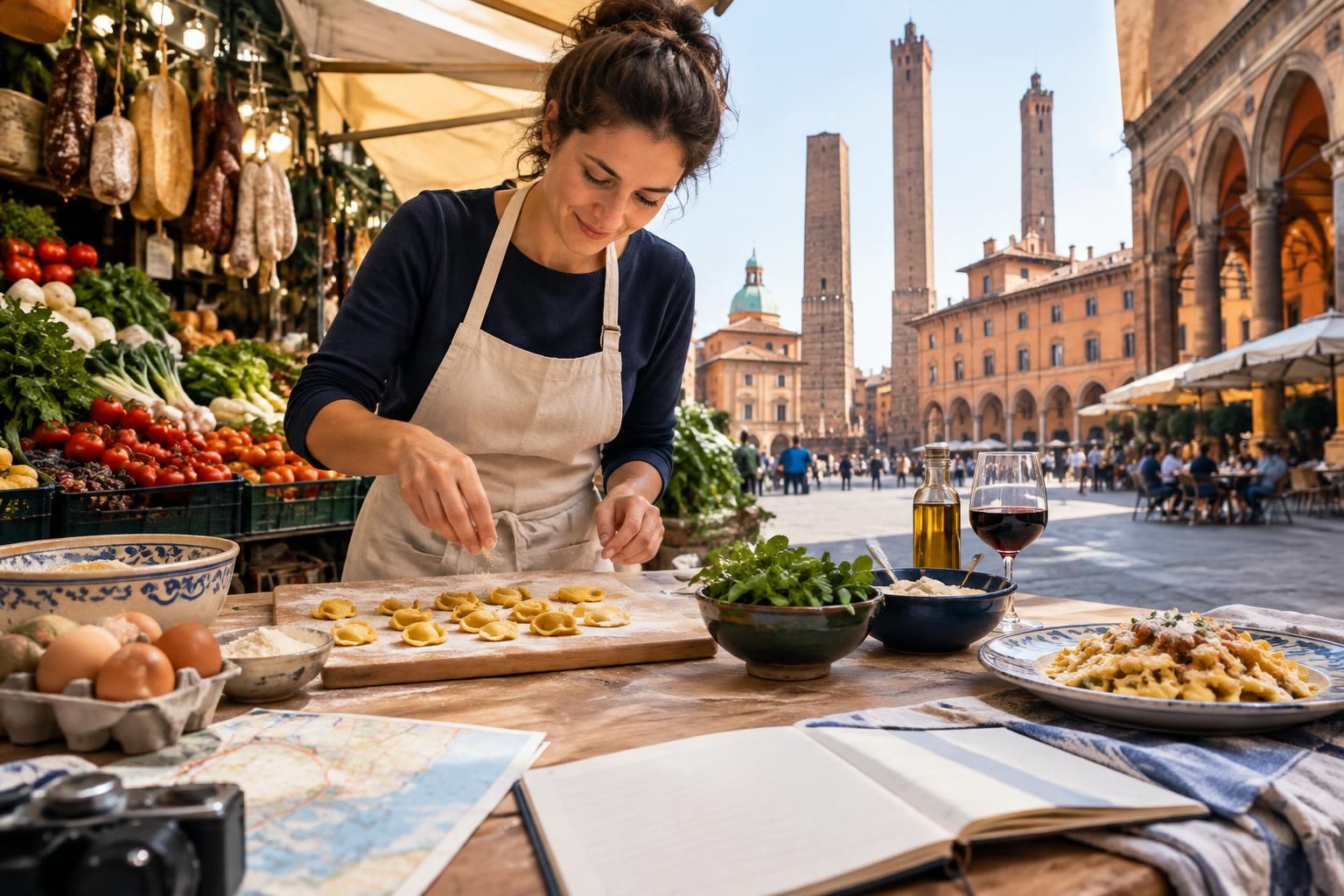
Bologna makes a compelling base for travelers who enjoy understanding a place through its kitchens, markets and everyday meals. Fresh pasta, filled breads and the food traditions of Emilia-Romagna offer plenty of direction, but a satisfying trip needs more than a list of things to eat. Too many restaurant reservations or excursions can leave little room for appetite, curiosity or rest. Plan four or five nights around one cooking experience, a few purposeful market visits and generous gaps between meals. The result is a city break that connects food with architecture, neighborhood walks and the pleasure of having time to notice details.
Choose a base that supports the way you want to eat
Decide first whether you want to cook, assemble simple meals or leave all preparation to someone else. An apartment with a usable kitchen suits travelers who enjoy turning market finds into breakfast or supper. A hotel or guesthouse is more straightforward if cooking would feel like a chore. Do not pay extra for a kitchen simply because this is a food-focused trip.
For an apartment, look beyond the phrase 'fully equipped.' Check for a refrigerator, hob, basic pans, knives, crockery and somewhere comfortable to sit. Ask about stairs or a lift if carrying groceries or managing steps matters. A central address can simplify walking, but examine its relationship to busy evening streets. Being near restaurants is useful; sleeping directly above a lively gathering place may be less appealing.
Use markets to learn, not just to shop
The Quadrilatero area and Mercato delle Erbe provide two natural starting points for exploring Bologna through food. Rather than treating either as a checklist, give yourself a modest task: choose fruit for breakfast, compare pasta shapes or find ingredients for one easy supper. Buying a small amount gives the visit a purpose without filling your accommodation with food you cannot finish.
Start with a browsing visit before making substantial purchases. Notice what needs refrigeration, what requires cooking and what you could realistically eat during your stay. If you are unsure how something is used, a simple question can be more rewarding than guessing. Keep purchases manageable, bring a reusable bag and return perishable food to suitable storage rather than carrying it through a long sightseeing afternoon.
Choose one cooking experience with a clear purpose
A cooking class is most useful when it teaches something you actually want to repeat. For one traveler, that might mean rolling pasta by hand; for another, shaping filled pasta or understanding a regional sauce. Read the activity description for the balance between demonstration and participation. A long menu does not necessarily mean more time practicing.
Before reserving, clarify group size, working arrangements, the language of instruction and whether the session includes a full meal. Dietary needs deserve a specific conversation about ingredients and substitutions rather than an assumption that every dish can be adapted. Place the class on a day without another major food commitment. Afterwards, leave time to write down techniques and quantities while they are still fresh in your memory.
Build days around appetite rather than restaurant lists
Choose one substantial food event per day: a cooking class, a leisurely restaurant meal or a market-led supper. Let the other meals remain simple. Bologna's culinary identity includes dishes such as tagliatelle al ragù and tortellini, but there is no need to sample every specialty in a single sitting. Sharing where appropriate, ordering fewer courses and saving a dish for another day can make the experience more enjoyable.
A workable rhythm is a light breakfast, a morning walk and a main meal followed by an unstructured afternoon. Another day might revolve around market shopping and cooking at your accommodation. Keep one evening undecided so you can revisit a favorite place or respond to your energy level. Confirm restaurant service days and reservation arrangements directly when making plans, rather than building the whole itinerary around assumptions.
Balance the table with porticoes, squares and longer walks
Food-focused travel benefits from interests that have nothing to do with eating. Use Piazza Maggiore and Bologna's portico-lined streets as the framework for exploratory walks, adding a museum, church interior or bookshop according to your interests. The porticoes provide some shelter, but pack for the season rather than expecting every route to be protected from rain or sun.
For a more substantial outing, consider the portico route toward the Sanctuary of San Luca. Assess the distance, gradients and steps against your group's comfort before committing to the full walk. A shorter neighborhood wander is equally valid. On arrival day, favor a modest stroll and an easy meal over a timed activity; transport delays and tiredness are poor companions for a class you particularly want to enjoy.
Add a regional excursion only if it offers something different
Modena or Parma can add another perspective on Emilia-Romagna, but neither needs to become an obligatory day trip. Choose one if its streets, cultural sights and food traditions genuinely interest you. Check rail connections for your travel dates and allow enough time to explore beyond lunch. For a short stay, another day in Bologna may offer more pleasure than packing in a second city.
Distinguish an independent city visit from a producer visit. Cheese dairies, vinegar producers and other food businesses may be outside town, and participation can depend on advance arrangements and transport. Establish the actual location, duration and transfer requirements before reserving. If bringing food home, check destination import requirements and carrier restrictions before buying; do not assume that a sealed package is automatically suitable for your journey.
A rewarding Bologna food break is built on selective commitments: accommodation that fits your habits, one worthwhile learning experience and enough free time to follow your appetite. Leave room for ordinary pleasures, from choosing breakfast fruit to walking beneath the porticoes. You will come away with a clearer sense of the city than a crowded tasting schedule can provide.
AI-assisted evergreen travel guide. Featured image is an AI-generated illustration, not a specific product or booking.