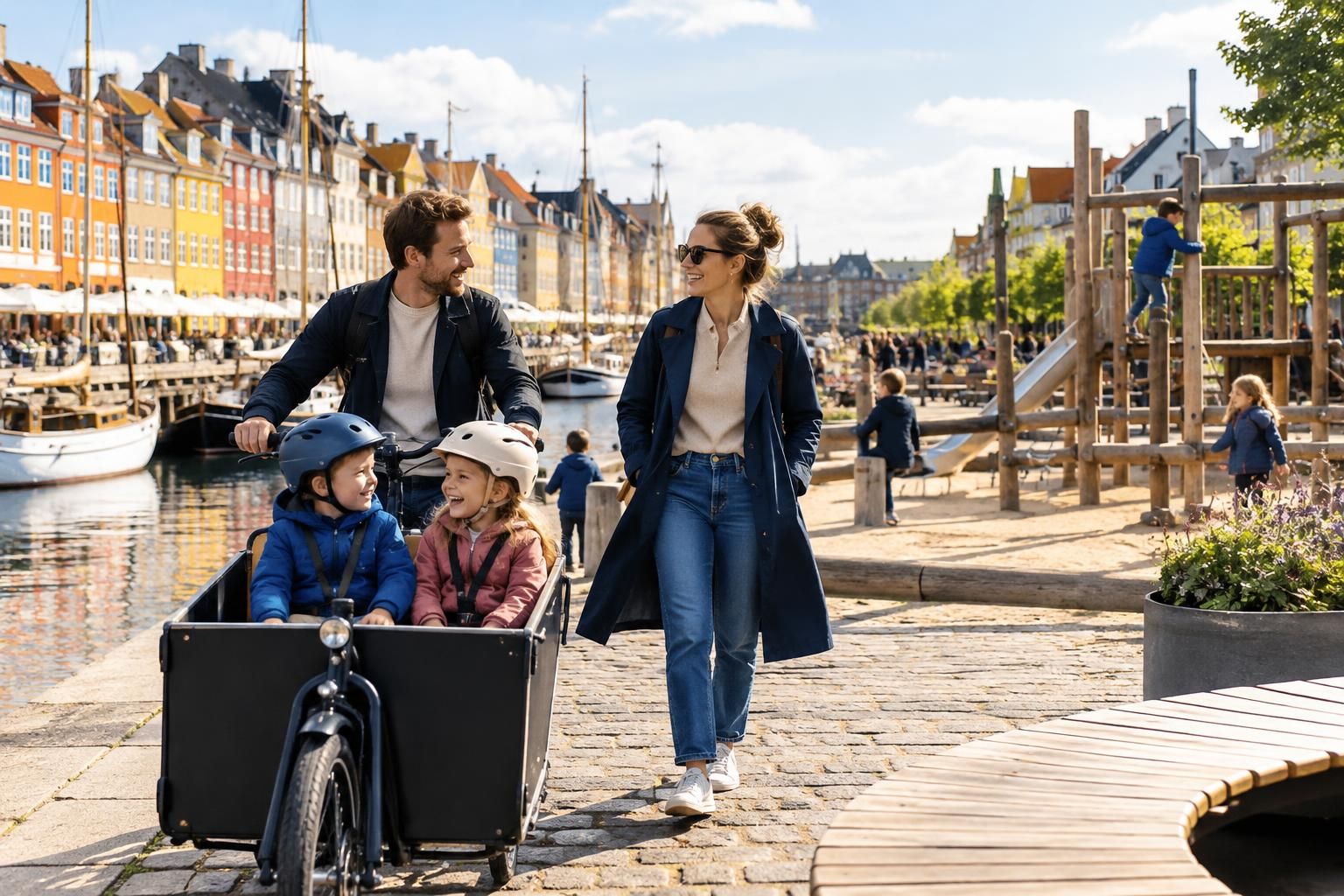
Copenhagen suits a family trip built around small discoveries rather than a long checklist: boats on the harbor, castle gardens, colorful streets and time to play between sights. The challenge is not finding enough to do, but keeping distances, spending and expectations manageable. Five nights gives you four full days, allowing a gradual introduction without requiring a different major attraction every morning. Choose accommodation around your family’s routines, group outings by neighborhood and keep one day deliberately loose. The result can feel like a holiday for adults as well as children.
1. Choose a base for everyday convenience
Start with the journey between your accommodation and the places you expect to visit most. A central address can reduce travel, but a quieter street near useful public transport may work better than a room directly beside a busy sightseeing area. Look at the actual walking route to a station, grocery shop and nearby green space rather than relying on a broad neighborhood label.
The inner city makes sense if you want to walk to historic streets and waterfront sights. Vesterbro can suit families who enjoy cafes and an urban neighborhood atmosphere; Østerbro is worth considering if parks and a more residential setting matter more. Compare individual locations carefully, since two properties in the same district can offer very different routines.
For a five-night stay, a kitchenette, separate sleeping area or access to laundry may be more valuable than an impressive lobby. Check bed arrangements, stairs, lift access, street noise and space for a folded stroller. If adults will spend evenings in the accommodation after bedtime, somewhere comfortable to sit becomes an important part of the booking decision.
2. Build days around one anchor activity
Choose one main activity each day and treat everything else as optional. A museum visit, a castle interior or a substantial paid attraction can provide that anchor. Add a simple outdoor stop nearby, then leave room for lunch and an unplanned pause. Avoid pairing two experiences that both require timed entry, queues or sustained attention.
A workable sequence is a historic-center day, a harbor-focused day, a museum-and-park day and a flexible final day. For example, combine the Rosenborg area with time in the King’s Garden rather than crossing the city immediately afterward. On another day, explore a short waterfront stretch and decide whether a boat outing matches your children’s interest and patience.
Keep the arrival afternoon especially light. Finding groceries, trying the route to public transport and locating a playground can be enough. This also helps you judge realistic walking distances before committing to a more structured day.
3. Make transport choices that reduce effort
Walking works well for compact clusters of sights, but Copenhagen’s attractions are not all adjacent. Before booking accommodation, map a few likely journeys and consider the whole trip: walking to the stop, changing services and reaching the final entrance. Check current tickets and family conditions with the relevant operator when planning, rather than assuming every journey uses the same arrangement.
Cycling is closely associated with Copenhagen, but it need not be part of a successful visit. Riding in an unfamiliar city while supervising children can require more concentration than expected. If you want to cycle, consider everyone’s confidence, suitable equipment and the route before making it your main transport plan.
For younger children, a compact stroller can provide a useful rest option even if they usually walk at home. Balance that benefit against steps, storage and cobbled surfaces. With older children, let them help navigate one short journey each day; it gives them a role without turning every transfer into a lesson.
4. Plan food around energy, not sightseeing ambition
A substantial breakfast and an early lunch can prevent the afternoon from unraveling. Carry water and a familiar snack, and identify a simple fallback meal near your accommodation. Bakeries, casual cafes and grocery supplies can be useful alongside restaurant meals, especially when different family members become hungry at different times.
Give children opportunities to try Danish food without making every meal an experiment. Open sandwiches can be a shared tasting option, while a bakery stop can become a small daily ritual. Check menus before settling in, particularly for selective eaters or dietary requirements. If you are self-catering, plan easy evening food rather than shopping for elaborate meals after a full day out.
5. Prepare a genuinely useful wet-weather plan
Pack layers, weather-resistant outerwear and comfortable shoes that everyone has already worn. Waterfront walks can feel quite different from sheltered streets, so bring an extra layer even when the day begins pleasantly. A spare set of children’s clothes in your day bag can rescue an outing after rain or enthusiastic water play.
Choose two indoor alternatives before the trip: one substantial museum or attraction, and one shorter option for a tired afternoon. Check their current opening arrangements before building a day around them. Match the choice to your children’s interests rather than simply selecting the best-known museum.
Do not automatically replace every rainy outdoor hour with another paid activity. A slow breakfast, a short outing and time back at the accommodation may be the better use of the day, particularly midway through the trip.
6. Decide what deserves your time and budget
List your likely paid activities before buying a sightseeing pass. Compare their current individual costs with any pass you are considering, including only places you would genuinely visit. A pass that encourages extra journeys or rushed visits may be poor value for your particular family, even if it includes many attractions.
Treat Tivoli, a boat trip or a day outside Copenhagen as a deliberate choice rather than an automatic addition. Each can shape a whole day once meals, travel and rest are included. For a first five-night stay, keeping the final full day open lets you repeat a favorite place, recover from bad weather or follow an interest that emerges during the trip.
A satisfying Copenhagen family break depends less on covering the city than on finding a workable daily rhythm. Choose a practical base, keep one main commitment per day and protect time for food, play and rest. With those foundations in place, gardens, harbor views and neighborhood discoveries can be as memorable as the headline attractions.
AI-assisted evergreen travel guide. Featured image is an AI-generated illustration, not a specific product or booking.